
🏠 Home > 🗺️ Recipes > 🍱 Snacks > 🇲🇲 Myanmar Snacks > 🍱 Panthay Khauk Swe (Spicy Panthay Noodle Soup) , A-kyaw Sone (Assorted Mixed Fritters) , Kyet Kyee Kaung (Jelly Dessert)
🍱 Unexplored Myanmar Snacks: 3 Authentic Street Food Recipes You Need to Master
Published by Supakorn | Updated: February 2026
Introduction: Your Burmese Snack Adventure Starts Now!
Hey there, fellow food adventurers! If you’ve spent any time exploring the food of Southeast Asia, you already know there's a world of flavor waiting beyond the usual Thai curries and Vietnamese pho. Today, we’re setting our sights on Myanmar—the "Golden Land"—and diving headfirst into its incredibly vibrant, underrated snack and street food scene.
Burmese cuisine is a wonderful fusion, a melting pot of culinary traditions. The country’s diverse geography and history—bordering India, China, and Thailand—have created a unique culinary profile. This blend is nowhere more apparent than in its snacks: a hearty, spicy noodle dish influenced by its northern neighbors, a platter of savory Indian-inspired fritters, and a uniquely refreshing local dessert.
In recent years, the complex, comforting, and layered flavors of Burmese food have been gaining global recognition. People are genuinely craving these deep, savory, and often intensely aromatic flavors, which are often less sweet than other Southeast Asian cuisines.
That’s exactly what this long-form, SEO-friendly guide is here for. I’m going to share the keys to mastering three essential, authentic Myanmar snacks right in your own kitchen. These are the dishes that locals queue up for, and they are guaranteed to bring a truly authentic taste of Myanmar to your home. We're covering a spicy, vibrant fusion noodle, a classic assortment of savory fritters, and a uniquely refreshing dessert!
Ready to roll up your sleeves? Let’s conquer these culinary classics!
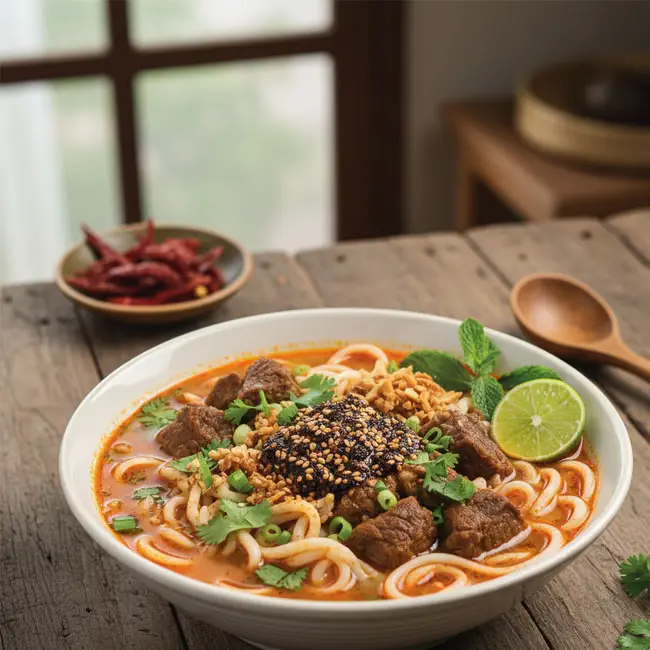
🔹 Recipe 1: Panthay Khauk Swe (Spicy Panthay Noodle Soup)
About this Recipe: Panthay Khauk Swe (The Chinese-Burmese Fusion Noodle Snack)
For a truly unique flavor profile that showcases Myanmar's position as a cultural crossroads, you have to try Panthay Khauk Swe (Khauk Swe means noodle). This dish is the culinary legacy of the Panthay people—Muslim Chinese immigrants primarily from the Yunnan province of China. Found mostly in the northern and central regions, this noodle dish is intensely popular as a filling snack or lunch.
Unlike the coconut-based Ohn No Khauk Swe or the dry Shan noodles, Panthay Khauk Swe is characterized by its thick, dark, savory, and intensely spicy broth made from mutton or beef stock, often flavored with chili paste, soy sauce, and star anise. It is served with thick egg noodles and topped with seasoned ground meat and a generous scattering of fresh cilantro and chili oil.
This is a dish for those who love bold, meaty, and spicy flavors. It's savory and comforting with an unmistakable warmth that comes from its northern origins, making it a powerful and exciting addition to your Burmese snack repertoire!
Ingredients & Measurements
For the Meat Topping:Ingredient - Quantity - Notes
- Ground Meat 1 lb (450g) Mutton (traditional) or Beef/Chicken.
- Soy Sauce (Dark) 2 tbsp For color and deep flavor.
- Garlic 4 cloves Minced.
- Ginger 2 inch piece Minced.
- Oil 2 tbsp For sautéing.
- Chili Paste 1 tbsp Or Sambal Oelek.
For the Broth & Noodles:Ingredient - Quantity - Notes
- Egg Noodles 1 lb (450g) Thick, yellow egg noodles (like ramen or Chinese wheat noodles).
- Meat Stock 6 cups (1.5 liters) Mutton or Beef Stock (clear).
- Star Anise 2 pods
- Cinnamon Stick 1 small
- Soy Sauce (Light) 3 tbsp To taste.
- Salt/Sugar Pinch each To balance the flavors.
For Serving (Crucial Garnishes):Ingredient - Quantity - Notes
- Chili Oil To taste Essential for heat and color.
- Cilantro 1/2 cup Chopped, fresh and abundant.
- Spring Onion 1/4 cup Sliced.
- Pickled Mustard Greens 1/4 cup Chopped (optional, for acidity).
Step-by-Step Instructions
1.Prepare the Meat Topping: Heat the oil in a wok or large pan over medium-high heat. Add the minced ginger and garlic and cook until fragrant. Add the ground meat and brown it completely. Stir in the dark soy sauce and chili paste/sambal. Cook for 2–3 minutes until the seasoning is absorbed. Set aside.
2.Cook the Noodles: Prepare the thick egg noodles according to package directions. Drain well and place in individual serving bowls.
3.Build the Broth: In a separate pot, bring the meat stock to a simmer. Add the star anise and cinnamon stick. Let the spices infuse for 10 minutes. Remove the spices before serving.
4.Season the Broth: Stir in the light soy sauce, salt, and sugar to the broth. The broth should be savory and dark, with a meaty richness. Keep warm.
5.Assemble and Serve: Ladle the hot, fragrant broth generously over the noodles in the serving bowls. Top each bowl with a large scoop of the seasoned ground meat topping.
6.Garnish: Finish each bowl with plenty of fresh cilantro, sliced spring onion, and a drizzle of homemade or good quality chili oil. Serve immediately while hot.
Tips & Mistakes to Avoid
- Use Dark Soy Sauce: The depth of color is important in this dish. Use dark soy sauce not just for saltiness, but for the rich, deep brown hue it provides to the meat topping.
- Spice is Non-Negotiable: This is meant to be a hearty, spicy noodle. Don't be shy with the chili paste in the meat and the chili oil in the final garnish.
- Infuse the Broth: The long simmering with star anise and cinnamon adds a deep, subtle warmth that is characteristic of northern Burmese and Chinese-influenced cooking. Don't skip the whole spices!
FAQ
Q: Can I use vegetable broth instead of meat stock?
A: You can, but this dish truly relies on the rich, savory depth of beef or mutton stock. If using vegetable broth, compensate with extra dark soy sauce and a touch of mushroom seasoning for umami.
Q: What is the difference between Panthay Khauk Swe and Shan Khauk Swe?
A: Shan Khauk Swe is typically a dry, zesty salad or a light soup base with peanuts. Panthay Khauk Swe is a rich, dark, heavily spiced broth, often with beef/mutton, and characterized by its Chinese-Yunnanese flavor profile (star anise, cinnamon).
Q: Where can I find a good pickled mustard green substitute?
A: If you can’t find the traditional pickled greens, a small spoonful of Korean kimchi or a quick pickle of crunchy cabbage can offer a similar acidic bite to cut the richness.
Summary of Panthay Khauk Swe
Panthay Khauk Swe is a powerhouse of flavor, demonstrating the delicious result of cultural fusion in Myanmar. It is a hearty, savory, and spicy snack that provides a wonderful counterpoint to other lighter Burmese fare.
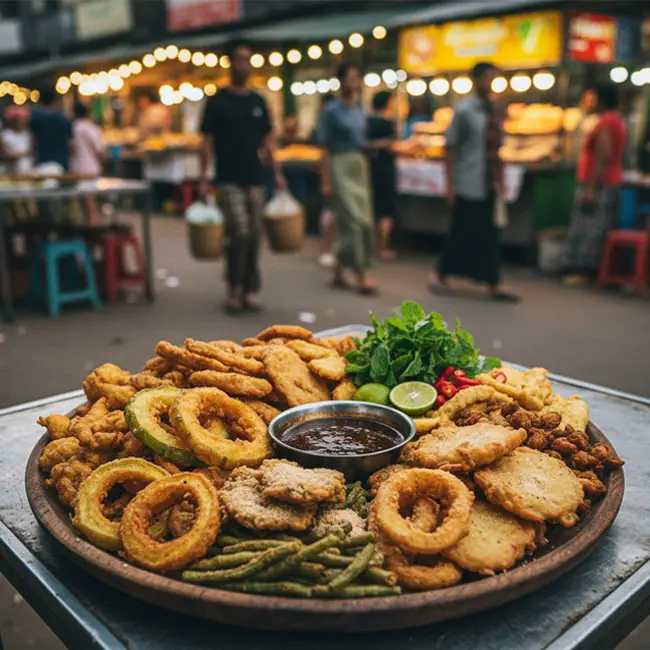
🔹 Recipe 2: A-kyaw Sone (Assorted Mixed Fritters)
About this Recipe: A-kyaw Sone (The Savory and Crunchy Assortment)
If you walk down any street in Myanmar, you will see vendors selling vast arrays of crispy, savory fritters—this is the A-kyaw Sone (Mixed Fritters), and it’s the ultimate Burmese street snack. A-kyaw means "fried," and Sone means "mixed/assortment."
This isn't one recipe; it's a collection of recipes! The best part about an A-kyaw Sone platter is the variety: everything from simple vegetable fritters and crunchy bread slices to savory split pea and onion fritters. They are often dipped in a tangy-sweet sauce made from tamarind, chili, and garlic.
We will focus on the most popular type, the Pè Kyaw (split pea fritter), which is often served alongside the others and is simple to master at home.
Ingredients & Measurements
For the Pè Kyaw (Split Pea Fritters):Ingredient - Quantity - Notes
- Dried Yellow Split Peas 1 cup Soaked overnight, then drained.
- Rice Flour 1/4 cup To bind the mixture.
- Onion 1/2 medium Chopped finely.
- Garlic/Ginger Paste 1 tsp
- Turmeric Powder 1/2 tsp
- Salt 1 tsp To taste.
- Oil Sufficient For deep frying.
For the Tamarind Dipping Sauce (Chin Ma Ngote):Ingredient - Quantity - Notes
- Tamarind Pulp/Paste 2 Tbsp
- Warm Water 1/4 cup
- Sugar 1 Tbsp Or to taste.
- Fish Sauce or Salt 1 tsp For savory balance.
- Garlic 1 clove Minced finely.
- Chili Flakes 1/2 tsp Or finely chopped fresh chili.
Step-by-Step Instructions
1.Prepare the Pè Kyaw Batter: Place the soaked and drained split peas, rice flour, a splash of water (about 2 Tbsp), and the garlic/ginger paste into a food processor. Process until coarsely ground—you want some texture, not a completely smooth paste.
2.Add Seasonings: Transfer the mixture to a bowl. Stir in the chopped onion, turmeric, and salt. The batter should be thick, holding its shape when dropped from a spoon.
3.Mix the Dipping Sauce: In a small bowl, mix the tamarind pulp with warm water until dissolved. Strain to remove any fibers (if using paste, this isn't necessary). Add the sugar, fish sauce (or salt), minced garlic, and chili flakes. Stir until the sugar is dissolved. Taste—it should be a perfect balance of sour, sweet, and savory.
4.Fry the Fritters: Heat the oil in a pot or wok to 350 ∘ F (175 ∘ C). Carefully drop spoonfuls of the batter into the hot oil.
5.Cook to Golden: Fry the fritters for 3–5 minutes, turning occasionally, until they are deep golden brown and crispy on the outside. Remove and drain on paper towels.
6.Serve the Assortment: Arrange the hot Pè Kyaw (split pea fritters) on a platter. If you have other quick fried items (like simply sliced and fried sweet potato or onion rings), add them to the platter for a true A-kyaw Sone. Serve with the bowl of tangy tamarind dipping sauce.
Tips & Mistakes to Avoid
- Texture is Critical: For the Pè Kyaw, do not over-blend the split peas! The slightly chunky texture is what makes them authentic and prevents them from becoming too dense.
- Control the Tamarind: When making the dipping sauce, start with less tamarind and add more slowly. You want a distinct sourness, but it shouldn't be overwhelmingly sharp.
- Oil Temperature: Ensure the oil is hot enough. If the oil is too cool, the fritters will soak up too much oil and become greasy.
FAQ
Q: Can I use chickpeas instead of split peas?
A: Yes, you can. Chickpeas work well, though the texture and flavor will be slightly different. Soak them overnight and process them similarly to the split peas.
Q: Is A-kyaw Sone meant to be a full meal?
A: It can be! While it's a great snack or side dish, a large, fresh assortment of A-kyaw (sometimes including larger items like bread or gourd fritters) is often served as a hearty, satisfying lunch when accompanied by the dipping sauce.
Q: How do I make the fried bread slices often included in A-kyaw Sone?
A: Simply slice white sandwich bread into triangles, spread with a thin layer of garlic paste, and fry quickly until golden and crisp.
Summary of A-kyaw Sone
A-kyaw Sone is the savory, crunchy heart of Burmese street food. It’s an essential appetizer that allows you to play with different textures and flavors, all unified by the irresistible tang of the homemade tamarind dipping sauce.
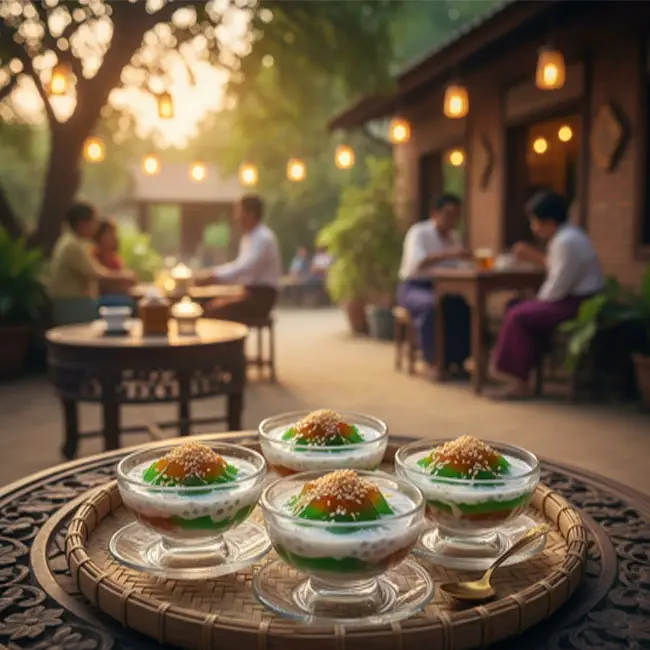
🔹 Recipe 3: Kyet Kyee Kaung (Jelly Dessert)
About this Recipe: Kyet Kyee Kaung (The Cool, Sweet, and Colorful Treat)
To balance out the savory snacks, we have to talk about Burmese desserts, and few are as refreshing and visually fun as Kyet Kyee Kaung (pronounced kyeh-jee-gaung). This translates literally to "chicken egg head," though thankfully, it contains neither. This dish is a colorful, cool, and sweet dessert that is perfect for cooling down on a hot day.
Kyet Kyee Kaung is a simple but delicious medley of sweet coconut milk, soft agar-agar (jelly) cubes, often tapioca pearls, and sometimes a splash of rose syrup. It is the Burmese equivalent of a shaved ice dessert, but uses frozen or chilled coconut milk instead. The colors—often achieved with food coloring or pandan—are essential to its appeal, making it a perfect, light, and sweet finish to any meal or a delightful afternoon snack.
The sweetness is balanced by the saltiness of the coconut milk, which is a classic Southeast Asian technique that makes the final flavor profile complex and incredibly addictive.
Ingredients & Measurements
For the Sweetened Agar-Agar Jellies:Ingredient - Quantity - Notes
- Agar-Agar Powder 2 tsp Or gelatine, though agar-agar is traditional.
- Water 2 cups
- Sugar 1/2 cup Adjust to taste.
- Flavor/Coloring To taste Red (rose syrup or food coloring) and Green (pandan extract).
For the Coconut Milk Base:Ingredient - Quantity - Notes
- Full-Fat Coconut Milk 2 cans (27 oz total) Unsweetened.
- Water 1 cup
- Sugar 1/4 cup Or to taste.
- Salt 1/2 tsp Essential for flavor balance!
For the Texture/Garnish:Ingredient - Quantity - Notes
- Tapioca Pearls 1/4 cup Small pearls, cooked per package directions.
- Bread 2 slices White bread, cubed and fried until golden (optional).
- Ice Crushed or cubed For serving.
Step-by-Step Instructions
1.Make the Agar-Agar Jellies: In a saucepan, whisk the agar-agar powder and water. Bring to a boil, stirring constantly. Reduce heat and simmer for 1 minute. Stir in the sugar until dissolved.
2.Color the Jellies: Divide the mixture into two bowls. In one, add a few drops of red food coloring or rose syrup. In the other, add green coloring or pandan extract. Pour into shallow dishes and let them set at room temperature or in the fridge until firm (about 1 hour). Once set, cut them into small cubes or diamond shapes.
3.Cook the Tapioca: Cook the small tapioca pearls according to package directions. Rinse them in cold water to remove excess starch and keep them from sticking. Set aside.
4.Prepare the Sweet Coconut Base: In a separate saucepan, combine the coconut milk, water, sugar, and salt. Heat gently until the sugar and salt are dissolved. Do not boil. Taste and adjust the balance—it should be sweet but with a crucial savory edge from the salt. Chill thoroughly in the refrigerator.
5.Assemble the Dessert: In a serving bowl, place a generous amount of crushed ice. Add the cooked tapioca pearls and the colorful agar-agar cubes.
6.Serve: Ladle the cold, sweet coconut milk base over the top. The dessert should be swimming in the creamy liquid. Garnish with a few small fried bread cubes (if using) for a surprise crunch. Serve with a long spoon!
Tips & Mistakes to Avoid
- Tip: The Salt is Key: Do not omit the salt in the coconut milk base! It's the essential element that cuts through the richness and sweetness, giving the dessert its authentic, complex flavor.
- Mistake: Boiling the Coconut Milk: Heating the coconut milk base too vigorously can cause it to curdle or separate. Keep the heat very low and gentle.
- Tip: Texture is Everything: This dessert relies on a variety of textures: the firm jelly, the soft tapioca, the creamy liquid, and the optional crisp bread.
FAQ
Q: Can I use gelatin instead of agar-agar?
A: Yes, you can. Gelatin will result in a softer jelly consistency. Agar-agar is plant-based and results in a firmer, crunchier jelly, which is preferred in many Southeast Asian desserts.
Q: What other toppings are traditional?
A: You can add simple slices of fruit like bananas or small pieces of jackfruit. Many vendors also add colorful layers of cooked sago or even sweet potato cubes.
Q: How long does this dessert keep?
A: The jellies and coconut base can be stored separately in the refrigerator for up to 3 days. Only assemble with the ice right before serving.
Summary of Kyet Kyee Kaung
Kyet Kyee Kaung is a fantastic example of a simple Burmese snack that delivers maximum refreshment and fun. The blend of textures and the perfectly balanced savory-sweet coconut base make it a perfect, light sweet treat.
Final Thoughts: Your Culinary Journey Awaits
See? That wasn't so tough, was it? Burmese food might have seemed intimidating or elusive, but with these three recipes, you’ve unlocked some of the most essential and delicious tastes of Myanmar's street food and snack scene.
You’ve mastered the savory, spicy, and rich depth of Panthay Khauk Swe, learned the satisfying, crunchy joy of A-kyaw Sone, and concocted the sweet, colorful refreshment of Kyet Kyee Kaung.
These recipes, while spanning spicy noodles, savory fritters, and sweet jelly, share the core philosophy of Burmese cuisine: a commitment to textural contrast and a perfect balance of layered flavors, often borrowing brilliantly from neighboring cultures.
I highly recommend trying these out one by one. Maybe start with the comforting crunch of A-kyaw Sone, then tackle the sweet refreshment of the Kyet Kyee Kaung, and finally master the bold, complex flavors of the Panthay Khauk Swe.
Once you do, I’d love to hear about it! What did you make first, and which dish was your favorite? Share your photos and experiences with us in the comments below! Happy cooking, and Pyan Sarr Pay Lar (enjoy your meal)!
| 🇲🇲 🍱 < Back |