
🏠 Home > 🗺️ Recipes > 🍨 Desserts > 🇲🇾 Malaysia Desserts > 🍨 1.The Iconic Pandan Layer Cake , 2.Traditional Melt-in-the-Mouth Pineapple Tarts , 3.Glistening Sago Gula Melaka with Coconut Cream
🍨 Celebrate the Holidays with Stunning Malaysian Festive Sweets
Published by Supakorn | Updated: February 2026
When the holiday season rolls around, the air in Malaysia changes. It’s not just about the decorations or the gatherings; it’s about that specific, sweet aroma wafting from kitchens across the country. Whether it’s Hari Raya, Chinese New Year, or Deepavali, the Malaysian dessert table is a masterpiece of color, texture, and tropical flavor.
Lately, the world has been waking up to the magic of Malaysian baking. From trendy cafes in Melbourne to boutique bakeries in London, the unmistakable green of Pandan and the rich, caramel scent of Gula Melaka are becoming global favorites. People are tired of the same old sponge cakes and chocolate chip cookies—they want something that tells a story.
In this ultimate festive guide, I’m going to share three show-stopping recipes that will make you the star of any holiday gathering. We aren’t just making food; we’re crafting edible memories. We will be diving into:
👑 • Recipe 1: The Iconic Pandan Layer Cake – A vibrant, jelly-topped masterpiece.
👑 • Recipe 2: Traditional Melt-in-the-Mouth Pineapple Tarts – The ultimate festive cookie.
👑 • Recipe 3: Glistening Sago Gula Melaka with Coconut Cream – A sophisticated, chilled delight.
Ready to turn your kitchen into a Malaysian patisserie? Let’s get baking!
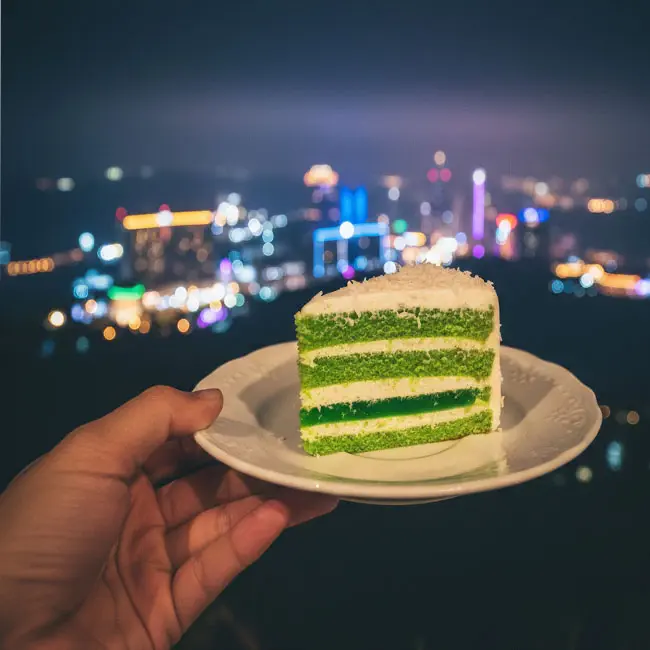
🍰 Recipe 1: The Iconic Malaysian Pandan Layer Cake
🍰 About this Recipe
If there is one cake that represents Malaysian celebrations, it is the Pandan Layer Cake (or Kuih Lapis Pandan). It is a marvel of engineering—alternating layers of fluffy, airy sponge cake and a silky, firm Pandan custard jelly. It looks like a bright green emerald on the dessert table. It’s light, not too sweet, and has that incredible floral aroma that only fresh Pandan leaves can provide. While it looks intimidatingly professional, I’m going to show you how to nail those layers every single time.
🍰 Ingredients & Measurements
For the Pandan Sponge Cake:
• 4 large eggs (room temperature)
• 100 grams granulated sugar
• 120 grams cake flour (sifted)
• 40 ml vegetable oil
• 40 ml fresh Pandan juice (blended from 10 leaves with a little water)
• 1/2 teaspoon cream of tartar
• 1/4 teaspoon salt
For the Pandan Custard Layer:
• 800 ml coconut milk (standard richness)
• 200 ml Pandan juice (concentrated)
• 100 grams Hoen Kwe flour (mung bean starch, white color)
• 10 grams agar-agar powder
• 150 grams granulated sugar
• 1/2 teaspoon salt
• A drop of natural green food coloring (optional, for that "pop")
🍰 Step-by-Step Instructions
1.Bake the Sponge: Whisk egg whites with cream of tartar and sugar until stiff peaks form. In a separate bowl, mix egg yolks, Pandan juice, oil, and flour. Fold the whites into the yolk mixture gently. Bake at 340∘F / 170∘C for 25-30 minutes. Once cooled, slice the cake horizontally into three even layers.
2.Prep the Custard: In a heavy-bottomed pot, combine coconut milk, Pandan juice, sugar, salt, agar-agar powder, and mung bean starch. Whisk until there are no lumps.
3.Cook the Jelly: Heat the mixture over medium-low heat, stirring constantly. It will suddenly thicken into a smooth, glossy custard. Once it starts to bubble, remove it from the heat.
4.The Layering Magic: Place one cake layer in a springform pan. Pour a layer of hot custard over it, making sure it fills the gaps at the sides. Place the second cake layer on top, followed by more custard. Repeat for the third layer.
5.The Finish: Pour the remaining custard over the top to create a smooth, green finish.
6.Set and Chill: Let it cool at room temperature before refrigerating for at least 4 hours (overnight is best) to allow the jelly to set firmly.
🍰 Tips & Mistakes to Avoid
• The "Floating" Cake: Make sure your custard is hot when you pour it. If it cools down and sets too quickly, the layers won't stick together, and your cake will slide apart when sliced.
• Sift Your Flour: Cake flour is essential for that light-as-air texture. Sift it twice to avoid clumps.
• Pandan Juice Quality: Don't use store-bought essence if you can avoid it. Blend fresh Pandan leaves for that authentic, sophisticated aroma.
• Release with Care: Use a thin knife to go around the edges of the pan before releasing the springform to ensure the jelly layers stay smooth.
🍰 FAQ
Q1.Can I use cornstarch instead of Hoen Kwe flour?
You can, but the texture will be different. Hoen Kwe gives it that signature "bouncy" Malaysian jelly feel.
Q2.How long does it stay fresh?
This cake is best eaten within 3 days. Keep it chilled at all times because of the coconut milk.
🍰 Summary
The Pandan Layer Cake is the perfect centerpiece. It’s a sophisticated blend of textures—the soft cloud of the sponge and the silky "pop" of the custard—that will leave your guests asking for the recipe.
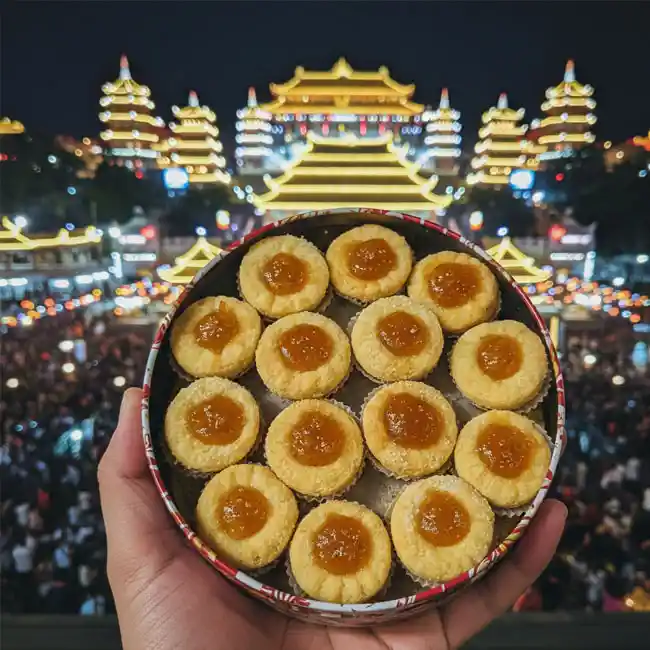
🍍 Recipe 2: Melt-in-the-Mouth Pineapple Tarts (Tat Nanas)
🍍 About this Recipe
In Malaysia, it isn't a holiday unless there are Pineapple Tarts on the table. These are the gold standard of festive cookies. We aren't talking about a hard biscuit; we’re talking about a buttery, crumbly pastry that practically dissolves the moment it hits your tongue, paired with a zesty, caramelized pineapple jam. For a holiday party, these are perfect because they are bite-sized and look like little nuggets of gold.
🍍 Ingredients & Measurements
For the Homemade Pineapple Jam:
• 2 large ripe pineapples (grated and drained of excess juice)
• 200 grams granulated sugar (adjust based on fruit sweetness)
• 1 cinnamon stick
• 2 star anise
• 1 tablespoon lemon juice
For the Buttery Pastry:
• 250 grams salted butter (cold and cubed)
• 350 grams all-purpose flour
• 50 grams cornstarch
• 2 egg yolks
• 1 tablespoon icing sugar
• 1/2 teaspoon vanilla extract
For the Egg Wash:
• 1 egg yolk mixed with 1 teaspoon water
🍍 Step-by-Step Instructions
1.The Jam (The Heart): Place the grated pineapple, cinnamon, and star anise in a pot. Cook over medium heat until the liquid evaporates. Add sugar and lemon juice. Stir constantly until it becomes a thick, golden, and sticky paste. Let it cool completely and roll into small balls.
2.The Pastry: Sift the flour, cornstarch, and icing sugar. Rub the cold butter into the flour using your fingertips until it looks like fine breadcrumbs.
3.Bind it: Add the egg yolks and vanilla. Mix gently until a soft dough forms. Do not overwork it, or it will become tough! Let the dough rest in the fridge for 30 minutes.
4.Shape: Take a small piece of dough, flatten it, place a pineapple jam ball in the center, and roll it into a smooth ball or use a tart mold for a decorative pattern.
5.Bake: Arrange on a baking sheet. Brush the tops with the egg wash for a golden glow. Bake at 330 degrees Fahrenheit / 165 degrees Celsius for 18-20 minutes until lightly golden.
🍍 Tips & Mistakes to Avoid
• Patience with the Jam: Don't rush the jam! If it’s too wet, the moisture will leak into the pastry, making it soggy. It should be dry enough to roll into balls.
• Cold Butter is Key: Use cold butter for the pastry. This creates tiny pockets of fat that result in that "melt-in-the-mouth" texture.
• Don't Over-Bake: These tarts should be pale gold, not brown. If they get too dark, the pastry loses its delicate crumble.
• Weight Ratio: Try to keep the ratio of dough to jam balanced (usually about 10g dough to 6g jam).
🍍 FAQ
Q1.Can I use canned pineapple?
You can, but fresh pineapple has a much better fiber structure and a more complex tang.
Q2.Why did my tarts crack?
Usually, this means the oven was too hot or the dough was too dry. Adding a teaspoon of cold water to the dough can help.
🍍 Summary
These Pineapple Tarts are addictive. They represent prosperity and happiness, making them the most meaningful sweet treat you can serve during the holidays.

🍮 Recipe 3: Glistening Sago Gula Melaka (Palm Sugar Pudding)
🍮 About this Recipe
If you want a dessert that looks like a million dollars but requires zero baking, Sago Gula Melaka is your answer. It is a stunning, translucent pearl pudding drenched in a rich, smoky palm sugar syrup and creamy coconut milk. In a holiday setting, serving these in individual crystal glasses makes for a very sophisticated presentation. It’s the perfect "cooling" dessert after a big, festive meal.
🍮 Ingredients & Measurements
For the Sago Pudding:
• 200 grams small sago pearls (white)
• 1.5 liters water (for boiling)
• A few drops of Pandan extract (optional, for color)
For the Gula Melaka Syrup:
• 200 grams Gula Melaka (Malaysian palm sugar), chopped
• 100 ml water
• 2 Pandan leaves (tied in a knot)
• A pinch of salt
For the Topping:
• 250 ml thick coconut cream
• A pinch of salt
🍮 Step-by-Step Instructions
1.Boil the Sago: Bring the water to a rolling boil. Add the sago pearls. Boil for 10-15 minutes, stirring occasionally so they don't stick to the bottom.
2.Soak: Turn off the heat, cover the pot, and let it sit for another 10 minutes until the white centers of the pearls disappear and they become completely translucent.
3.Rinse: Pour the sago into a fine-mesh sieve and rinse under cold running water to wash away the excess starch. This is what makes the pearls "glisten."
4.Mold: If you want a specific shape, spoon the sago into small ramekins or silicone molds. Chill in the fridge for at least 2 hours until firm.
5.Make the Syrup: Combine Gula Melaka, water, Pandan leaves, and salt in a small saucepan. Simmer until the sugar is dissolved and the syrup is thick and glossy. Let it cool.
6.Prep the Coconut: Mix the coconut cream with a pinch of salt (the saltiness is crucial to balance the sugar).
7.Assemble: Unmold the sago onto a serving plate or leave in the glass. Pour a generous amount of coconut cream over it, followed by a drizzle of the dark palm sugar syrup.
🍮 Tips & Mistakes to Avoid
• The Rinse is Crucial: If you don't rinse the sago thoroughly, you’ll end up with a sticky, gummy block rather than individual glistening pearls.
• Salt the Coconut: Do not skip the salt in the coconut cream! It provides the "umami" contrast that makes the palm sugar flavor explode.
• Don't Overcook: If you boil the sago for too long, it will simply dissolve into the water. Stop once they are mostly clear.
• Use Real Gula Melaka: Don't substitute with brown sugar. Real palm sugar has a fermented, smoky depth that defines this dish.
🍮 FAQ
Q1.Can I color the sago?
Yes! You can add a drop of food coloring to the boiling water to make pink, green, or blue pearls for a festive theme.
Q2.Is this vegan?
Yes! This is a naturally vegan and gluten-free dessert.
🍮 Summary
Sago Gula Melaka is the epitome of "simple elegance." Its striking contrast of white pearls, creamy white coconut, and dark amber syrup makes it a visual and culinary delight.
🥂 Final Thoughts
Bringing the flavors of Malaysia to your holiday table is easier than you think. Whether it’s the towering beauty of the Pandan Layer Cake, the buttery joy of Pineapple Tarts, or the cooling elegance of Sago Gula Melaka, these treats offer something truly special.
The best part about these recipes? They are made for sharing. In Malaysia, we believe that food tastes better when eaten together. Don’t feel pressured to make all three at once! Start with the one that speaks to you the most, and I promise, once you smell that Pandan or taste that Gula Melaka, you’ll be hooked.
I’d love to see your holiday spreads! Try these out, share them with your loved ones, and let me know which one was the biggest hit at your party. Happy baking and Happy Holidays!
| 🇲🇾 🍨 < Back |