
🏠 Home > 🗺️ Recipes > 🍞 Breads > 🇬🇳 Guinea Breads
🇬🇳 🍞 Guinea Breads Recipes
Published by Supakorn | Updated: March 2026
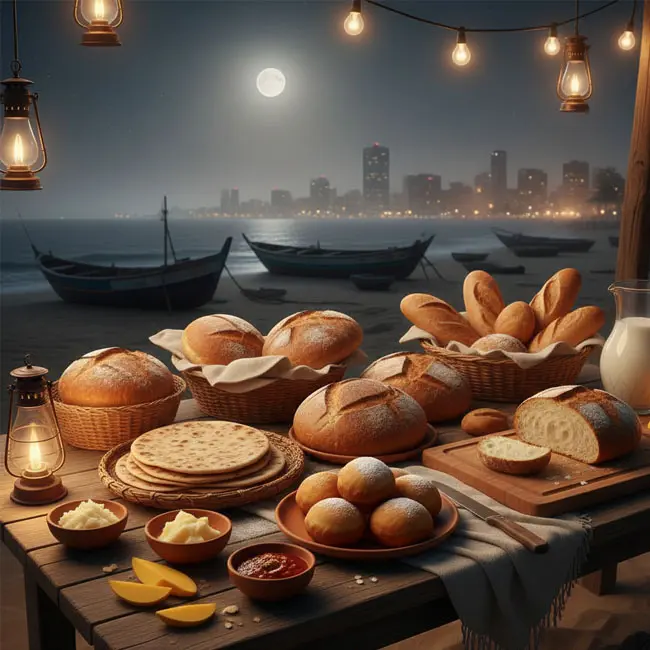
When you think of a tropical West African nation like Guinea, your mind probably goes straight to lush jungles, vibrant textiles, and spicy peanut stews. But there is a scent that wafts through the humid air of Conakry every single morning that might surprise you: the smell of fresh, yeasty, crusty bread.
In Guinea, bread isn’t just a side dish; it’s the heartbeat of the morning. It’s the fuel for the workers, the comfort for the children, and the ultimate vessel for every savory sauce the country has to offer. Guinean bread culture is a fascinating mix of ancient African grain traditions and a lasting French colonial influence, creating a "bread-scape" that you won't find anywhere else in the world. Grab a seat, maybe a little butter, and let’s break bread (literally) as we explore the doughy delights of Guinea.
🥖 The Daily Loaf: Bread as a Way of Life 🗺️📚
If you want to understand Guinea, you have to watch the "Bread Rush" at sunrise. In the capital of Conakry and in smaller villages across the Fouta Djallon highlands, the day doesn't truly start until the first batch of bread leaves the wood-fired ovens.
🏠 The "Boulangerie" Culture
Because of its history, Guinea has inherited a deep love for the French-style baguette, but they’ve given it a local soul. You won't find many fancy, high-tech bakeries here. Instead, you’ll find local boulangeries—often small brick buildings with a massive, dome-shaped clay oven inside. The bakers work through the night, kneading massive mounds of dough by hand, so that by 6:00 AM, the baskets are overflowing with warm loaves.
🚲 The Bread Vendors
One of the most iconic sights in Guinea is the bread vendor. Usually, young men or women cycle through the streets or walk with massive wooden crates balanced perfectly on their heads. They shout "Pain! Pain!" (French for bread), and neighbors come running out of their gates to grab a few fresh sticks for breakfast. It’s a social ritual that connects the whole community.
🥯 Iconic Guinean Breads You Must Try
Guinean bread ranges from the long and crusty to the soft and sweet. Each has a specific "job" to do at the table.
🥖 1. Tapalapa (The King of Breads)
If you only try one bread in West Africa, let it be Tapalapa. This is the heavy-duty brother of the French baguette.
• The Texture: It’s denser, heavier, and has a much more "toothy" crust than a standard baguette.
• The Secret: It’s often made with a blend of wheat flour and sometimes a bit of millet or maize flour, giving it a slightly nutty undertone. It’s cooked in traditional wood-fired ovens which give the crust a smoky, charred flavor that a modern electric oven just can't replicate.
• Best For: Scooping up heavy stews. It doesn't get soggy easily!
🍞 2. Pain Paillasse
This is the "rustic" loaf of the country. It’s usually shaped into thick, twisted batons. It has a very airy interior with large "bubbles," making it perfect for soaking up the oils from a Sauce Feuille (leafy green soup). It’s the kind of bread that sounds like a crackling fire when you squeeze it.
🥐 3. Senegalese-Style Baguette
Due to the close proximity and shared history with Senegal, you’ll find a lighter, fluffier version of the baguette in many Guinean markets. It’s thinner and more brittle, often eaten with a simple spread of chocolate-hazelnut paste or local butter for a quick snack.
🥯 4. Sweet "Cake" Breads
In the afternoon, you might find vendors selling smaller, round loaves that are slightly enriched with sugar and sometimes a hint of coconut or nutmeg. These aren't quite "dessert," but they are sweet enough to be enjoyed on their own with a bit of hot tea.
🧈 How Guineans Eat Their Bread
In the West, we might use bread for a sandwich. In Guinea, bread is an active participant in the meal.
🍳 The Breakfast Sandwich (The "Sandwichier")
On many street corners, you’ll find a "Sandwichier" stand. The vendor will take a half-loaf of Tapalapa, slice it open, and fill it with whatever is fresh that morning. Common fillings include:
• Spicy Omelets: Fried with onions and tiny, fiery peppers.
• Spaghetti: Yes, you read that right! A "spaghetti sandwich" is a popular, carb-heavy fuel for laborers.
• Mayonnaise and Onion: A simple, creamy, and pungent local favorite.
🥣 The "Scoop" Method
During lunch and dinner, bread replaces the fork. While rice is the primary starch in Guinea, bread is often served on the side of fish or meat dishes. You tear off a hunk of bread, use your thumb to create a small "well," and use it to grab a piece of meat and a bit of sauce. It’s a skill that takes practice but makes the meal taste ten times better.
🏺 The Traditional Baking Process: Clay and Wood
What makes Guinean bread special isn't just the flour—it’s the heat.
Many traditional bakeries use traditional clay ovens. These ovens are preheated by burning local hardwoods inside them. Once the wood has turned to glowing embers, the ash is swept out, and the dough is slid onto the hot stone floor.
The result? A bread that has a thick, caramelized crust and a subtle aroma of woodsmoke. This is the "terroir" of Guinean bread—a flavor that is inextricably linked to the land and the trees of the region.
🌾 Grains of the Land: Beyond Just Wheat
While wheat is the primary ingredient for modern breads, Guinea has a rich history of using indigenous grains. In more rural areas, you might find "bread-adjacent" foods made from:
1.Millet: Creating a flatter, heartier bread that is incredibly nutritious.
2.Sorghum: Used to make a slightly sour, fermented bread that pairs perfectly with spicy soups.
3.Fonio: Known as the "hungry rice," this ancient grain is sometimes ground into flour to add a delicate, couscous-like texture to baked goods.
💡 Bread Etiquette and Culture
If you’re sharing bread with a Guinean family, keep these "unwritten rules" in mind:
• Never Waste a Crumb: Bread is seen as a blessing. If a piece falls, it’s often picked up, brushed off, and eaten (or given to an animal). Throwing away bread is considered very poor form.
• Breaking, Not Cutting: It’s much more common to see people "break" bread with their hands than to see it sliced with a knife at the table. It reinforces the communal, "family-style" nature of the meal.
• Freshness is King: Guineans rarely eat "day-old" bread. Bread is bought fresh for every meal. If a loaf goes stale, it’s usually soaked in milk or water to be used in a porridge.
🧐 Frequently Asked Questions (FAQ)
❓ Q1. Is Tapalapa bread vegan?
Yes! Traditionally, Tapalapa is made with a very simple list of ingredients: flour, water, salt, and yeast. Unlike some Western "brioche" styles, it doesn't use eggs or butter, making it a perfect staple for vegans.
❓ Q2. How long does Guinean bread stay fresh?
Because it contains no preservatives, Guinean bread is best eaten within 6–8 hours of coming out of the oven. By the next day, a Tapalapa loaf becomes very hard—great for dipping into soup, but not so great for a sandwich!
❓ Q3. Can I find "whole wheat" bread in Guinea?
While the traditional Tapalapa uses a more "rustic" flour that contains more bran than highly processed white flour, Western-style "100% Whole Wheat" loaves are less common in traditional street markets and are usually found only in high-end city supermarkets.
🍞 Fresh from the Oven: 3 Quick Guinean Breads for Your Weeknight
👉 Enjoy 3 Weeknight Guinean Breads
| 🌐 🍞 < Back | 🇬🇳 🥗 < Previous | Next > 🍱 🇬🇳 |