
🏠 Home > 🗺️ Recipes > 🍱 Snacks > 🇬🇼 Guinea-Bissau Snacks
🇬🇼 🍱 Guinea-Bissau Snacks Recipes
Published by Supakorn | Updated: February 2026
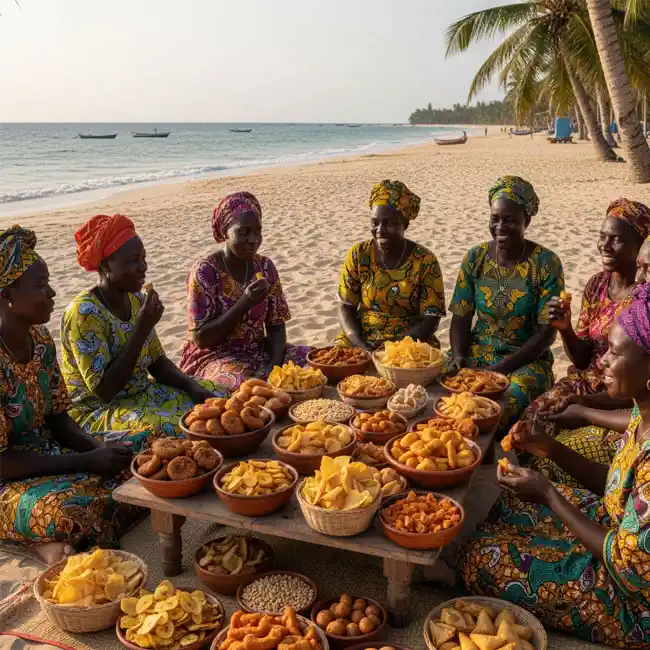
🍱 🇬🇼 Welcome to the Snack Side of Guinea-Bissau
Hey there, food explorer! 👋
When people think about Guinea-Bissau, they often imagine rich stews, rice dishes, and coastal seafood. But there’s another side of everyday eating that deserves the spotlight — snacks. Small bites, simple treats, street food classics, and homemade nibbles that quietly shape daily life across the country.
In Guinea-Bissau, snacks are not rushed or overly processed. They’re tied to routine, community, and availability. You snack while chatting. You snack while walking. You snack while waiting for dinner. And most importantly, you snack together.
This page is a relaxed walk through the snack culture of Guinea-Bissau — what people eat between meals, what children buy after school, what families prepare at home, and what vendors proudly sell on the street. No recipes yet, no complicated techniques — just culture, context, and flavour.
🧡🥜 The Heart of Snacking in Guinea-Bissau
🌱 Rooted in Local Ingredients
Snacking in Guinea-Bissau begins with what grows well locally. The country’s tropical climate supports cassava, plantains, peanuts, corn, coconuts, bananas, and a wide variety of fruits. These ingredients are affordable, accessible, and familiar — which is exactly why they dominate snack culture.
Instead of packaged snacks, people rely on:
• Roots like cassava
• Fruits like banana, mango, papaya
• Nuts like peanuts and cashews
• Simple doughs made from flour or cornmeal
Snacks here feel close to the land — unpretentious, nourishing, and practical.
🤝️ Snacking as a Social Habit
In Guinea-Bissau, food is rarely just fuel. Snacks are shared, offered, and exchanged. A bowl of roasted peanuts might sit on a table while conversations flow. A child buys fried dough balls and shares them with friends. A neighbour brings coconut candy over without needing a reason.
Snacks mark moments:
• After school
• During long afternoons
• At celebrations and festivals
• On street corners and markets
They are small gestures of hospitality — easy to make, easy to share.
🛣️🏘️ Street Food vs Homemade Snacks
🚶♂ Street Snacks
Street food is everywhere in Bissau and smaller towns. Vendors sell snacks from trays, baskets, or small stalls. Everything is meant to be eaten quickly and freshly — often wrapped in paper or leaves.
Street snacks are usually:
• Fried
• Warm
• Crunchy or chewy
• Affordable
They’re designed for movement and conversation.
🏠 Homemade Snacks
At home, snacks are softer, calmer, and often slightly sweeter. Families make fritters, cakes, or nut-based treats using basic pantry ingredients. These snacks are deeply tied to memory — what someone’s mother or grandmother used to make.
Homemade snacks are about comfort, not speed.
💥✨ Iconic Snacks You’ll Find in Guinea-Bissau
🍌 Fried Plantain Chips (Banana Frita)
Plantains are one of the most beloved snack ingredients in Guinea-Bissau. When sliced and fried, they transform into golden, crispy bites with caramelized edges.
The vibe:
Sweet-savory, crunchy, deeply satisfying.
You’ll find thin crispy chips and thicker, softer slices depending on the vendor. Some are lightly salted, others lean into their natural sweetness.
Why they’re everywhere:
Plantains are affordable, filling, and versatile — perfect for street food.
🥜 Peanut Snacks & Roasted Groundnuts (Mancarra)
Peanuts are everywhere in Guinea-Bissau. As snacks, they appear in many forms:
• Roasted peanuts
• Boiled peanuts
• Peanut clusters bound with caramelized sugar
The vibe:
Nutty, earthy, addictive.
These snacks are eaten slowly, often while chatting or walking. They’re simple but deeply comforting.
Cultural note:
Peanuts aren’t just snacks — they’re a symbol of local agriculture and food security.
🍠 Cassava Chips (Batata Frita da Mandioca)
Cassava is a survival crop across West Africa, and in Guinea-Bissau it becomes a beloved snack.
The vibe:
Rustic, crunchy, slightly sweet.
Cassava chips have a denser texture than potato chips and a unique chew. Some vendors season them lightly, others keep them plain.
Why people love them:
They’re hearty, affordable, and feel “real” — not processed.
🍩 Puff-Puff-Style Dough Balls
These soft, fried dough balls are a familiar sight at gatherings and street stalls. Lightly sweet, airy inside, golden outside.
The vibe:
Comfort food, celebratory, nostalgic.
They’re often eaten warm, sometimes plain, sometimes dusted lightly with sugar.
Social role:
Perfect for sharing — one bowl feeds many hands.
🥥 Coconut Slices & Coconut Candy
With palm trees lining the coast, coconut snacks are natural favourites.
• Fresh coconut slices are cooling and refreshing.
• Coconut candy is chewy, caramelized, and fragrant.
The vibe:
Tropical, simple, refreshing.
Coconut snacks often appear during hot afternoons when heavy food feels like too much.
🥔 Fried Bean Cakes
Made from mashed beans (often black-eyed peas), these fritters are crispy outside and soft inside.
The vibe:
Savory, protein-rich, filling.
They blur the line between snack and small meal and are often enjoyed plain.
Cultural connection:
Bean fritters link Guinea-Bissau to broader West African food traditions.
🌽 Corn & Groundnut Cakes
These dense little cakes combine cornmeal and ground peanuts.
The vibe:
Nutty, filling, homemade.
They’re usually made at home and packed for travel or long days.
Why they matter:
They show how snacks can also be practical nourishment.
🥭 Tropical Fruit Snacks
Sometimes the best snack is just fruit.
Common choices include:
• Mango
• Papaya
• Banana
• Pineapple
• Guava
Often chopped and shared, sometimes sprinkled with lime or crushed peanuts.
The vibe:
Fresh, juicy, natural.
Fruit snacks double as dessert in many households.
🍠 Cassava Balls & Cassava Fritters
Grated cassava mixed with sugar or coconut, shaped and fried.
The vibe:
Chewy, slightly sweet, festival-ready.
These snacks are especially popular at fairs and celebrations.
🛣️ Everyday Street Bites
Not every snack has a name. Some are simply:
• Roasted corn
• Boiled cassava
• Fried dough scraps
• Spiced legumes
The charm:
They’re quick, honest, and deeply local.
🍱🏡 How Snacks Fit into Daily Life
🌞 Afternoon Energy
Snacks bridge the long gap between meals in hot weather.
👶 After-School Treats
Children often buy or receive small snacks after school.
🎉 Celebrations & Gatherings
Fritters, dough balls, and sweet treats appear at parties and holidays.
🤝 Hospitality
Offering snacks is a quiet way of saying “you’re welcome here.”
🧠🍴 What Guinea-Bissau Snacks Teach Us
Snacks in Guinea-Bissau reflect:
• Resourcefulness — using what’s available
• Community — food is meant to be shared
• Balance — sweet and savory, soft and crunchy
• Respect for ingredients — minimal processing, real food
They’re not flashy, but they’re deeply human.
🏘️🍱 Bringing the Snack Spirit Home
🌱 Keep It Simple
You don’t need rare ingredients to capture the vibe.
🔥 Focus on Texture
Crunch, chew, softness — contrast matters.
🧂 Season Lightly
Let ingredients shine.
🤲 Share Everything
Snacks taste better when shared.
❓🍱 Frequently Asked Questions
❓ Q1.Are Guinea-Bissau snacks mostly fried?
Many are, but not all. Fruits, nuts, and boiled snacks are common too.
❓ Q2.Are snacks sweet or savory?
Both — often in the same sitting.
❓ Q3.Are these everyday foods?
Yes. Snacks are woven into daily routines.
🌿✨ Final Thoughts
Guinea-Bissau snacks may look simple, but they carry deep meaning. They tell stories of land, family, climate, and creativity. From crunchy cassava chips to soft dough balls and juicy fruit, each snack reflects a way of living — unhurried, communal, and grounded.
🍱 Tasty Guinea-Bissau Snack Recipes You Can Make at Home
| 🌐 🍱 < Back | 🇬🇼 🍞 < Previous | Next > 🥘 🇬🇼 |