
🏠 Home > 🗺️ Recipes > 🍞 Breads > 🇬🇹 Guatemala Breads
🇬🇹 🍞 Guatemala Breads Recipes
Published by Supakorn | Updated: February 2026
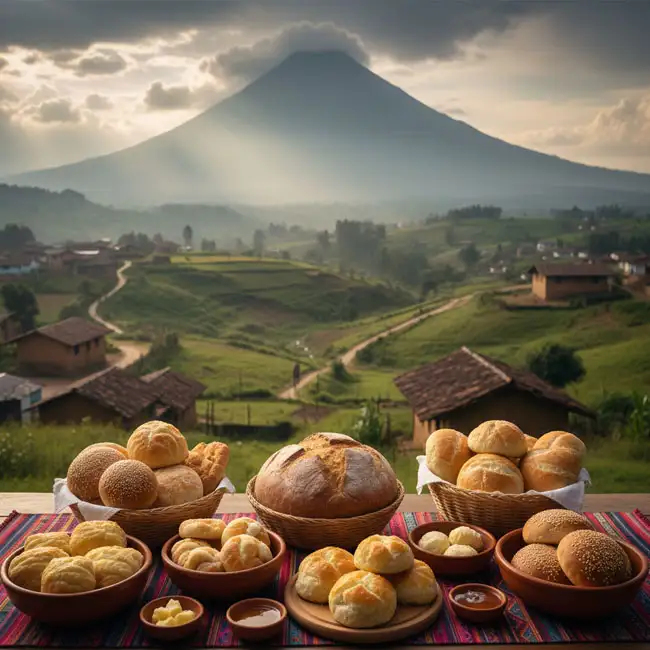
🌟 More Than Just Baked Goods
Hey, bread enthusiasts and world travelers! We’ve explored the savory start of a Guatemalan meal and the sweet end, but now we're focusing on the foundation—the carb companion that is present at every meal, in some form or another. I'm talking about Guatemalan Breads.
Now, before you think of typical European loaves, let's reset our expectations. In Guatemala, the world of "bread" is dual: it’s split between the ancient, ever-present corn tortilla and the diverse, delicious, and often sweet world of pan (wheat-based bread). Both are staples, but the history, culture, and context surrounding each are completely different.
The pan tradition is largely a delicious inheritance from Spanish colonial times, a testament to European baking techniques adapted to local ingredients and tastes. This resulted in the creation of pan dulce (sweet bread), which isn’t just a food item; it’s a cultural ritual, a social lubricant, and the centerpiece of the vital afternoon coffee break. Get ready to explore the aroma, the ritual, and the sheer variety of baked goods that make the Guatemalan panadería a true national treasure!
🌽 🌾 The Dual Foundation: Corn vs. Wheat
To discuss Guatemalan "breads," we have to acknowledge the great historical divide between the indigenous staple and the colonial introduction.
☀️ The Eternal Queen: The Corn Tortilla
For millennia, the corn tortilla has been the foundational "bread" of Guatemala, a legacy inherited from the Mayan people. It is the carbohydrate, the utensil, and the side dish for countless meals.
• Nixtamalization: The key to the tortilla is nixtamalization, the ancient process where dried corn is cooked in an alkaline solution (usually limestone). This process unlocks crucial nutrients, makes the corn digestible, and creates the distinct flavor and texture of the masa (dough).
• The Daily Grind: Tortillas are made fresh, often twice a day, in the home or at specialized tortillerías. They are cooked on a comal (a flat griddle), served hot, and eaten with everything—from soups and stews to beans and guacamol.
• Cultural Weight: The tortilla is subsistence, culture, and identity. It is rarely thought of as a simple side, but rather the essential matrix upon which the entire meal rests.
🥖 The Colonial Cousin: Pan (Wheat Bread)
When the Spanish arrived, they brought wheat and European baking traditions. This led to the development of pan, which, unlike the savory tortilla, found its niche largely in the sweet sphere.
• Flour Adaptation: The challenge of growing wheat in a tropical climate led to adaptations in recipes, often resulting in breads that are slightly denser or richer than their European ancestors.
• The Pan Dulce Focus: The majority of non-tortilla bread consumed in Guatemala falls under the umbrella of pan dulce (sweet bread). This isn't just one item; it's a massive, diverse category of pastries, rolls, and cakes designed to pair perfectly with coffee.
☕ 🍞 The Panadería Culture: A Social Institution
The panadería (bakery) in Guatemala is much more than a place to buy bread; it’s a social and cultural institution, particularly revolving around the ritual of la hora del café (coffee time).
🛍️ The Art of the Scoop
Walking into a traditional Guatemalan panadería is an experience for all the senses. Unlike many bakeries where you wait to be served, here, the tradition is interactive and self-service.
• The Tongs and Tray: You grab a small metal tray and a pair of tongs. The breads—hundreds of them, arranged on large, tiered shelves—are there for the taking. You walk along, scooping up the varieties that catch your eye: the pan de yemas, the champurradas, the cuernitos.
• A Feast for the Eyes: The breads are often decorated with bright colors, sugar glazes, sprinkles, and unique shapes, reflecting the joyful, artistic side of the local culture. It’s an exercise in restrained indulgence, as you try to pick only a few from the massive selection.
• The Weighing: You hand your tray to the clerk, who weighs the contents. You pay by weight, not by the piece—a tradition that encourages sampling a wide variety.
⏱️ La Hora del Café: The Sacred Pause
The afternoon coffee break is the defining moment for pan dulce. Around 4:00 PM, life slows down.
• Sweet Companionship: This is the moment to gather with family or friends to enjoy a cup of strong, sweet, locally grown coffee alongside a selection of pan dulce. The breads are designed to be dunked, softening the sometimes dry texture and dissolving the sugar into the hot beverage.
• Simple Socializing: This ritual is about simple pleasure and connection. It’s a moment of respite that centers around warmth, conversation, and the comforting, familiar aroma of cinnamon and panela (brown sugar).
🥨 🥐 The Standouts: Essential Pan Dulce Varieties
The world of pan dulce is huge, but a few staples stand out as essential must-tries, each with its own character and perfect use.
🍪 Champurradas: The Ultimate Dipping Bread
If there is one bread designed specifically for coffee, it’s the champurrada.
• The Form: It’s a large, flat, thin, and very crunchy cookie-like bread. It looks simple but is profoundly satisfying.
• The Purpose: The crunch and texture make it absolutely perfect for dunking. It quickly absorbs the coffee without dissolving immediately, softening just enough to provide a sweet, buttery, and slightly porous bite. It’s a ritual: dip, wait a second, and enjoy.
🥚 Pan de Yemas: The Rich, Yellow Roll
Pan de yemas literally translates to "yolk bread," and that’s exactly what gives it its characteristic color and flavor.
• The Ingredient: This bread is enriched with extra egg yolks, making the dough wonderfully soft, tender, and subtly sweet. It often has a lovely yellow hue and is traditionally shaped into a small, round loaf or a roll.
• The Use: It’s a versatile, all-purpose sweet bread that is delicious on its own or perfect for making torrejas (the Guatemalan version of French toast) during holidays. Its soft crumb soaks up syrup beautifully.
🌟 Shecas: The Quetzaltenango Classic
Hailing from the western highlands, particularly the region around Quetzaltenango (Xela), shecas are a highly regional and much-loved bread.
• The Flavor: They are small, round, dense rolls often flavored with a hint of anise (or sometimes cinnamon). They are slightly sweeter than a basic dinner roll but less decorated than other pan dulce.
• The Density: Their texture is firm and dense, making them incredibly satisfying. They are a staple breakfast item, often eaten with savory sides like frijoles volteados (refried beans) or queso fresco (fresh cheese), bridging the gap between sweet and savory.
🌀 Elotes and Cuernitos: Shapes and Glazes
The names of many pan dulce varieties describe their appearance, often mimicking European shapes but with a distinct Central American flavor profile.
• Elotes (Corn Cobs): These are sweet, elongated loaves that often have a distinctive glazed, criss-crossed top that resembles the kernels on a corn cob. They are soft and airy, perfect for tearing and sharing.
• Cuernitos (Little Horns): These are the Guatemalan version of a crescent roll, though they are usually denser and much sweeter than a French croissant. They are often brushed with a sweet glaze and sometimes topped with sprinkles or crystallized sugar.
🥖 🍮 Special Occasion and Regional Breads
Beyond the daily pan dulce, certain breads are reserved for specific times of the year, adding to the cultural tapestry.
💀 Pan de Muerto: The Bread of the Dead
• The Occasion: This bread is integral to the celebration of Día de Muertos (Day of the Dead) on November 1st.
• The Bread: It is a soft, often slightly dense, sweet bread that is baked specifically for the occasion. It is often simply shaped and topped with a light sugar glaze or sesame seeds.
• The Tradition: The bread is placed on family altars as an offering to the spirits of deceased loved ones. It is a symbol of communion and a delicious way to honor memory. While the concept is shared with Mexico, the Guatemalan version tends to be less elaborate in its bone-like decorations.
🥖 Pan Francés (French Bread): The Savory Counterpart
While the sweet breads get all the attention, a simple, savory wheat bread exists, known as pan francés or pan de manteca.
• The Use: This is the standard loaf used for sandwiches, particularly the shucos (the famous Guatemalan "dirty" hot dogs, though here it refers to the messy, stuffed sandwich). It’s usually a crusty, slightly airy baguette or roll, reflecting the practical need for a savory carrier.
• The Context: It is less common in the panadería as a feature and more of a staple used in street food and home cooking for savory preparations.
In conclusion, the world of Guatemalan bread is a dynamic, delicious story of fusion—where the ancient, nourishing tortilla reigns supreme in the savory realm, and the charming, abundant pan dulce holds court during the afternoon social break. It's a cuisine that embraces its history, offering something comforting, simple, and satisfying at every table. To truly experience Guatemala is to stand in a bustling panadería, tray and tongs in hand, choosing your perfect sweet companion for la hora del café.
❓ FAQ: Your Guatemalan Breads Questions Answered
Q1: Is the corn tortilla considered a type of bread in Guatemala?
A: Culturally and functionally, yes, the corn tortilla is the staple bread of Guatemala, serving as the primary source of carbohydrate and a core component of nearly every savory meal. However, when Guatemalans refer to pan, they are almost always referring to wheat-based bread or pan dulce (sweet bread), which is a separate tradition introduced by the Spanish. So, the tortilla is the original "bread," but pan is the word for the baked wheat product.
Q2: Why is pan dulce so much more common than savory wheat bread in Guatemalan bakeries?
A: The tradition of pan dulce is deeply tied to the social ritual of la hora del café (the afternoon coffee break). The sweet breads are specifically designed to be enjoyed with the strong, black, often sweetened coffee. Savory wheat bread (pan francés) is mainly used for practical, functional items like sandwiches, while the pan dulce is the focus of indulgence, tradition, and social gathering, making it the star of the panadería.
Q3: How is the Guatemalan panadería experience different from visiting a bakery in Europe or North America?
A: The main difference is the self-service tradition of using a tray and tongs to select your own items. In a typical Guatemalan panadería, customers are encouraged to browse and select a diverse mix of pan dulce items from large, open shelves. Payment is often calculated by weight rather than by the piece, encouraging customers to sample a greater variety of the many unique shapes and flavors available.
🍞 Baking Bliss: Traditional Guatemalan Breads for Your Daily Table
👉 View 3 Family Guatemala Breads
| 🌐 🍞 < Back | 🇬🇹 🥗 < Previous | Next > 🍱 🇬🇹 |