
🏠 Home > 🗺️ Recipes > 🍨 Desserts > 🇬🇩 Grenada Desserts
🇬🇩 🍨 Grenada Desserts Recipes
Published by Supakorn | Updated: April 2026
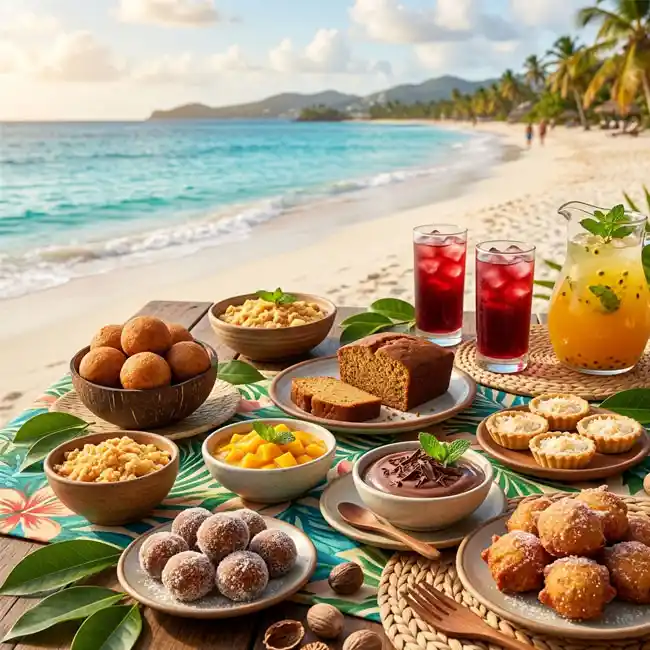
If you’ve ever closed your eyes and imagined what a tropical paradise tastes like, chances are your taste buds are drifting toward the island of Grenada. Known globally as the "Spice Isle," this vibrant Caribbean gem isn’t just about breathtaking beaches and lush rainforests—it is a literal playground for anyone with a sweet tooth.
When we talk about Grenada’s dessert culture, we aren't just talking about sugar. We are talking about a deep, soulful connection to the land. This is a place where the air smells faintly of nutmeg and mace, where cocoa pods grow as thick as your forearm, and where every backyard seems to have a fruit tree ready to be transformed into something magical.
In this deep dive, we’re going to walk through the winding paths of Grenadian sweets. We’ll explore why the culture here is so obsessed with spice, how the history of the island shaped what’s on the plate today, and why you can’t talk about dessert here without talking about the soil itself. So, grab a glass of fruit juice, get comfortable, and let’s take a journey to the sweetest corners of the Spice Isle! 🇬🇩✨
🏺🏝️ The Heart of the Spice Isle: A Cultural Sweet Spot 🇬🇩 🍨
To understand Grenada’s desserts, you first have to understand the vibe of the island. Grenada is unique because it is one of the world's largest producers of nutmeg. That isn't just a fun fact for a geography quiz; it’s the DNA of their culinary world. Nutmeg, cinnamon, ginger, and cloves find their way into almost every sweet treat, giving Grenadian desserts a warm, earthy, and aromatic profile that sets them apart from the rest of the Caribbean.
The "eating and living" philosophy in Grenada is all about "farm-to-table" before it was even a trendy buzzword. People here live in harmony with the seasons. If the mangoes are ripe, you better believe there’s mango fudge or stewed mango on every table. If the cocoa harvest is in full swing, the scent of roasting beans fills the air.
Dessert isn’t just a course at the end of a meal in Grenada; it’s a social event. It’s the "sweet hand" of a grandmother making a batch of coconut drops for the neighborhood kids. It’s the street vendors selling spice cake near the harbor. It’s a celebration of heritage, resilience, and the incredible bounty that this volcanic soil provides.
🍫 From Tree to Table: The Legend of Grenadian Cocoa
You can’t mention Grenada without talking about chocolate. While many countries export their raw beans, Grenada has become a pioneer in the "Tree-to-Bar" movement. This means the cocoa is grown, fermented, dried, and turned into world-class chocolate right there on the island.
The flavor profile of Grenadian cocoa is intense, fruity, and incredibly rich. This isn't your average supermarket candy bar. When used in desserts, this chocolate brings a complexity that is unmatched. Whether it’s a simple cocoa tea (which is more of a thick, spiced breakfast dessert) or a decadent chocolate mousse found in a high-end resort in Grand Anse, the cocoa is the undisputed king.
Visiting the estates, like the Belmont Estate or the Grenada Chocolate Company, is like a pilgrimage for foodies. You see the colorful pods hanging from the trees and then taste the finished product. It’s a full-circle experience that makes every bite of chocolate cake feel like you’re partaking in the island’s history.
🍮 Must-Try Dessert Icons of Grenada
While there are dozens of treats to explore, a few stand out as the true ambassadors of Grenadian sweetness. These are the heavy hitters—the ones that locals crave and tourists never forget.
🌰 The Nutmeg Ice Cream Phenomenon
If there is one flavor that defines the island, it is Nutmeg Ice Cream. It sounds simple, but the first time you try it, your brain has to recalibrate. It’s creamy, cooling, and then—bam!—that warm, peppery, aromatic punch of freshly grated nutmeg hits you. It is the perfect metaphor for the island: cool trade winds mixed with the warmth of the sun and spice.
🥥 Coconut Drops and "Tanty" Favorites
Coconut is the backbone of Caribbean life. In Grenada, "Coconut Drops" are a staple. These are rugged, hand-formed little mounds of grated coconut, sugar, and (of course) spices, baked until they have a crunchy exterior and a chewy, tropical heart. They are the ultimate "grab-and-go" snack for a hike to the Seven Sisters Waterfalls.
🍠 Sweet Potato Pudding: The Comfort Classic
Don’t let the word "vegetable" fool you. Grenadian Sweet Potato Pudding is a masterpiece of texture. It’s dense, moist, and flavored with ginger and coconut milk. It has a "pudding-cake" consistency that feels like a warm hug. Historically, this dish showcases the island’s ability to turn humble, earth-grown starches into something fit for a king.
🥭 Stewed Fruits and Preserves
Because fruit is so abundant, Grenadians are masters of preservation. Stewed guava, mango amchar (the sweet version), and "tamarind balls" are everywhere. Tamarind balls, in particular, are a wild ride for your taste buds—tart, sour, and coated in enough sugar to make them a chewy, addictive delight.
🗺️ Culinary Tourism: Where Sweetness Meets the Scenery
One of the best things about Grenada is that the food and the geography are inseparable. To truly experience these desserts, you have to go to where they are born.
⛰️ The Rainforest Retreats
Imagine sitting on a veranda overlooking the Grand Etang National Park, with the mist rolling over the mountains, enjoying a slice of heavy spice cake. The cool altitude of the rainforest makes the warm spices of the desserts feel even more cozy. Many eco-lodges in the interior serve traditional desserts made with ingredients picked just steps from your table.
⛵ St. George’s Harbor Vibes
The capital, St. George’s, is often called the most beautiful harbor town in the Caribbean. Walking the Carenage (the waterfront), you’ll find small bakeries and vendors. This is the place to find "Spice Cake"—a dark, rich cake packed with raisins, currants, and enough cloves and cinnamon to power a small ship. Pairing a slice of this with the view of the colorful boats in the water is a core memory in the making.
🏖️ Beachside Bliss
On the white sands of Grand Anse or the secluded coves of Carriacou (Grenada’s sister island), the desserts become lighter. Think chilled tropical fruit salads with a lime-zest syrup or a scoop of soursop sorbet. Soursop is a local fruit with a creamy, tangy flavor that tastes like a mix of strawberry, pineapple, and citrus. It’s the ultimate beach snack.
🥣 The Art of the "Sweet Hand": Grenadian Cooking Culture
In Grenada, you’ll often hear people talk about someone having a "sweet hand." This isn't just about being a good cook; it’s about a natural intuition for balance. It’s the ability to know exactly how much nutmeg is "enough" (the answer is usually "a little bit more").
The cooking style is communal. Big batches of fudge—whether it’s ginger fudge, coconut fudge, or chocolate fudge—are made to be shared. The process of making these sweets is often labor-intensive, involving lots of stirring over a hot stove, which is why it’s often a family affair.
There’s also a beautiful lack of pretension. You’ll find world-class chocolate desserts in 5-star restaurants, but you’ll find equally delicious (and perhaps more authentic) treats in the local markets, wrapped in simple brown paper or plastic. Both are essential to the Grenadian experience.
🥥 Beyond the Plate: Exotic Ingredients You Need to Know
To talk about these desserts, we have to give credit to the "stars" of the show.
1.Mace: This is the lacy, red outer covering of the nutmeg seed. It has a more delicate, floral flavor than nutmeg and is often used in lighter cakes and jellies.
2.Cassava: Similar to sweet potato, cassava is used to make "Cassava Pone," a sticky, dense, and delicious cake that is a staple of island life.
3.Soursop: As mentioned, this fruit is a superstar for sorbets and "milky" desserts. It’s known for its medicinal properties, but we love it for its wild, tropical flavor.
4.Sugar Cane: While refined sugar is common now, the history of the island is tied to sugar cane. You can still find raw cane juice or "wet sugar" (unrefined molasses-like sugar) being used to give desserts a deep, smoky sweetness.
🌈 Why Grenada’s Sweet Scene is "Friendly" SEO Gold
If you’re a traveler or a foodie looking for the next big thing, Grenada is it. The trend toward organic, sustainable, and authentic culinary experiences fits Grenada like a glove. The island hasn't lost its soul to mass production. When you eat a dessert here, you are eating the story of the farmers, the spice-pickers, and the "sweet hands" of the local bakers.
For those of us who love exploring the world through our stomachs, the Spice Isle offers a "Long-Tail" of flavors. It’s not just "Caribbean food"—it’s a specific, spiced-up, chocolate-infused subculture that demands its own spotlight.
🤔❓ FAQ: Frequently Asked Questions
Q1: What makes Grenadian desserts different from other Caribbean islands?
A: It really comes down to the volume and variety of fresh spices! While every island uses cinnamon and ginger, Grenada’s massive production of nutmeg and mace means these ingredients are used much more generously. Also, the "Tree-to-Bar" chocolate culture is much more prominent here than on most other islands.
Q2: Are there any "must-visit" spots for someone with a sweet tooth?
A: Absolutely! You have to visit the Belmont Estate for the full chocolate experience. For the best local vibe, head to the Market Square in St. George’s on a Saturday morning to find home-made fudges, tamarind balls, and spice cakes sold by local vendors. Don't leave without trying nutmeg ice cream from a local parlor!
🍨 Sweet Island Bliss: Satisfy Your Cravings with Grenada’s Healthiest Treats
👉 Get 3 Healthy Grenadian Desserts
| 🌐 🍨 < Back | 🇬🇩 🍝 < Previous | Next > 🍷 🇬🇩 |