
🏠 Home > 🗺️ Recipes > 🍱 Snacks > 🇬🇭 Ghana Snacks > 🍱 Koose (Spicy Black-Eyed Pea Fritters) , Awiesu / Banfo Bisi (Fried Cornmeal Snack) , Ghanaian Chips (Savory Chin Chin)
🍱 Taste the Streets of Accra: 3 Unique, Authentic Ghana Snack Recipes for Beginners
Published by Supakorn | Updated: February 2026
Hey there, fellow food adventurer! Ready to spice up your snack game? Then grab a seat, because we’re taking a deep-fried, sweet, and savory journey straight to the heart of Ghanaian street food.
If you've ever walked through a market in Accra, Kumasi, or even the diaspora communities abroad, you know that the air is filled with the irresistible aroma of freshly fried treats. These aren't just snacks; they are expressions of Ghanaian culture—perfect for breakfast, a quick afternoon bite, or a vibrant side dish to a main meal. They are, quite simply, legendary.
The best part? You don't need a passport or a culinary degree to recreate these authentic flavors. These recipes are designed for beginners—using simple techniques and ingredients you can find almost anywhere.
Your Ultimate Ghanaian Snack Menu Awaits!
In this comprehensive guide, we'll dive into the details of three distinct Ghanaian treats that showcase the diversity of the country’s savory and sweet frying traditions. Forget those expensive takeout orders; it's time to make them better at home!
1.Koose (Spicy Black-Eyed Pea Fritters): Savory, light, and protein-rich bean cakes.
2.Awiesu / Banfo Bisi (Fried Cornmeal Snack): A dense, satisfying, fried sweet cornmeal dough.
3.Ghanaian Chips (Savory Chin Chin): The ultra-crunchy, savory fried dough sticks that are impossible to stop eating.
Let’s get cooking!

🔹 Recipe 1: Koose (Spicy Black-Eyed Pea Fritters)
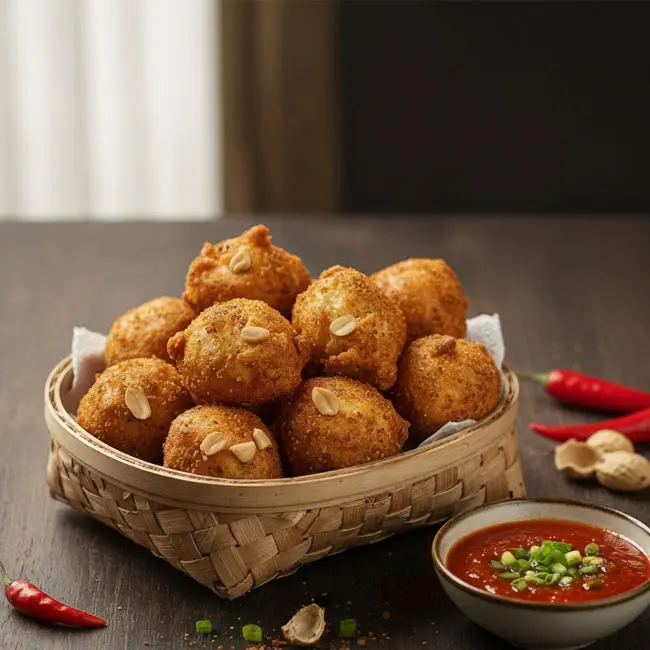
Koose (also known as Akara in other parts of West Africa) is a savory fried fritter made from black-eyed peas (beans). These fluffy, protein-packed bites are a popular breakfast item, often served alongside a porridge like Koko or tucked into a fresh baked roll. They are naturally gluten-free and a fantastic alternative to flour-based fritters.
About this Recipe (Protein-Packed Fluffiness)
The unique texture of Koose comes from whipping air into the bean batter. Unlike a heavy, mashed patty, a properly made Koose should be light and airy on the inside with a crunchy, dark exterior. The flavor is a beautiful blend of bean earthiness, spicy pepper, and aromatic onions.
This recipe simplifies the traditional process of peeling the beans (which is often very time-consuming) by using a quick-soak and blending method, making it beginner-friendly.
Ingredients & Measurements (Yields 15-20 Fritters)
Ingredient - Measurement - Notes
- Dried Black-Eyed Peas 2 cups Soaked overnight, or at least 6 hours
- Small Red Onion 1/2 Roughly chopped
- Scotch Bonnet or Red Chili 1/2 to 1 whole Adjust heat to your preference
- Salt 1 teaspoon To taste
- Baking Powder (optional) 1/2 teaspoon For extra fluffiness
- Water 1/4 - 1/2 cup Added gradually, just enough for blending
- Vegetable Oil 4-6 cups For deep frying
Step-by-Step Instructions
1.Prep the Beans: Place the soaked black-eyed peas (drained) into a high-powered blender or food processor. Tip: You can use canned beans if you’re in a hurry, but dry beans give a better texture.
2.Add Flavor Base: Add the onion, chili pepper, salt, and baking powder (if using) to the blender.
3.Blend the Batter: Add about 1/4 cup of water to the blender. Blend until the mixture is smooth and thick like a heavy pancake batter. You should still see a few small chunks of bean, but the consistency is key—it should be thick enough to hold its shape when dropped from a spoon. Add more water, one tablespoon at a time, only if needed.
4.Whip for Air: Transfer the batter to a large bowl. Using a wooden spoon or a hand whisk, vigorously beat the batter for 5-7 minutes. This is a traditional step and crucial for incorporating air, which makes the Koose light and fluffy (not dense and stodgy). The batter should lighten in color and nearly double in volume.
5.Heat the Oil: In a deep pot, heat the vegetable oil to about 350°F (175°C) over medium heat.
6.Fry the Fritters: Drop tablespoon-sized balls of the batter into the hot oil. Do not overcrowd the pan.
7.Cook to Golden: Fry for about 4-6 minutes, turning frequently, until they are a rich golden-brown and fully cooked through. They should float and turn easily.
8.Drain and Serve: Remove the Koose and drain them on a paper towel-lined plate. Serve immediately while hot!
Tips & Mistakes to Avoid
- Blending Consistency: If the batter is too runny, your Koose will spread out and be flat. If it’s too stiff, it will be dense. The perfect batter is creamy and spoonable.
- The Power of Whipping: Don't skip the whipping step! It’s the secret to making truly fluffy, authentic Koose without relying on too much baking powder.
- Oil Check: If the oil is too hot, the outside will burn before the inside cooks. If it’s too cool, the fritters will soak up oil and be greasy.
- Optional Veggies: For extra flavor, some people mix in a tablespoon of finely chopped spring onion or bell pepper after whipping the batter.
FAQ
Q: Can I peel the black-eyed peas?
A: Yes! Traditionally, the skins are removed, which results in a whiter, silkier batter. To do this, pulse the soaked beans with water in a blender until the skins separate, then manually rub and rinse them off.
Q: Why did my Koose come out flat?
A: The most common reason is that the batter was too thin (too much water was added during blending) or you did not whip enough air into the batter.
Summary
Koose is a savory, satisfying, and filling snack that’s perfect any time of day. It’s a great way to experience a staple West African ingredient transformed into something uniquely delicious.
🔹 Recipe 2: Awiesu / Banfo Bisi (Fried Cornmeal Snack)
Awiesu or Banfo Bisi is a popular fried cornmeal snack, often described as a sweet, dense, fried cake or pudding. It’s a classic northern Ghanaian delicacy, distinct from fritters or chips because it uses cooked and then mixed cornmeal as its base.
About this Recipe (Sweet & Dense Comfort)
This recipe involves a two-step process: cooking a portion of the cornmeal into a thick paste (like a stiff porridge) and then mixing it with raw cornmeal, sugar, and milk to form a moldable dough. The result is a golden-brown exterior and a soft, crumbly, and sweet interior. The flavor is comforting, slightly milky, and reminiscent of a fried cornbread.
It’s often served with roasted peanuts or a side of cold Atadwe (Tiger Nut) milk!
Ingredients & Measurements (Yields 12-15 pieces)
Ingredient - Measurement - Notes
- Fine White Cornmeal 2 1/2 cups Divded (1 cup for cooking, 1.5 cups for dough)
- Water 1 1/4 cups For cooking the cornmeal
- Granulated Sugar 1/2 cup Adjust to taste, or substitute with agave/honey
- Powdered Milk 1/2 cup Adds richness and flavor
- Ground Nutmeg 1/2 teaspoon Essential aromatic
- Salt 1/4 teaspoon To enhance the sweetness
- Vegetable Oil 4-6 cups For deep frying
Step-by-Step Instructions
1.Make the Cornmeal Paste (Dzogbo): In a small saucepan, combine 1 cup of cornmeal with 1 1/4 cups of water. Cook over medium heat, stirring constantly, until the mixture thickens into a very stiff, smooth paste that pulls away from the sides of the pan (about 5-8 minutes). This is called Dzogbo. Remove from heat and let it cool slightly.
2.Mix the Dry Ingredients: In a large bowl, combine the remaining 1.5 cups of raw cornmeal, sugar, powdered milk, nutmeg, and salt. Stir well.
3.Form the Dough: Add the slightly cooled Dzogbo (cooked cornmeal paste) to the dry ingredients. Use your hands to thoroughly knead and mix the two cornmeal parts together. Continue kneading until you have a smooth, homogeneous dough that is easily moldable and not sticky. If it’s too dry, add a splash of water; if too wet, add a little more raw cornmeal.
4.Shape the Awiesu: Pinch off pieces of the dough and roll them into oblong/oval shapes or small, thick logs (about 2-3 inches long and 1 inch thick). Place the molded pieces on a baking sheet.
5.Heat the Oil: In a deep pot, heat the vegetable oil over medium heat to about 325°F (160°C).
6.Fry the Awiesu: Carefully drop the shaped dough into the hot oil in batches.
7.Cook to Golden: Fry for about 6-8 minutes, turning occasionally. Due to the density of the dough, you must fry them on a lower heat than fritters to ensure the center cooks through without burning the outside. They should be a deep golden brown.
8.Drain and Serve: Remove from the oil and drain on a paper towel. Awiesu is best served warm, sometimes dipped in evaporated milk or enjoyed with peanuts.
Tips & Mistakes to Avoid
- Patience with Frying: The Awiesu is denser than most fried snacks. Keep the heat moderate and allow the full cooking time to prevent a raw center.
- The Texture Balance: The dough should be stiff enough to retain its shape perfectly when fried. Do not make it too soft or it will dissolve or become greasy.
- Authentic Cornmeal: Look for fine white cornmeal (not corn flour or polenta). The grind size is important for the final texture.
FAQ
Q: Can I use regular milk instead of powdered milk?
A: You can use liquid milk, but you will need to reduce the amount of water used in the initial Dzogbo to compensate for the added liquid, keeping the dough stiff.
Q: What is Dzogbo?
A: Dzogbo is the cooked cornmeal paste used as the binder in the Awiesu recipe. It gives the final product its unique, dense, yet soft texture.
Summary
Awiesu is a delightful deep-fried corn snack that offers a wonderfully unique texture and flavor profile among Ghanaian street foods—sweet, satisfying, and a true taste of local cooking tradition.

🔹 Recipe 3: Ghanaian Chips (Savory Chin Chin)
Known simply as Ghanaian Chips or Savory Chin Chin, this snack is the quintessential crispy, crunchy, savory treat found at every Ghanaian party, road stand, and home. They are small, deep-fried dough pieces, often shaped into sticks, squares, or diamonds, seasoned with a delightful mix of savory and sweet notes.
About this Recipe (Crunchy, Addictive & Savory)
The beauty of Ghanaian Chips lies in their texture: they should be extremely crunchy without being rock-hard. The dough is typically made with flour, butter/margarine, a little sugar, and flavorings like ginger or nutmeg, but the savory version focuses on salt and butter to create a deliciously addictive chip.
The process is very similar to making biscuits or pastry—it’s all about the dough consistency and the perfect high-heat fry!
Ingredients & Measurements (Yields 1 Large Batch)
Ingredient - Measurement - Notes
- All-Purpose Flour 3 cups (about 375g) Sifted
- Butter or Margarine 1/2 cup (1 stick / 115g) Cubed, chilled is best
- Granulated Sugar 2 tablespoons A small amount balances the salt
- Salt 1 teaspoon To taste
- Baking Powder 1 teaspoon For a slight lift and tenderness
- Ground Nutmeg 1/2 teaspoon (optional) Adds a subtle warmth
- Egg 1 large Lightly beaten
- Water 1/4 - 1/2 cup Added gradually
- Vegetable Oil 4-6 cups For deep frying
Step-by-Step Instructions
1.Combine Dry Ingredients: In a large bowl, whisk together the flour, sugar, salt, baking powder, and nutmeg (if using).
2.Cut in the Fat: Add the cold, cubed butter or margarine to the flour mix. Using your fingertips, a pastry blender, or a stand mixer, cut the butter into the flour until the mixture resembles coarse crumbs or sand. This is key for a tender chip.
3.Form the Dough: Pour in the beaten egg. Start adding the water gradually, one tablespoon at a time, mixing until a stiff, smooth dough forms. Do not over-knead! Knead just enough to bring the dough together (about 2-3 minutes).
4.Rest and Roll (30 mins): Wrap the dough tightly in plastic wrap and let it rest at room temperature for 30 minutes. This allows the gluten to relax, making it easier to roll.
5.Cut the Chips: Divide the dough into 3 or 4 manageable portions. On a lightly floured surface, roll one portion out very thinly (about 1/8 inch thick). Use a knife or a pizza cutter to cut the dough into small, uniform shapes—squares, diamonds, or thin sticks.
6.Fry the Chips: Heat the vegetable oil in a deep pot over medium-high heat. The oil should be hot enough to make the chips sizzle immediately upon dropping.
7.Cook to Golden Crunch: Fry the chips in batches. They will puff up slightly and quickly turn golden. Stir them continuously with a slotted spoon to ensure they brown evenly and crisply on all sides. This takes about 3-5 minutes per batch.
8.Drain and Cool: Remove the chips immediately and drain them on a paper towel-lined plate or a colander. Let them cool completely—they will get significantly crunchier as they cool!
Tips & Mistakes to Avoid
- The Thinness Factor: The thinner you roll the dough, the crunchier your chips will be. Aim for the thickness of a thick pasta sheet.
- The Stiff Dough: The dough must be stiff, not sticky, or your chips will absorb too much oil. If it’s sticky, knead in a little more flour.
- Continuous Stirring: Unlike some other fried doughs, these need constant, gentle stirring while frying to ensure they don't stick together and to achieve that uniform, golden crunch.
FAQ
Q: How do I store Ghanaian Chips?
A: Once completely cool, store them in a very airtight container at room temperature. They can stay fresh and crunchy for up to 3-4 weeks.
Q: Can I make a sweet version?
A: Absolutely! Increase the sugar to 1/2 cup, omit the salt, and add a few drops of vanilla essence. This makes the popular sweet chin chin version.
Summary
Ghanaian Chips (Savory Chin Chin) are a deliciously easy and highly versatile snack. They’re the perfect crunchy treat to have around the house, and your friends will beg you for the recipe!
Final Thoughts
You’ve officially unlocked the secrets to three of the most irresistible and unique Ghanaian snacks! From the savory, fluffy Koose to the dense, sweet Awiesu, and the ultra-crunchy Ghanaian Chips, you now have the skills to bring these authentic street flavors home.
What’s truly wonderful about these recipes is their simplicity. They prove that you don't need complex ingredients or techniques to create profound, delicious food that everyone will love.
Ready to start frying? I recommend starting with the Ghanaian Chips—they store the best and are the most satisfyingly crunchy!
Try one of these recipes this weekend, snap a photo, and share your results! Which of these delicious Ghanaian snacks will you make first?
| 🇬🇭 🍱 < Back |