
🏠 Home > 🗺️ Recipes > 🧊🍵 Glacial Herbal Elixirs (Primitive Drinks) > 🏔️ Franco-Cantabrian Region: Glacial Herbal Elixirs (Primitive Drinks) Recipes > 🧊🍵 1.Chauvet Cave Wild Juniper & Berry Infusion
🧊🍵 Reawakening the Wild Flavors of Chauvet Cave
Published by Supakorn | Updated: August 2026
🏔️ 🌿 Prehistoric Ancestral Palate: Upper Paleolithic Europe (Approximately 32,000 Years Ago)
Long before farms, villages, written language, or kingdoms appeared across Europe, small bands of hunter-gatherers followed the rhythm of nature through forests, limestone valleys, icy rivers, and vast grasslands. Around 32,000 years ago, the region surrounding what is now southern France became home to some of humanity's most extraordinary cave artists. Hidden deep inside the limestone cliffs, the magnificent Chauvet Cave preserved breathtaking paintings of lions, mammoths, woolly rhinoceroses, horses, cave bears, and other creatures that once dominated the Ice Age landscape.
These remarkable works of art reveal far more than artistic talent. They hint at a culture deeply connected with wildlife, seasonal migration, and the natural world. Every hunt, every changing season, and every edible plant discovered in the wilderness shaped daily survival. Food was not separated from nature—it was nature itself.
Unlike today's kitchens overflowing with packaged ingredients, prehistoric people relied entirely on what forests, rivers, cliffs, and open plains generously provided. Every berry collected, aromatic branch gathered, edible root uncovered, and fragrant leaf discovered represented valuable knowledge carefully passed from one generation to another.
Wild botanical infusions likely played many practical roles within hunter-gatherer communities. Warm herbal preparations could provide comfort during harsh winters, accompany shared meals around glowing campfires, or simply celebrate another successful hunt. While archaeology rarely preserves organic beverages directly, discoveries of edible plant remains, pollen, seeds, grinding stones, and residues continue helping researchers understand the incredible botanical knowledge possessed by Ice Age peoples.
The story behind a Chauvet Wild Berry Infusion is therefore not presented as an exact archaeological recipe. Instead, it is a respectful culinary reconstruction inspired by the plants, landscapes, and survival traditions that surrounded Europe's earliest artists. Every ingredient reflects species that either existed during the Upper Paleolithic or closely resemble plants available within those ancient ecosystems.
Preparing this infusion today becomes more than following a recipe. It becomes a quiet journey backward through tens of thousands of years—a chance to experience flavors remarkably close to those enjoyed beside glowing hearths beneath towering cave walls covered with timeless animal paintings.
❄️ The Upper Paleolithic Chronicles: Around 32,000 Years of Ice Age Survival
Imagine standing outside Chauvet Cave during the height of the Ice Age.
A sharp northern wind sweeps through the valley, carrying tiny crystals of snow across frozen limestone cliffs. Massive conifer forests stretch toward the horizon while patches of hardy shrubs cling stubbornly to rocky hillsides. The landscape feels both beautiful and unforgiving.
Nearby, a family of reindeer slowly crosses the valley floor. Farther away, woolly mammoths travel across the open steppe in search of winter grasses buried beneath snow. High above, birds circle silently against pale gray skies.
Smoke curls gently from the entrance of a cave where a small group of hunter-gatherers gathers around a carefully maintained fire. Sparks rise into the darkness as children watch experienced hunters repair stone spear points using flint collected from nearby outcrops.
Inside the cave, warm light dances across walls already decorated with magnificent charcoal drawings. Horses seem to gallop through flickering shadows. Cave lions appear almost alive as flames illuminate ancient pigments created from charcoal, ochre, and mineral earth.
The aroma of burning hardwood mixes with scents carried from woven baskets filled with recently gathered juniper branches, wild berries, fragrant herbs, edible roots, and evergreen needles. These simple plants transformed ordinary hot water into nourishing infusions that offered warmth during freezing nights.
Winter demanded constant preparation.
Every edible resource mattered. Knowledge of seasonal berries meant survival. Understanding which herbs soothed tired bodies after long hunts became priceless wisdom. Children learned these lessons not from books but by walking beside elders through forests and valleys, recognizing plants through observation, memory, and experience.
Meals were shared, never rushed.
Gathering around the communal fire strengthened social bonds every bit as much as it filled empty stomachs. Food represented cooperation. One successful hunt fed many families. One experienced forager could identify dozens of edible plants hidden beneath snow or growing between rocky crevices.
The cave itself served many purposes beyond shelter. It protected precious firewood from storms, preserved tools, inspired spiritual expression, and created a gathering place where stories could be shared beneath walls filled with powerful animal imagery.
Although thousands of years separate us from these people, the basic human experience remains surprisingly familiar. We still gather around warmth. We still celebrate shared meals. We still find comfort in natural flavors that connect us with changing seasons.
That enduring connection is perhaps the greatest legacy left behind by the people of Chauvet.
🌲 The Primeval Legacy of Human Survival
Modern grocery stores can sometimes make us forget how extraordinary human survival truly is.
For over ninety-nine percent of our species' existence, every meal depended entirely upon observation, patience, adaptability, and cooperation. There were no cultivated fields waiting beyond the village. No preserved foods lined wooden shelves. No written recipes explained which plants were safe to eat.
Nature itself became humanity's first teacher.
Our Paleolithic ancestors developed astonishing environmental awareness. They recognized subtle differences between edible and poisonous berries. They understood when certain herbs produced their strongest aromas. They knew where underground roots remained protected beneath winter frost and where evergreen shrubs continued providing nourishment throughout cold seasons.
This intimate relationship with wild landscapes gradually shaped not only survival but culture itself.
Food gathering encouraged exploration.
Hunting demanded teamwork.
Fire inspired innovation.
Shared meals strengthened trust.
Generations accumulated knowledge through direct experience, creating one of humanity's earliest forms of education. Every successful discovery became a lesson worth preserving. Every mistake became a warning remembered for decades.
Natural ingredients also offered remarkable nutritional diversity. Wild berries supplied antioxidants and natural sweetness. Aromatic herbs contributed beneficial plant compounds while adding complexity to otherwise simple meals. Edible shoots, roots, leaves, and seeds expanded seasonal food availability throughout the year.
Unlike modern diets often dominated by heavily processed ingredients, Paleolithic foods remained astonishingly simple.
Nothing artificial.
Nothing refined.
Only what nature willingly provided.
This simplicity encouraged appreciation rather than excess. Every harvested plant represented time, effort, and gratitude. Waste became almost unimaginable because obtaining food required genuine physical work.
Today's growing interest in ancestral nutrition reflects more than nostalgia. Many people seek inspiration from traditional eating patterns emphasizing whole foods, seasonal ingredients, and minimal processing. While our modern lifestyles differ dramatically from those of Ice Age hunter-gatherers, their respect for natural ingredients continues offering valuable lessons.
Recreating an infusion inspired by Chauvet Cave honors that enduring philosophy.
Rather than chasing historical perfection—which archaeology cannot fully reconstruct—we celebrate the timeless relationship between humans, plants, fire, and the wild landscapes that sustained countless generations long before civilization emerged.
🔥 The Paleolithic Resurrection
Archaeology rarely uncovers complete recipes.
Time erases delicate leaves. Wooden bowls decay. Plant fibers disappear into the soil. Liquids evaporate long before modern scientists arrive.
Instead, researchers piece together ancient culinary traditions through tiny fragments of evidence.
Microscopic pollen trapped inside cave sediments.
Charred seeds preserved within ancient hearths.
Grinding stones retaining plant residues.
Animal bones marked by stone tools.
Mineral deposits left behind in cooking pits.
These discoveries create fascinating glimpses into prehistoric life without claiming complete certainty.
Inspired by these findings, modern experimental archaeology attempts to recreate ancient techniques using authentic materials wherever possible. Researchers heat river stones before placing them into water-filled hide containers. Flint tools process edible plants. Fire pits are rebuilt using local stone and hardwoods similar to those available thousands of years ago.
Such experiments reveal something remarkable.
Simple technologies often produced surprisingly sophisticated results.
Hot stones could gently heat water without metal vessels.
Slow fires extracted delicate flavors from herbs and berries.
Wood smoke subtly transformed surrounding aromas.
Patience replaced complicated equipment.
The Chauvet Wild Berry Infusion follows this same spirit.
Rather than copying a lost recipe that no longer exists, it respectfully combines archaeological knowledge, Ice Age ecology, experimental cooking techniques, and botanical evidence into a preparation suitable for modern kitchens while preserving the untamed character of prehistoric food traditions.
Every fragrant berry.
Every evergreen branch.
Every handful of wild herbs.
Every gentle simmer.
Together they become more than ingredients.
They become echoes carried across thirty-two thousand years of human history, inviting us to slow down, reconnect with nature, and rediscover flavors born long before agriculture forever changed the human story.
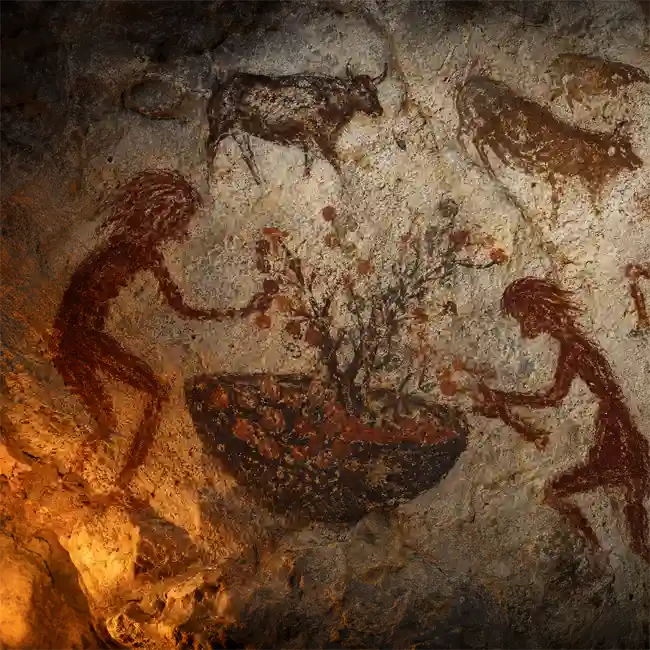
🍃 Recipe: Chauvet Cave Wild Juniper & Berry Infusion
More than thirty-two millennia ago, long before ceramic vessels, cultivated orchards, or written recipes, the people who gathered near the limestone cliffs of Chauvet lived in close harmony with the seasons. Every edible berry, fragrant evergreen branch, and aromatic herb represented generations of observation rather than chance.
The Chauvet Cave Wild Juniper & Berry Infusion is a respectful modern interpretation inspired by that world. It is not claimed to be an exact archaeological recipe, but a culinary reconstruction based on Ice Age ecology, archaeobotanical discoveries, experimental archaeology, and the edible plants that would have been familiar to Upper Paleolithic hunter-gatherers across Western Europe.
Its flavor is gentle yet surprisingly layered. Forest berries bring natural sweetness balanced by light tartness, while juniper contributes crisp woodland aromas reminiscent of cold mountain air. Wild herbs provide subtle earthy notes, creating an infusion that feels both refreshing and deeply rooted in nature.
Unlike modern sweetened beverages, this preparation celebrates simplicity. Every ingredient has a purpose, allowing nature to remain the true chef.
Whether enjoyed beside a fireplace on a snowy evening or shared during an outdoor gathering, this recipe invites you to experience a small taste of Europe's ancient wilderness.
🌸 Echoes from the Glacial Ice
Deep within the darkness of Chauvet Cave, flickering firelight once illuminated magnificent paintings that have survived for tens of thousands of years. Horses galloped across limestone walls. Mammoths towered over hunting scenes. Cave lions appeared almost alive as shadows danced across mineral pigments.
Although these paintings do not depict recipes directly, they reveal communities whose daily lives revolved around wildlife, seasonal landscapes, and shared survival.
Archaeologists believe caves like Chauvet served as far more than shelters. They were places where knowledge, rituals, artistic expression, and social traditions came together.
Imagine a successful day of foraging.
Small woven baskets overflow with dark berries gathered from thorny shrubs growing along rocky slopes. Fresh evergreen sprigs release crisp aromas as they warm beside glowing embers. Children carefully separate edible plants while experienced elders explain which species are safe and which should always be avoided.
Nearby, smooth river stones rest inside the fire until they glow with stored heat.
Instead of placing a metal pot over flames, heated stones could be transferred into water contained within animal-hide vessels or naturally carved stone basins. This ingenious technique gradually warmed the liquid without burning delicate herbs or berries.
As fragrant steam rose into the cold cave air, the aroma of juniper mingled with woodland berries and freshly gathered plants. Families gathered around the fire, sharing warmth, conversation, and nourishment while storms raged outside.
No written recipe recorded those moments.
Instead, they survived through memory.
Each generation learned by watching.
Each child remembered the scent of evergreen branches.
Each successful gathering season strengthened knowledge that would help future generations survive another harsh winter.
The infusion recreated here celebrates those enduring traditions rather than attempting to claim historical certainty.
It is a tribute to humanity's earliest botanical wisdom.
🌿 Wild Foraged Essentials & The Hunter's Pantry
The forests, river valleys, and rocky plateaus surrounding Chauvet Cave offered an extraordinary variety of edible plants throughout the changing seasons. Hunter-gatherers rarely depended upon a single ingredient. Instead, they collected whatever nature provided at its seasonal peak.
This recipe embraces that same philosophy by combining ingredients that closely reflect the flavors of prehistoric Western Europe while remaining practical for today's kitchens.
🌱 The Primitive Staples
Imagine stepping into an Ice Age woodland just after sunrise.
Morning frost still clings to evergreen branches.
Birdsong echoes through ancient forests.
The scent of damp earth rises beneath your feet as experienced foragers begin gathering nature's hidden treasures.
The heart of this infusion comes from ingredients that represent resilience, seasonality, and the remarkable botanical knowledge of Paleolithic communities.
Gather the following:
• Fresh or dried juniper berries – about 2 tablespoons
• Wild blueberries or bilberries – 1 cup
• Wild blackberries – ½ cup
• Wild raspberries – ½ cup
• Rose hips – ¼ cup, lightly crushed
• Pine needles from an edible pine species – 2 tablespoons, finely chopped
• Fresh thyme – 1 tablespoon
• Fresh yarrow leaves (optional) – 1 teaspoon
• Fresh mint leaves – 8–10 leaves
• Filtered spring water – 4 cups
• Raw forest honey (optional for a modern variation) – 1–2 teaspoons
These ingredients reflect the diversity of Europe's temperate forests. Some add bright fruit flavors, while others contribute resinous woodland aromas that evoke evergreen valleys stretching beneath Ice Age skies.
🍇 Modern Kitchen Substitutes
Fortunately, recreating prehistoric flavors does not require searching for rare Ice Age plants. Modern ingredients can closely capture the same balance of sweetness, freshness, and earthy complexity.
Suitable substitutions include:
• If wild bilberries are unavailable, use cultivated blueberries at a 1:1 ratio.
• Replace wild blackberries with fresh organic blackberries using the same amount.
• Frozen mixed forest berries may substitute fresh berries at a 1:1 ratio.
• Culinary-grade dried juniper berries work perfectly when fresh berries cannot be found.
• Rosemary can replace a portion of pine needles using half the quantity to avoid overpowering the infusion.
• Fresh sage may substitute for yarrow in equal amounts.
• Lemon thyme can replace common thyme without changing proportions.
• If rose hips are unavailable, add a small amount of dried hibiscus petals for gentle tartness using approximately half the quantity.
• Maple syrup may replace honey if preferred, using the same amount while maintaining a naturally sweet finish.
These substitutions preserve the woodland character while making the recipe accessible in kitchens around the world.
📏 Paleolithic Proportions
For the most balanced flavor, combine the ingredients using these proportions:
• 4 cups filtered spring water
• 2 tablespoons lightly crushed juniper berries
• 1 cup wild blueberries or bilberries
• ½ cup wild blackberries
• ½ cup wild raspberries
• ¼ cup lightly crushed rose hips
• 2 tablespoons finely chopped edible pine needles
• 1 tablespoon fresh thyme
• 1 teaspoon yarrow leaves (optional)
• 8–10 fresh mint leaves
• 1–2 teaspoons raw forest honey (optional modern addition)
🌿 Balance Guide
For those who enjoy adjusting flavors naturally:
• Prefer a brighter berry flavor? Increase blueberries by ¼ cup.
• Want stronger woodland aromas? Add ½ tablespoon more juniper berries.
• Looking for extra freshness? Double the mint leaves.
• Prefer a lighter herbal finish? Reduce thyme by half.
• Enjoy gentle tartness? Increase rose hips by 1 tablespoon.
• For a richer forest character, add another ½ tablespoon of pine needles while keeping the infusion time the same.
These proportions create a naturally balanced infusion where no single ingredient overwhelms the others. Instead, each botanical contributes a subtle layer, much like the diverse landscapes that once surrounded Chauvet Cave.
As the ingredients slowly release their aromas into warm water, the kitchen begins to fill with scents that feel timeless—fresh evergreen, ripe woodland berries, fragrant herbs, and the quiet memory of ancient forests where some of Europe's earliest artists once walked beneath the shadow of towering Ice Age skies.
🔥 The Primitive Culinary Ritual
Preparing this infusion is about more than simply combining ingredients. It is an invitation to slow down and appreciate one of humanity's oldest cooking traditions—using gentle heat, patience, and the gifts of the natural world.
Thousands of years ago, Upper Paleolithic communities had no metal kettles or ceramic teapots. Instead, experimental archaeology suggests that people could warm water by placing fire-heated stones into hide-lined containers, carved stone basins, or wooden vessels. This simple yet ingenious method allowed delicate plants to steep without exposing them directly to flames.
Today, we can recreate the spirit of that ancient ritual with modern cookware while preserving its calm, intentional rhythm.
🔸 Step 1: Awaken the Wild Botanicals
Place the juniper berries into a wooden mortar or small bowl.
Lightly crush them using a pestle or the back of a spoon. Avoid grinding them into powder. A gentle crack releases their fragrant woodland oils while maintaining a clean, balanced flavor.
As you prepare the berries, breathe in their crisp aroma. Imagine evergreen forests stretching across Ice Age Europe, where these hardy shrubs survived even the coldest winters.
🔸 Step 2: Build the Forest Base
Pour the spring water into a heavy saucepan or cast-iron pot.
Add:
◦ Crushed juniper berries
◦ Pine needles
◦ Thyme
◦ Rose hips
◦ Optional yarrow leaves
Heat slowly over medium-low heat.
Do not allow the water to boil vigorously.
Instead, aim for a gentle simmer for approximately 12–15 minutes, allowing the herbs to gradually release their aromas.
Slow heating creates a smoother, cleaner infusion while preserving delicate botanical flavors.
🔸 Step 3: Add the Woodland Berries
Reduce the heat to low.
Stir in:
◦ Wild blueberries
◦ Wild blackberries
◦ Wild raspberries
Allow the berries to steep gently for another 8–10 minutes.
Rather than bursting apart, they should soften naturally while releasing their rich colors and subtle sweetness into the water.
The liquid gradually transforms into a beautiful deep ruby-purple shade reminiscent of twilight inside a limestone cave.
🔸 Step 4: Finish with Fresh Herbs
Remove the pot from the heat.
Add the fresh mint leaves.
Cover with a lid and allow everything to rest for 5 minutes.
This final stage captures the brightest herbal aromas without making the infusion overpowering.
If desired, stir in a small amount of raw honey after the liquid has cooled slightly.
🔸 Step 5: Strain and Serve
Pour the infusion through a fine strainer into cups or heatproof mugs.
For a rustic presentation, garnish with:
◦ A few fresh berries
◦ A tiny sprig of thyme
◦ One or two juniper berries placed beside the serving vessel
Enjoy while warm, especially on cool evenings when the comforting woodland aromas are most noticeable.
Every sip reflects simple ingredients transformed by time, warmth, and patience rather than complicated techniques.
🪔 Secrets of the Ancestral Fire
Ancient cooks mastered fire through observation rather than thermometers. They learned to judge heat by glowing embers, changing smoke, and the sound of crackling wood.
These timeless lessons remain surprisingly useful today.
🔸 Keep the Heat Gentle
• Never allow the infusion to boil aggressively.
• Gentle simmering preserves delicate berry flavors.
• Slow heating creates a smoother, more balanced result.
🔸 Crush, Don't Pulverize
• Lightly cracking juniper berries releases essential aromas.
• Finely ground berries may create excessive bitterness.
• Larger pieces provide cleaner extraction.
🔸 Choose Fresh Ingredients
• Firm berries produce brighter flavors.
• Fresh herbs retain more natural fragrance.
• Pine needles should come only from known edible pine species.
🔸 Let Nature Lead
• Resist adding excessive sweeteners.
• The berries already contribute gentle natural sweetness.
• The goal is harmony, not richness.
🔸 Use Filtered Water
• Clean water allows subtle botanical flavors to shine.
• Mineral-heavy water may slightly alter the infusion.
• Avoid Long Steeping
• Leaving herbs in the liquid too long can create bitterness.
• Strain promptly once the recommended steeping time is complete.
🔸 Store Carefully
• Refrigerate leftovers in a sealed glass container.
• Enjoy within 48 hours for the freshest flavor.
🔸 Respect Wild Foraging
• Never harvest unidentified plants.
• Collect only from clean environments away from roads or pollution.
• If uncertain, purchase culinary-grade herbs from trusted suppliers.
These simple practices mirror the careful attention that helped prehistoric communities transform humble wild plants into comforting nourishment.
❓ Paleolithic Wisdom & Secrets FAQ
Q1.Was this exact infusion discovered inside Chauvet Cave?
No.
There is currently no archaeological evidence identifying this precise recipe. Instead, it is a carefully researched culinary reconstruction inspired by Upper Paleolithic environments, archaeobotanical studies, edible European plants, and experimental archaeology.
Q2.Why are juniper berries included?
Juniper has grown across Europe for thousands of years and produces aromatic berries that have long been valued in traditional food cultures.
Their fresh woodland character pairs naturally with wild berries and evergreen herbs, making them an excellent ingredient for an Ice Age-inspired infusion.
Q3.Is this recipe suitable for a Paleo lifestyle?
Yes.
The recipe emphasizes whole, minimally processed ingredients gathered from nature.
If following a strict Paleo approach, simply omit the optional honey or use the version without added sweeteners.
Q4.Can children enjoy this infusion?
The berry-based version prepared with familiar culinary herbs can generally be enjoyed by most people.
However, anyone with allergies, dietary concerns, or medical conditions should consult an appropriate healthcare professional before trying unfamiliar herbs or botanicals.
Q5.Can I prepare it ahead of time?
Absolutely.
Allow the infusion to cool naturally before refrigerating it.
It remains pleasantly flavorful for up to two days and can be enjoyed gently warmed or served chilled.
📝 The Taste of Primeval History
The first sip is surprisingly gentle.
Bright woodland berries arrive first, offering natural sweetness balanced by subtle tartness. Moments later, the cool resinous character of juniper begins to unfold, followed by soft herbal notes that linger pleasantly without overwhelming the palate.
It is not an intense drink.
It is a quiet one.
Its beauty lies in restraint.
Every ingredient contributes something small, allowing the landscape itself to become the dominant flavor. You can almost imagine mist rising from ancient valleys, evergreen forests stretching toward distant mountains, and glowing embers flickering against limestone cave walls decorated with extraordinary animal paintings.
Unlike many modern beverages built around artificial flavors or refined sweetness, this infusion celebrates simplicity.
There are no unnecessary additions.
No synthetic aromas.
No complicated processing.
Only berries, herbs, clean water, gentle heat, and time.
That simplicity connects us with a remarkable truth about our ancestors.
For tens of thousands of years, survival depended upon understanding the natural world rather than controlling it. Every edible plant represented accumulated wisdom. Every successful meal reflected cooperation between people and their environment.
Preparing the Chauvet Cave Wild Juniper & Berry Infusion today is not about recreating the past perfectly. Such perfection is impossible.
Instead, it is about honoring the curiosity, resilience, and resourcefulness of the people who walked the valleys of Ice Age Europe long before cities, farms, or written history.
With each warm cup, we are reminded that some of humanity's oldest traditions still live on—not in stone tools or cave walls alone, but in the simple act of gathering natural ingredients, tending a gentle fire, and sharing nourishment with others.
🏕️ Final Thoughts: Taming the Ice Age in Your Modern Kitchen
The modern kitchen may be filled with stainless steel, electric stoves, and convenient appliances, but at its heart, cooking remains one of humanity's oldest traditions. Every meal we prepare continues a story that began hundreds of thousands of years ago, when our ancestors first gathered around glowing hearths beneath open skies.
The Chauvet Cave Wild Juniper & Berry Infusion is not simply another herbal recipe. It is an invitation to slow down in a world that rarely pauses. It encourages us to rediscover the quiet pleasure of preparing food with intention, using simple ingredients whose flavors have remained remarkably timeless.
You do not need a limestone cave, a mammoth hunt, or an Ice Age landscape to appreciate these ancient traditions.
Instead, transform your own kitchen into a modern ancestral hearth.
Open the windows and let fresh air drift inside.
Take a moment to crush fragrant juniper berries by hand instead of relying on machines.
Watch the gentle steam rise from the pot.
Notice how the aroma of wild herbs slowly fills the room.
Allow yourself to cook without rushing.
These small rituals connect us with generations who viewed every meal as a gift from the surrounding landscape rather than something taken for granted.
The greatest lesson our Paleolithic ancestors leave behind is not a specific recipe.
It is a philosophy.
Respect nature.
Use simple ingredients wisely.
Share food generously.
Waste very little.
Appreciate every season.
Those values remain just as meaningful today as they were beneath the painted ceilings of Chauvet Cave more than thirty thousand years ago.
Every cup of this woodland-inspired infusion serves as a quiet reminder that history is not locked away inside museums.
Sometimes, history can be experienced one warm sip at a time.
🌿 The Sacred Tribe (Claim Your Ancestral Heritage)
Across every continent, more people are rediscovering the beauty of natural cooking, seasonal ingredients, and forgotten food traditions. They are looking beyond processed convenience and returning to flavors that celebrate simplicity, authenticity, and the remarkable ingenuity of our earliest ancestors.
If that journey speaks to you, then you are already part of something much larger.
You are joining a growing community of curious home cooks, history enthusiasts, experimental food lovers, outdoor explorers, and ancestral food advocates who believe the oldest recipes still have stories worth sharing.
Every recreated prehistoric dish helps preserve cultural curiosity.
Every carefully researched recipe keeps archaeological discoveries alive in a practical, meaningful way.
Every shared meal encourages new conversations about where our food traditions truly began.
As you continue exploring the Prehistoric Ancestral Palate collection, you'll discover more than recipes.
You'll uncover forgotten landscapes.
You'll meet ancient hunter-gatherers through the foods they may have gathered.
You'll explore Ice Age forests, windswept valleys, rocky coastlines, and glacial plains through carefully reconstructed culinary experiences inspired by archaeological evidence and the natural environments of prehistoric Europe.
So gather your ingredients.
Light your stove as though tending an ancient hearth.
Invite family or friends to share the experience.
Tell the stories behind each recipe.
Celebrate the remarkable resilience that allowed humanity to thrive through countless generations.
Because every meal prepared with curiosity becomes another chapter in the long story of our shared ancestral heritage.
The fire is still burning.
The journey has only just begun.
🦴 Credit to the Keepers of the Paleolithic Legacy
This culinary reconstruction is inspired by archaeological research, Paleolithic cave art, archaeobotanical discoveries, paleoenvironmental studies, and experimental archaeology exploring the lifeways of Upper Paleolithic hunter-gatherers approximately 32,000 years ago.
Rather than claiming to reproduce an exact historical recipe, this preparation respectfully reimagines how wild berries, evergreen botanicals, and naturally foraged plants may have been prepared using the simple techniques and resources available during the Ice Age.
Every ingredient has been thoughtfully adapted for today's home kitchen while remaining faithful to the spirit of prehistoric living—celebrating seasonal abundance, sustainable gathering, and the deep relationship between early humans and the landscapes that sustained them.
May this recipe inspire a greater appreciation for our shared human story, encourage responsible exploration of ancient food traditions, and honor the enduring legacy preserved within the painted caves, weathered stone tools, and archaeological discoveries that continue to illuminate humanity's earliest chapters.
The wilderness remembers.
The hearth endures.
And every respectful recreation helps keep the spirit of the Paleolithic world alive for future generations.
| 🏔️ 🧊🍵 < Back |