
🏠 Home > 🗺️ Recipes > 🥗 Salads > 🇩🇰 Denmark Salads > 🥗 1.Danish Salads
🥗 Fresh Scandinavian Flavors: Traditional Danish Salads Made Easy at Home
Published by Supakorn | Updated: November 2026
🇩🇰 🥗 Introduction – Discover Danish Salads: Authentic Denmark Fresh Side Dish
If you love fresh, colorful food that tastes wonderful without being complicated, Danish salads deserve a place on your kitchen table. Denmark is well known for its beautiful coastal landscapes, charming countryside, seasonal produce, and relaxed approach to everyday dining. Its food culture reflects these qualities, combining simple ingredients, fresh flavors, and a genuine appreciation for good-quality local produce.
From crisp cucumbers and peppery radishes to tender potatoes, fresh herbs, and creamy homemade dressings, Danish-style salads offer something for everyone. They can be light and refreshing enough for a summer lunch or hearty enough to accompany a traditional family dinner.
One of the most appealing things about Danish food is its balance. Rather than relying on complicated cooking techniques or overwhelming seasonings, many Scandinavian dishes allow the natural character of their ingredients to shine. Fresh vegetables, garden herbs, dairy products, mustard, and vinegar all play important roles in creating satisfying flavors.
Denmark's dining traditions also make room for salads in different ways. A fresh vegetable salad might accompany grilled fish, roasted chicken, or a selection of open-faced sandwiches known as smørrebrød. Potato-based salads are another familiar choice, especially when families gather for relaxed meals and seasonal celebrations.
Today, we're bringing these lovely Scandinavian-inspired flavors into your home with an approachable collection of Danish salad ideas and a delicious homemade sugar-free dressing.
This recipe takes inspiration from traditional Danish ingredient combinations and everyday Nordic cooking principles while adapting the preparation for modern home kitchens. The dressing contains no added sugar, making it an excellent choice for anyone who prefers a less sweet salad.
You don't need professional equipment, expensive ingredients, or special culinary training. Just gather some fresh vegetables, prepare a few simple ingredients, and follow the easy instructions.
Ready to bring a little taste of Denmark to your kitchen? Let's get started!
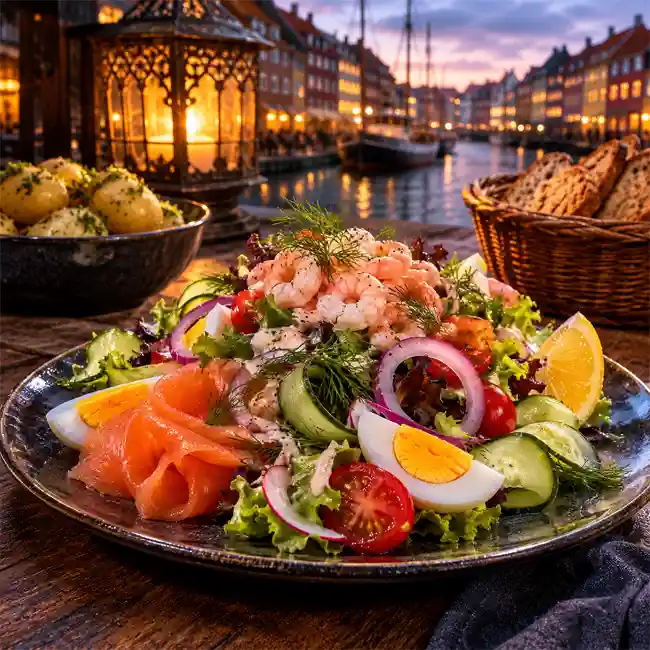
🇩🇰 Authentic Danish Salads Recipe
🌿 Culinary Background & Flavor Profile
Danish salads are wonderfully versatile. There isn't just one official recipe that represents every Danish salad, because ingredients and preparations vary between households, seasons, and regions.
However, several ingredients appear naturally in Scandinavian cooking and make excellent foundations for Danish-style salads.
Cucumbers provide a refreshing crunch and delicate flavor. Radishes introduce a slightly peppery bite, while fresh dill contributes a distinctive herbal aroma that pairs beautifully with vegetables and creamy dressings.
Potatoes are particularly important in Danish everyday cooking. When cooked until tender and combined with fresh herbs, crunchy vegetables, and a lightly tangy dressing, they become a satisfying salad that works equally well as a side dish or a light meal.
Apples are another lovely addition. Their natural sweetness and crisp texture create a pleasant contrast against the acidity of mustard and vinegar.
For this recipe, we're combining these ingredients into a fresh Scandinavian-style salad featuring:
• Crisp cucumber slices.
• Tender cooked baby potatoes.
• Fresh radishes.
• Sweet-tart apple pieces.
• Thinly sliced red onion.
• Fresh dill and parsley.
• A creamy, tangy, sugar-free homemade dressing.
The overall flavor is fresh, creamy, slightly tangy, and gently aromatic. Every ingredient contributes something different, creating a balanced dish without needing added sugar.
The dressing is especially important. Instead of using a commercial dressing that may contain added sweeteners, we're preparing a homemade version using plain Greek yogurt, Dijon mustard, lemon juice, and apple cider vinegar.
The result is a naturally flavorful dressing with a creamy consistency and a refreshing finish.
🥒 Essential Ingredients & Precise Measurements
This recipe makes approximately four generous side-dish servings. For the best results, choose fresh vegetables, good-quality dairy products, and herbs with a pleasant aroma.
🔸 For the Danish-Style Salad
◦ 300 g baby potatoes: Choose small, firm potatoes with smooth skins. These provide a tender, satisfying base.
◦ 1 medium cucumber (approximately 250 g): Slice thinly to create a refreshing crunch.
◦ 120 g fresh radishes: Wash thoroughly and cut into thin rounds.
◦ 1 medium crisp apple (approximately 150 g): Choose a slightly tart variety and cut it into small cubes.
◦ 40 g red onion: Thinly slice for a mild savory flavor.
◦ 2 tablespoons fresh dill: Finely chop to bring out its characteristic Scandinavian aroma.
◦ 1 tablespoon fresh parsley: Chop finely for freshness and color.
◦ 50 g mixed salad leaves: Use tender lettuce or other fresh leafy greens.
◦ 1 tablespoon fresh lemon juice: Toss with the apple to help prevent browning.
◦ 1/4 teaspoon fine sea salt: Adjust according to taste.
◦ 1/8 teaspoon freshly ground black pepper: Add a gentle savory finish.
🔸 For the Sugar-Free Homemade Dressing
◦ 120 g plain Greek yogurt: Use unsweetened yogurt for a creamy base.
◦ 1 tablespoon Dijon mustard: Adds depth and a gentle mustard flavor.
◦ 1 tablespoon apple cider vinegar: Provides balanced acidity.
◦ 1 tablespoon fresh lemon juice: Brightens the overall flavor.
◦ 1 tablespoon extra virgin olive oil: Gives the dressing a smoother texture.
◦ 1 tablespoon finely chopped fresh dill: Reinforces the fresh herbal character.
◦ 1 teaspoon finely chopped parsley: Adds a subtle green, fresh note.
◦ 1/4 teaspoon garlic powder: Provides a mild savory background.
◦ 1/8 teaspoon fine sea salt: Enhances the other ingredients.
◦ 1/8 teaspoon freshly ground black pepper: Adds a little warmth.
◦ 1–2 tablespoons cold water: Use only as needed to adjust the consistency.
A note about sugar-free ingredients: This recipe contains no added sugar, honey, syrup, or artificial sweeteners. Plain yogurt and fresh apples naturally contain small amounts of sugar. If you are following a medically prescribed dietary plan, check the nutritional information of your chosen ingredients.
🌱 Optional Garnishes
◦ 1 tablespoon toasted sunflower seeds for extra crunch.
◦ 1 tablespoon chopped fresh chives for a mild onion-like aroma.
◦ A few additional dill sprigs for presentation.
◦ A small handful of microgreens for a fresh finishing touch.
These optional additions allow you to personalize the salad without changing its Scandinavian-inspired character.
👩🍳 Step-by-Step Cooking Instructions
Making Danish-style salad at home is straightforward. The secret is preparing each ingredient carefully and allowing the flavors to come together before serving.
✦ Step 1: Prepare the Potatoes
Wash the baby potatoes thoroughly under cool running water. Remove any dirt and trim away damaged areas.
Place the potatoes in a medium saucepan and cover them with cold water. Add a small pinch of salt.
Bring the water to a boil, then reduce the heat and simmer gently for approximately 12–18 minutes, depending on the size of the potatoes.
Check their tenderness by inserting a small knife into the center. It should slide through easily without the potatoes falling apart.
Drain immediately and allow them to cool until comfortable to handle.
Cut larger potatoes into halves or quarters while leaving smaller ones whole.
✦ Step 2: Prepare the Fresh Vegetables
Wash the cucumber, radishes, apple, lettuce, dill, and parsley thoroughly.
Slice the cucumber into thin rounds. For an attractive presentation, you can create delicate ribbon-like slices using a vegetable peeler.
Cut the radishes into thin circular slices. Their bright pink edges will add beautiful color to the finished salad.
Thinly slice the red onion. If you prefer a milder onion flavor, soak the slices in cold water for five minutes, then drain and pat dry.
Cut the apple into small cubes and immediately toss with one tablespoon of lemon juice.
This simple step helps slow browning while adding a refreshing citrus note.
✦ Step 3: Make the Sugar-Free Homemade Dressing
Add the Greek yogurt to a small mixing bowl.
Stir in the Dijon mustard, apple cider vinegar, lemon juice, and extra virgin olive oil.
Add the chopped dill, parsley, garlic powder, sea salt, and black pepper.
Whisk everything together until smooth and creamy.
If the dressing seems too thick, add cold water gradually, one tablespoon at a time, until it reaches your preferred consistency.
Taste the dressing before using it.
If you enjoy a sharper flavor, add a little more lemon juice. For a stronger mustard character, add a small additional amount of Dijon mustard.
Cover and refrigerate for approximately 10–15 minutes to allow the flavors to develop.
✦ Step 4: Combine the Salad Ingredients
Choose a large serving bowl.
Add the mixed salad leaves first, followed by the cooled potatoes, cucumber slices, radishes, apple cubes, and red onion.
Sprinkle the chopped dill and parsley evenly over the ingredients.
Use clean salad servers to gently toss everything together.
Be careful not to crush the potatoes or bruise the delicate greens.
✦ Step 5: Add the Homemade Dressing
Remove the dressing from the refrigerator and give it another quick stir.
Pour approximately half of the dressing over the salad.
Gently toss until the vegetables and potatoes are lightly coated.
Add more dressing if needed, depending on your preference.
The goal is to coat the ingredients without allowing the dressing to collect excessively at the bottom of the bowl.
✦ Step 6: Finish with Fresh Garnishes
Sprinkle toasted sunflower seeds over the salad if desired.
Add a little extra chopped dill, fresh chives, or microgreens.
Finish with a light sprinkle of freshly ground black pepper.
For an especially attractive presentation, arrange a few cucumber ribbons and radish slices on top.
Serve immediately for the freshest texture, or refrigerate briefly before serving.
Your homemade Danish-inspired salad with sugar-free dressing is ready to enjoy!
👨🍳 Chef's Pro Tips & Common Mistakes to Avoid
A great salad depends on more than simply mixing vegetables together. A few thoughtful techniques can make a noticeable difference in the final flavor and texture.
1. Choose Fresh Seasonal Ingredients
Freshness is one of the most important elements of Scandinavian-style cooking.
Look for firm cucumbers, crisp radishes, fresh green leaves, and potatoes without soft spots.
Fresh dill should have a pleasant herbal aroma and vibrant green color. Avoid wilted herbs because they contribute less flavor and can make the salad look tired.
2. Never Overcook the Potatoes
Overcooked potatoes can become mushy when mixed with dressing.
Choose small potatoes of similar size so they cook evenly.
Start checking for tenderness after approximately 12 minutes. Cooking time depends on the variety and size.
Once cooked, drain them promptly.
3. Cool the Potatoes Before Adding the Dressing
Adding yogurt-based dressing to steaming-hot potatoes can make the dressing thinner than expected.
Allow the potatoes to cool first.
Slightly warm potatoes can absorb seasoning nicely, but they should not be hot enough to compromise the creamy dressing.
4. Keep the Cucumber Crisp
Cucumbers contain a considerable amount of water.
If your cucumber is particularly watery, remove some of the central seeds before slicing.
You can also lightly salt the slices, leave them for 10 minutes, and gently pat away excess moisture.
Do not leave them sitting in salt for too long, or they may lose their crisp texture.
5. Balance the Dressing Carefully
A delicious sugar-free dressing should not taste overly sour or too strongly of mustard.
Start with the recommended measurements and adjust gradually.
More lemon juice creates brightness, while extra yogurt softens sharp flavors.
A little olive oil helps create a smoother mouthfeel.
Remember that a good dressing should complement the vegetables rather than overpower them.
6. Use Unsweetened Yogurt
Not all yogurt products are equally suitable.
Some flavored or prepared yogurt products contain added sugar, even when they look similar to plain yogurt.
Always check the ingredient label and choose plain, unsweetened Greek yogurt.
7. Avoid Dressing the Salad Too Early
If you prepare the salad several hours before serving, keep the vegetables and dressing separate.
Cucumber and leafy greens can release moisture over time, making the salad less crisp.
Add the dressing shortly before serving for the best results.
8. Experiment with Ingredient Substitutions
You can adapt this recipe according to what is available in your local grocery store.
• Replace baby potatoes with small waxy potatoes.
• Use spring onions instead of red onion.
• Substitute fresh chives for parsley.
• Replace sunflower seeds with pumpkin seeds.
• Use plain unsweetened dairy-free yogurt for a dairy-free variation.
• Add extra radishes if you prefer a more peppery salad.
These adjustments make the recipe flexible while preserving its fresh Scandinavian-inspired flavor.
🍽️ Pairings & Serving Suggestions
One of the best things about Danish salads is how easily they fit into different meals.
Their fresh, creamy, and slightly tangy flavors make them wonderful companions for a variety of everyday dishes.
⭐ Serve with Danish-Inspired Open-Faced Sandwiches
Smørrebrød is one of Denmark's best-known food traditions.
These open-faced sandwiches are commonly built on rye bread and topped with carefully arranged ingredients.
A fresh cucumber and potato salad makes a lovely side dish alongside rye bread topped with sliced eggs, vegetables, or other savory ingredients.
The combination creates a satisfying meal with different textures and flavors.
⭐ Pair with Grilled Fish
Mild grilled fish works particularly well with the refreshing character of dill and lemon.
Try serving the salad alongside grilled cod, salmon, or another fish of your choice.
The creamy dressing complements the fish without making the meal feel too heavy.
⭐ Enjoy with Roasted Chicken
If you prefer a more filling meal, serve the salad with oven-roasted chicken.
The savory flavor of the chicken contrasts beautifully with the crisp vegetables and tangy homemade dressing.
⭐ Create a Vegetarian Scandinavian Lunch
For a simple vegetarian meal, serve the salad with whole-grain rye bread, boiled eggs, or roasted vegetables.
You can also add chickpeas or white beans for additional protein and a more substantial texture.
⭐ Make It a Beautiful Family Table Dish
For gatherings, serve the salad in a wide ceramic bowl.
Arrange the cucumber slices and radishes on top, add fresh dill, and drizzle a little dressing just before bringing it to the table.
This simple presentation highlights the natural colors of the ingredients.
🎡❓ Frequently Asked Questions (FAQ)
Q1. Are Danish salads traditionally made without sugar?
Not necessarily. Danish salad recipes vary considerably, and some traditional dressings or prepared salads may include sweetening ingredients.
This particular recipe is adapted to contain no added sugar while maintaining a balanced flavor through yogurt, mustard, vinegar, and lemon juice.
Q2. How long can homemade Danish salad be stored in the refrigerator?
For the best quality, enjoy the assembled salad on the day it is prepared.
If stored in an airtight container at or below 4°C (40°F), leftovers should generally be consumed within 1–2 days. However, cucumber and leafy greens may become softer.
For better results, store the dressing separately and combine it with the vegetables just before serving.
Do not leave the salad at room temperature for more than two hours, or one hour when the temperature is above 32°C (90°F).
Q3. Can I make the sugar-free homemade dressing without Greek yogurt?
Absolutely!
You can use plain, unsweetened dairy-free yogurt or another suitable unsweetened yogurt alternative.
The flavor and consistency may vary slightly depending on the product, so adjust the lemon juice and water gradually.
Q4. Can I prepare Danish potato salad ahead of time?
Yes. Cook the potatoes in advance, allow them to cool, and store them in a covered container in the refrigerator.
Prepare the dressing separately.
When you're ready to serve, combine the potatoes with the fresh vegetables and dressing.
This preparation method saves time and helps maintain a better texture.
📝 Recipe Quick Summary
Here is a quick reference for anyone who wants the essential cooking details at a glance.
• Recipe Name: Danish-Style Fresh Salad with Sugar-Free Homemade Dressing
• Cuisine Inspiration: Danish and Scandinavian
• Preparation Time: 20 minutes
• Cooking Time: 15 minutes
• Cooling and Chilling Time: 15 minutes
• Total Time: Approximately 50 minutes
• Servings: 4 side-dish portions
• Difficulty: Easy
• Dietary Style: Vegetarian
• Added Sugar: None
• Main Ingredients: Potatoes, cucumber, radishes, apple, fresh dill, and leafy greens
• Dressing Base: Plain Greek yogurt, Dijon mustard, lemon juice, and apple cider vinegar
• Best Served: Freshly prepared and lightly chilled
❤️ Final Thoughts & Kitchen Inspiration
Making delicious Danish-inspired salads at home is a wonderful way to explore Scandinavian food culture without making your cooking routine complicated.
The beauty of this recipe comes from its simplicity. Fresh cucumbers, tender potatoes, crunchy radishes, crisp apples, and fragrant dill work together to create a dish that feels both comforting and refreshing.
The homemade sugar-free dressing is another reason to love this recipe. By combining plain Greek yogurt, mustard, lemon juice, and apple cider vinegar, you can create a creamy, flavorful alternative to many commercially prepared dressings.
You also have plenty of room to experiment.
Try adding extra fresh herbs, changing the vegetables according to the season, or serving the salad alongside your favorite Scandinavian-inspired main course.
If you're new to Danish cooking, this is a lovely place to begin. You can enjoy familiar ingredients while discovering the fresh flavors and relaxed dining traditions associated with Denmark.
Most importantly, cooking should be enjoyable. Don't worry about making everything look perfect. Focus on fresh ingredients, balanced flavors, and sharing good food with the people around you.
Give this recipe a try, make it your own, and let us know how it turns out in your kitchen. If you enjoyed the flavors, share your experience and inspire someone else to discover the pleasure of homemade Scandinavian salads!
🏛️ Culinary Heritage & Cultural Credit to Denmark
Denmark has a rich culinary heritage shaped by its geography, climate, agricultural traditions, and close relationship with the surrounding seas.
For generations, Danish households have made use of locally available ingredients, including potatoes, cabbage, root vegetables, dairy products, rye, apples, fish, and fresh herbs.
Seasonality has played an important role in everyday Danish cooking. During colder months, preserved foods, root vegetables, and hearty ingredients have traditionally helped families prepare nourishing meals. During spring and summer, fresh vegetables, herbs, and garden produce bring lighter flavors to the table.
Danish food culture also reflects a practical approach to home cooking. Many familiar dishes are built around ingredients that are easy to prepare, readily available, and suitable for sharing with family and friends.
One important part of this culinary identity is smørrebrød, the traditional Danish open-faced sandwich. Although its ingredients and presentation vary, it demonstrates the Danish appreciation for thoughtful food preparation, attractive arrangements, and complementary flavors.
Salads have their own place in this broader food culture. Potato salads, cucumber preparations, vegetable salads, and creamy side dishes can be found in different forms throughout Danish homes and seasonal meals.
It is important to recognize that there is no single standardized recipe called the definitive authentic Danish salad. Recipes differ between families, regions, and generations. Some use creamy dressings, others favor vinegar-based preparations, and many reflect whatever vegetables are fresh and available.
The recipe presented here respects these culinary traditions by highlighting familiar Scandinavian ingredients, including potatoes, cucumbers, radishes, apples, dill, and dairy-based dressing.
The sugar-free dressing is a modern adaptation rather than a claim about the historical ingredients of every traditional Danish dressing.
Our intention is to celebrate Denmark's culinary heritage while making its fresh, approachable flavors accessible to today's home cooks.
By appreciating the ingredients, techniques, and cultural traditions behind Danish food, we can explore international cuisine with curiosity and respect.
A taste of Denmark is not just about following a recipe. It is about appreciating seasonal ingredients, simple preparation, and the pleasure of sharing a beautiful meal.
| 🇩🇰 🥗 < Back |