
🏠 Home > 🗺️ Recipes > 🥘 Sauces > 🇨🇿 Czechia Sauces
🇨🇿 🥘 Czechia Sauces Recipes
Published by Supakorn | Updated: April 2026
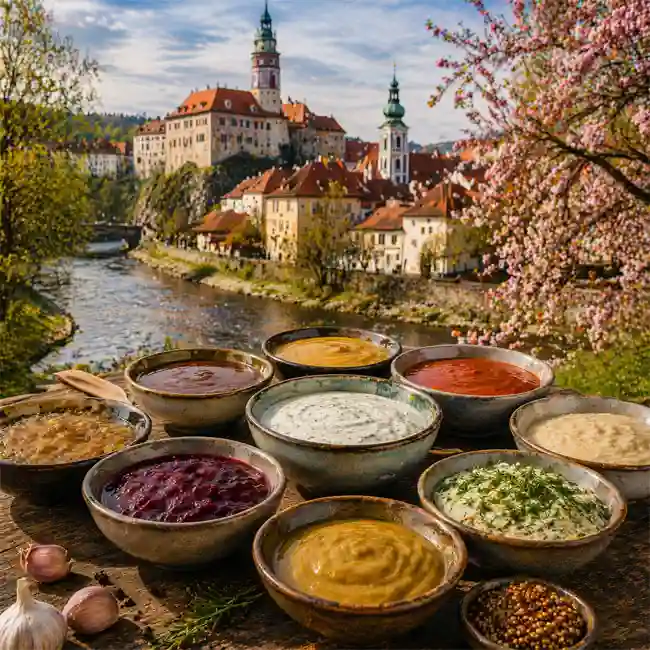
If you ask anyone who has spent time in a traditional Czech kitchen what the most important part of the meal is, they won’t say the meat. They won’t even say the famous bread dumplings. They will point directly at the sea of rich, velvety, and aromatic liquid covering the plate: the sauce (omáčka).
In Czechia, a meal without sauce is like a day without sunshine. The "Omáčka" culture is what truly defines Bohemian comfort food. It is the glue that holds the meat and the dumplings together, turning a simple dinner into a legendary feast. These aren't just light drizzles or thin jus; Czech sauces are thick, hearty, and often cream-based masterpieces that have been perfected over hundreds of years.
Whether you are dining in a rustic tavern in the Šumava mountains or a trendy bistro in the heart of Prague, the sauce is where the chef shows their true skill. Let’s dive into the world of Czechia’s liquid gold!
🏺🏛️ The Cultural Heritage of "Omáčka" 🇨🇿 🥘
To understand Czech sauces, you have to understand the geography and history of Central Europe. In a landlocked country with cold winters, food needed to be calorie-dense and soul-warming. Sauces were a way to make a small amount of expensive meat go a long way, ensuring that every bit of bread or dumpling was used to soak up every last drop of flavor.
🏠 A Symbol of Home
For many Czechs, the smell of a root-vegetable sauce simmering on a Sunday morning is the ultimate scent of childhood. Cooking these sauces is a slow process—often taking hours of roasting, blending, and tempering with heavy cream. It’s a labor of love that represents the "slow food" movement long before it was a global trend.
👑 The Icons: Must-Try Czech Sauces
While there are dozens of variations, a few "royal" sauces stand at the top of the culinary hierarchy. If you only have a few days in Czechia, these are the ones you need to hunt down.
🥕 Svíčková na Smetaně: The National Treasure
If Czechia had a culinary king, it would be Svíčková (pronounced sveetch-ko-vah). This is more than just a sauce; it’s a cultural phenomenon.
• The Flavor Profile: It is a creamy, sweet-and-savory sauce made from pureed root vegetables (carrots, celeriac, and parsley root).
• The Secret: It’s finished with a huge dollop of heavy cream and tempered with a hint of lemon and vinegar for a bright tang.
• The Presentation: It is traditionally served with beef sirloin, bread dumplings, a spoonful of cranberry compote (brusinky), and a "cloud" of whipped cream. It sounds like an unusual combination, but one bite will change your life.
🍋 Rajská Omáčka: The Sweet Tomato Comfort
Forget the spicy or herbal Italian tomato sauces you know. Czech Rajská is in a category of its own.
• The Taste: It is famously sweet and incredibly smooth. It’s often flavored with "sweet spices" like cinnamon, cloves, and allspice.
• The Memory: For most Czechs, this is the ultimate "school lunch" nostalgia dish. It’s usually served with boiled beef or stuffed peppers and either dumplings or pasta.
🍄 Houbová Omáčka: The Forest’s Bounty
Czechs are the world champions of mushroom hunting. When autumn hits, the forests are filled with locals carrying wicker baskets, and the kitchens are filled with the scent of Houbová.
• The Essence: This is a rich, earthy cream sauce loaded with wild forest mushrooms (like porcini or chanterelles).
• The Vibe: It’s woody, savory, and incredibly deep in flavor. It’s best enjoyed with local bread dumplings to soak up every bit of the mushroom essence.
🌿 Koprová Omáčka: The Love-It-or-Hate-It Dill Sauce
Koprovka (Dill sauce) is perhaps the most polarizing dish in the country. People either absolutely adore its bright, herbal creaminess or they avoid it entirely.
• The Profile: A thick, white cream sauce packed with fresh, finely chopped dill. It’s sweet, sour, and very aromatic.
• The Serving: It’s traditionally served with a hard-boiled egg or boiled beef and potatoes. If you love dill, this will be your new favorite dish.
🌲 Regional Flavors and Local Secrets
As you travel across the Czech Republic, you’ll find that sauces change based on what grows nearby.
🏰 Central Bohemia and Prague
In the capital, you’ll find the most refined versions of Svíčková. Many chefs in Prague are now experimenting with "modern" takes, using organic root vegetables and lighter creams, but the soul remains the same.
🏔️ The Mountainous North
In the Krkonoše or Jeseníky mountains, sauces tend to be even heartier. You might find Křenová (Horseradish sauce). It’s a creamy white sauce with a powerful, sinus-clearing kick of fresh horseradish. It’s the perfect way to warm up after a day in the snow.
🍇 South Moravia
In the sunny south, where the climate is milder, you might find more fruit-influenced sauces. Some traditional recipes use dried plums or apricots to thicken and sweeten meat gravies, creating a unique sweet-savory balance that reflects the region’s orchards.
🥢 The Art of "Wiping the Plate"
There is a specific etiquette to eating Czech sauces that you won’t find in a fine-dining manual, but you will see it in every local home.
1.The Dumpling Tool: Czech dumplings (knedlíky) are designed to be sponges. They are porous and soft, specifically made to soak up the sauce. Don't eat the meat first; cut a bit of dumpling, dip it deep into the sauce, and enjoy the perfect harmony.
2.No Sauce Left Behind: It is perfectly acceptable (and encouraged!) to use your last piece of dumpling or bread to wipe the plate clean. In fact, a clean plate is the best compliment you can give to a Czech cook.
3.The Garnish Matters: When you see a slice of lemon or a dollop of cranberries on your sauce, don't set them aside. They are there to provide acidity, cutting through the richness of the cream.
🥣 Why Are Czech Sauces So Unique?
What sets these sauces apart from French or British gravies is the technique.
• The "Jíška" (Roux): Almost every Czech sauce starts with a carefully prepared roux of butter and flour. This gives the sauce its signature thickness and "glossy" look.
• The Blending: Unlike chunky stews, most Czech sauces are blended until they are perfectly smooth. This creates a luxurious mouthfeel that feels very high-end, even in a humble farmhouse.
• The Balancing Act: A great Czech sauce is never just one flavor. It’s a delicate balance of Slaný (salty), Sladký (sweet), and Kyselý (sour).
🗽 FAQ: Everything You Need to Know About Czech Sauces
Q1. Are Czech sauces suitable for vegetarians?
This is a bit tricky! While sauces like Koprová (Dill) or Houbová (Mushroom) don't have meat in them, they are traditionally made using a base of meat broth (vývar) for depth. However, because of the rise in plant-based eating, many modern restaurants in Prague and Brno now offer "Vegetariánská omáčka" using vegetable stock. Always ask: "Je to dělané z masového vývaru?" (Is this made from meat broth?).
Q2. Why are the sauces so sweet compared to other European gravies?
Czech cuisine has a historical fondness for the "sweet and sour" profile. Using sugar, honey, or caramelized root vegetables (like carrots in Svíčková) is a traditional way to balance the heavy fats and salty meats. It’s a unique characteristic that makes Bohemian food stand out from its neighbors!
🥘 The Creamy Soul of Bohemia: Mastering Iconic Czech Sauces on a Budget
👉 Must-Try 3 Budget-Friendly Czech Sauces
| 🌐 🥘 < Back | 🇨🇿 🍱 < Previous |