
🏠 Home > 🗺️ Recipes > 🍞 Breads > 🇨🇿 Czechia Breads
🇨🇿 🍞 Czechia Breads Recipes
Published by Supakorn | Updated: April 2026
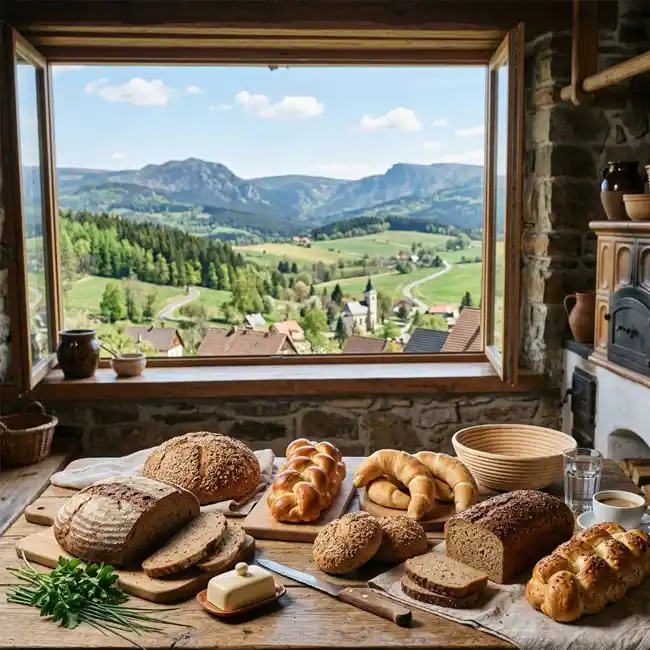
If you’ve ever walked through the streets of Prague, Brno, or a tiny village in the heart of Moravia in the early hours of the morning, you’ve smelled it. That unmistakable, deep, earthy aroma of baking caraway seeds and fermented rye. In Czechia, bread isn't just a side dish—it is the very foundation of the culinary identity.
For Czechs, bread is sacred. There is a long-standing tradition of welcoming guests with "Bread and Salt" (Chléb a sül), a gesture of hospitality that dates back centuries. You don’t just "eat" bread here; you respect it. You’ll even see older generations make a small sign of the cross on the back of a loaf before slicing it, or kissing a piece if it accidentally falls on the floor.
In this guide, we’re going to explore the crusty, chewy, and sometimes sweet world of Czechia’s most beloved breads. We’ll look at the cultural rituals, the regional stars, and why a simple bread roll might be the most important item in a Czech person's grocery bag.
🇨🇿 🥖 The Daily Bread: More Than Just a Meal 📚🚩
In many Western cultures, bread has become a mass-produced, plastic-wrapped afterthought. But in the Czech Republic, the local Pekařství (Bakery) is the center of the community. People visit almost every single day to pick up a fresh loaf or a bag of rolls that were pulled from the oven just hours—or minutes—before.
🏠 The Sourdough Tradition
Long before "sourdough" became a global health trend, it was simply how Czech bread was made. Most traditional Czech loaves (Chléb) are made from a mix of rye and wheat flour using a natural fermented starter. This gives the bread a slightly tangy flavor, a dense, chewy interior, and a crust so thick it can keep the bread fresh for days without any preservatives.
🧂 The Flavor of the Land: Caraway Seeds
If there is one flavor that defines Czech bread, it is Kmín (Caraway). These tiny seeds are folded into the dough or sprinkled liberally over the crust. It gives the bread a warm, anise-like spice that pairs perfectly with hearty soups, thick layers of butter, or slices of local cheese.
🥐 Iconic Breads and Rolls You Must Try
When you walk into a Czech bakery, the variety can be overwhelming. Let’s break down the "must-buys" that define the local palate.
🍞 Šumava: The King of Loaves
Named after the Šumava (Bohemian Forest) region, this is the classic oval-shaped loaf you’ll see in every household.
• The Profile: It’s a rye-wheat blend with a dark, crackly crust and a soft, porous "crumb."
• The Experience: It’s traditionally eaten with a thick spread of fresh butter and a sprinkle of salt, or used as the base for Obložené chlebíčky (open-faced sandwiches).
🥐 Rohlík: The Everyday Hero
If the Šumava is the King, the Rohlík is the hardworking citizen. This is a simple, finger-shaped bread roll, and it is arguably the most consumed food item in the country.
• The Texture: It has a thin, slightly salty crust (often topped with coarse salt and poppy seeds) and a very light, airy white interior.
• The Ritual: Czech kids grow up snacking on a plain Rohlík while their parents shop. It’s used for breakfast with jam, for lunch with a slice of ham, or even dried out to make breadcrumbs (Strouhanka) for Schnitzel.
🥨 Houska: The Braided Beauty
Similar to the Rohlík in ingredients but different in spirit, the Houska is a braided roll. The braiding creates more surface area for the crust to get golden and crispy. It’s often topped with poppy seeds, which add a nutty crunch that is quintessential to Central European baking.
🎄 Sweet Breads and Festive Traditions
Czechia’s bread culture isn't just about the savory. When the holidays roll around, the ovens turn toward rich, sweet, yeast-leavened masterpieces.
🍞 Vánočka: The Christmas Braid
Named after Vánoce (Christmas), this bread is a work of art. It’s a rich, brioche-like dough filled with raisins and almonds, braided into an intricate shape that is meant to resemble a baby wrapped in blankets.
• The Tradition: Braiding a Vánočka is a skill passed down through generations. It’s usually made with nine strands, representing different elements like the sun, the earth, and the stars. It’s eaten on Christmas Eve morning, usually dipped into hot cocoa or tea.
🥞 Mazanec: The Easter Loaf
At Easter, the savory loaves step aside for Mazanec. It uses a very similar dough to the Vánočka but is shaped into a large, round loaf with a cross cut into the top. It’s packed with rum-soaked raisins and topped with sliced almonds. It’s the symbol of the end of Lent and the beginning of spring.
🏰 Culinary Tourism: Where to Find the Best Bites
If you’re traveling through Czechia, the bread changes subtly as you move across the map.
🍺 West Bohemia (Plzeň Region)
The bread here is often extra hearty to stand up to the rich, heavy dishes of the region. Look for "Potato Bread" (Bramborový chléb), where mashed potatoes are added to the dough to make it incredibly moist and long-lasting.
🍷 South Moravia
In the wine regions of the south, you’ll find Pekáče and other regional buns that are often served at festivals. The bread culture here is social; it’s meant to be shared over a long table with friends and neighbors.
🏙️ The Prague "Artisan" Movement
In recent years, Prague has seen a massive "Bakery Renaissance." Young bakers are returning to ancient wood-fired ovens and heritage grains. If you’re in the capital, looking for "Kváskový chléb" (pure sourdough) is a must for any foodie traveler.
🥢 How to Enjoy Czech Bread Like a Pro
1.Freshness is Key: Buy your Rohlíks in the morning. By evening, they lose their "snap."
2.The Butter Rule: Czech butter is high-quality. A thick slab of cold butter on a piece of warm rye bread is a gourmet meal in its own right.
3.The Soup Dip: Never finish a bowl of Czech soup without using a crust of bread to "clean" the bowl. It’s the highest compliment to the chef!
4.Open-Faced Everything: Master the art of the Chlebíček. Take a slice of bread and layer it with potato salad, a slice of hard-boiled egg, ham, and a tiny pickle. It’s the ultimate Czech party food.
🤔 FAQ: Common Questions About Czech Breads
Q1. Is Czech bread gluten-free?
Traditionally, no. Czech bread culture is heavily built on wheat and rye. However, in major cities like Prague and Brno, "Bezlepkové pekařství" (Gluten-free bakeries) are becoming very popular, offering gluten-free versions of Rohlíks and even sweet Christmas breads.
Q2. Why is there caraway in almost every loaf?
Caraway seeds (Kmín) aren't just for flavor! Traditionally, they were added to rye bread to help with digestion, as rye can be quite heavy on the stomach. Over time, the taste became so iconic that Czechs now feel a loaf "tastes wrong" without it.
Q3. Can I take Czech bread home as a souvenir?
While a fresh Rohlík will be hard as a rock by the time you fly home, a high-quality Šumava sourdough loaf can last 4–5 days if wrapped in a linen cloth (never plastic!). For something even more durable, look for traditional Czech gingerbread (Perník), which is technically a honey-bread and can last for months!
🍞 Bake Like a Bohemian: Authentic Czech Breads Without the Price Tag
👉 Master 3 Budget-Friendly Czech Breads
| 🌐 🍞 < Back | 🇨🇿 🥗 < Previous | Next > 🍱 🇨🇿 |