
🏠 Home > 🗺️ Recipes > 🍞 Breads > 🇨🇺 Cuba Breads
🇨🇺 🍞 Cuba Breads Recipes
Published by Supakorn | Updated: May 2026
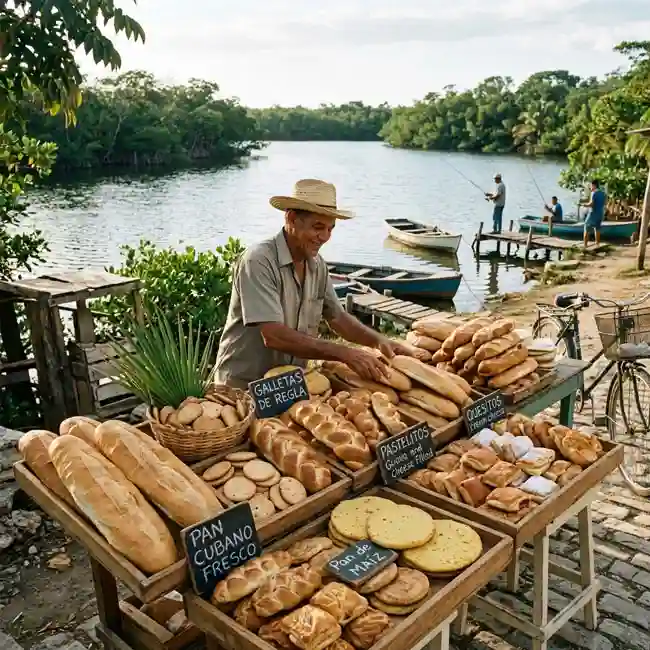
If there is one smell that defines a Cuban morning, it isn’t just the aroma of strong coffee—it’s the scent of toasted flour and lard wafting from the local panadería (bakery). Bread in Cuba isn't just a side dish; it is the skeleton that supports almost every meal. Whether it’s being dunked into a bowl of soup, pressed into a world-famous sandwich, or slathered with butter for a simple breakfast, bread is the humble hero of the island.
In this deep dive, we’re going to explore the crispy, airy, and sometimes sweet world of Cuba Breads. We aren't just talking about a loaf of dough; we’re talking about a cultural icon that has traveled from the colonial ovens of Spain to the tropical streets of modern-day Havana.
🇨🇺 🥖 The Crust of the Matter: What Makes Cuban Bread Unique?
You might look at a loaf of Cuban bread and think, "Oh, that looks like a French baguette or Italian bread." But hold on, my friend! One bite and you’ll realize it’s a totally different beast.
🐷 The Secret Ingredient: Lard
The defining characteristic of traditional Cuban bread is the use of lard (animal fat) instead of olive oil or butter. This gives the bread its signature flavor and a texture that is uniquely "shattery" on the outside and incredibly soft, almost pillow-like, on the inside. It makes the bread richer and more savory than its European cousins.
🌿 The Palmetto Leaf Tradition
Authentic Cuban bread has a long, thin indentation running down the center. Traditionally, bakers would place a damp strip of a palmetto leaf (from a palm tree) on top of the dough before baking. This kept the crust from splitting irregularly and helped the bread expand. While many modern bakeries use a knife to score the dough today, the "split" remains the mark of a true Cuban loaf.
🏛️ A Slice of History: How Bread Conquered the Island
Bread arrived in Cuba with the Spanish, but like everything else on the island, it adapted to the environment.
⚓ Havana: The Bakery of the Caribbean
During the colonial era, Havana was a major port. Bread was essential for sailors, but the humidity of the Caribbean made traditional European recipes go stale or moldy very quickly. Cuban bakers had to innovate, creating a bread that was best eaten fresh—very fresh. This created the culture of the "daily loaf," where people visit the bakery every single morning to get bread that is still warm from the oven.
🚂 The Expansion to Miami and Beyond
While we are focusing on the island's roots, it's impossible to ignore how this bread traveled. When Cubans migrated to Florida in the late 1800s and again in the 1960s, they took their bread recipes with them. Today, the "Tampa vs. Miami" debate over who makes the best Cuban bread is almost as intense as a baseball game! But the heart of it all will always be the traditional ovens in cities like Matanzas and Santiago de Cuba.
🥐 The Daily Roll: Iconic Cuban Bread Varieties
While the long loaf is the king, there is a whole family of breads you need to meet. Each has its own place in the Cuban day.
🥖 1. Pan Cubano (The Standard Loaf)
This is the classic. It’s long (sometimes up to 3 feet!), thin, and has that golden, flaky crust. It’s designed to be sliced into sections. The most famous way to eat it? Sliced down the middle, buttered, and pressed in a plancha (sandwich press) until it’s thin and crunchy.
🥖 2. Pan de Flauta (The Flute)
This is essentially a thinner, even more elongated version of the standard Cuban bread. Its name comes from its resemblance to a flute. Because it has more surface area for the crust, it is the ultimate choice for people who love that "crunch" factor.
🥯 3. Pan de Sal
While the name translates to "Salt Bread," it isn't overly salty. These are smaller, individual rolls. They are perfect for small snacks or for kids to take to school. They are soft and slightly denser than the long loaves.
🍞 4. Pan de Suave / Pan de Leche
For those with a softer palate, Pan de Suave (Soft Bread) is a dream. It’s often made with a bit of milk or more sugar, resulting in a texture similar to a brioche or a dinner roll. It’s commonly used for Elena Ruz sandwiches (a famous Cuban turkey and cream cheese sandwich).
☕ The Breakfast Ritual: Bread and Coffee
In Cuba, breakfast is rarely a giant plate of eggs and bacon. Instead, it’s a beautiful, minimalist ritual centered around the bread.
• El Pan con Timba: This is a classic snack—bread with guava paste and cheese. It’s the perfect balance of salty, sweet, and starchy.
• Café con Leche Dunking: If you want to eat like a local, you take your buttered Cuban bread (pan con mantequilla) and dunk it directly into your bowl of cafe con leche. The bread acts like a sponge, soaking up the sweet, creamy coffee while the crust maintains just enough structure.
🥪 The Sandwich Empire: Why the Bread is the Boss
We can't talk about Cuban bread without mentioning the Cuban Sandwich (the Cubano) and the Media Noche.
🥓 The Cubano
The bread is the most important part of a Cuban sandwich. Without the right bread, the ham, roasted pork, swiss cheese, pickles, and mustard just don't stay together. The lard in the bread allows it to toast to a perfect gold without becoming hard like a rock.
🌙 The Media Noche (Midnight Sandwich)
This sandwich is almost identical to the Cubano, but it uses Pan de Suave (the sweet, egg-based bread). This sandwich was traditionally served in Havana nightclubs around midnight (hence the name), providing a softer, sweeter bite for the late-night crowd.
📍 Traveling for Toast: Where to Find the Best Bread
If you find yourself wandering the island, keep your eyes peeled for these "doughy" hotspots:
1.Old Havana's State Bakeries: While they may look simple, these bakeries have ovens that have been seasoned for decades. Watching the bakers work the long loaves is like watching a choreographed dance.
2.Trinidad: In this colonial town, you’ll often find bread being delivered by bicycle. The sound of the baker’s whistle or bell is the signal for everyone to run out to the street with a few coins for their morning loaf.
3.The "Ventanitas" (Little Windows): In any Cuban city, look for a small window on the side of a house or building. Usually, they are selling coffee and "Pan con Bistec" (steak sandwiches). The bread is always toasted to order and is a great way to see how the bread handles high heat.
🌾 The Resilience of the Baker
Baking in Cuba is an art form born of necessity. Bakers often have to deal with fluctuating temperatures and varying flour quality. Yet, the consistency of the Cuban loaf remains incredible. It’s a testament to the skill passed down through generations. When you eat a piece of Cuban bread, you aren't just eating carbs—you’re eating the result of centuries of adaptation.
🥖 Why You’ll Fall in Love with Cuban Bread
There is a simplicity to Cuban bread that is deeply moving. It doesn't try to be fancy. It doesn't have seeds, nuts, or complex grains. It’s just flour, water, yeast, salt, and a little bit of fat. But in that simplicity, there is perfection. It’s the ultimate vessel for flavor, the perfect companion for a lonely cup of coffee, and the soul of the Cuban kitchen.
😕❓ FAQ
Q1.Can I make authentic Cuban bread without lard?
While you can use vegetable shortening or even butter, purists will tell you it’s not truly Cuban bread without lard. The lard provides a specific savory note and affects the way the crust shatters when you bite into it. If you’re looking for that authentic Havana taste, lard is the way to go!
Q2.How long does Cuban bread stay fresh?
Not long at all! Because it contains very few preservatives and is designed for a light, airy texture, Cuban bread is best eaten within 6 to 8 hours of leaving the oven. By the next day, it becomes quite hard—but don't throw it away! That’s when it becomes perfect for making Torrejas (Cuban French Toast) or bread pudding.
Q3. What is the difference between Cuban bread and French bread?
The main differences are the ingredients and the crust. French bread usually only uses flour, water, salt, and yeast, resulting in a chewier, tougher crust. Cuban bread includes fat (lard), which makes the crust thinner and flakier, and the inside much softer and more tender.
🍞 Wake Up to Havana: Mastering the Art of Cuban Holiday Baking
| 🌐 🍞 < Back | 🇨🇺 🥗 < Previous | Next > 🍱 🇨🇺 |