
🏠 Home > 🗺️ Recipes > 🍞 Breads > 🇨🇮 Côte d’Ivoire Breads
🇨🇮 🍞 Côte d’Ivoire Breads Recipes
Published by Supakorn | Updated: March 2026
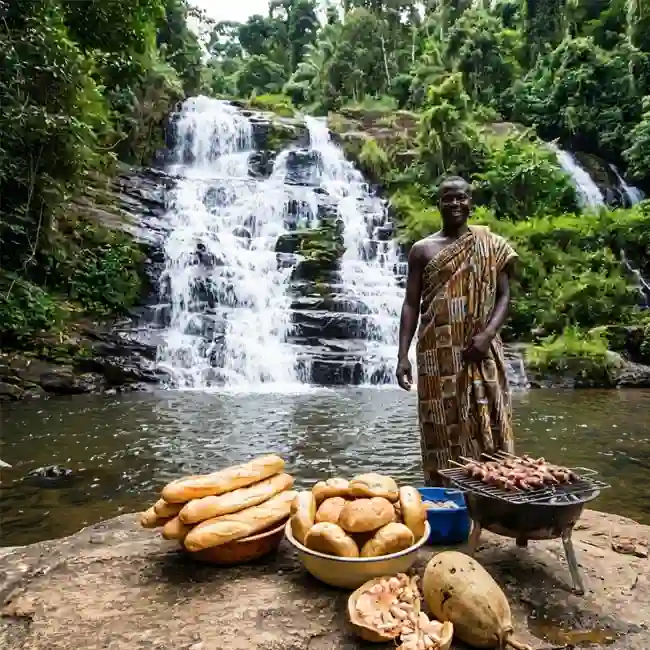
Hey there, fellow food explorer! If you’ve ever walked the vibrant, noisy, and wonderfully colorful streets of Abidjan, the first thing you’ll notice isn't just the music or the traffic—it’s the intoxicating scent of freshly baked bread.
In Côte d’Ivoire, bread is more than just a side dish; it’s the bridge between every meal. Whether it’s a quick breakfast on the go, a sturdy lunch base, or a late-night street snack, bread—in all its varied forms—is the undisputed backbone of the Ivorian diet. Let’s pull up a chair (or a plastic stool at a local boulangerie) and dig into the fascinating world of Ivorian grain culture.
🥖🧀 The Great Bread Tradition: Where French Flair Meets African Soul 🇨🇮 🌐🌾
Ivorian bread culture is a captivating blend of colonial history and local innovation. If you look closely, you’ll see the unmistakable influence of the French boulangerie—the crisp crusts, the airy interiors, and the ubiquitous baguette. But here’s the twist: Ivorians have taken these concepts and made them entirely their own.
In Côte d’Ivoire, bread is treated with respect. It’s rarely eaten alone; it’s almost always paired with something savory—a spicy sauce, a hearty stew, or grilled meats. It’s the ultimate "utility" food. You’ll see it wrapped in newspaper on the back of a motorbike, tucked under someone's arm on the way home, or served steaming hot in the middle of a bustling market. It represents the daily ritual of provision and community.
🥯 The Ivorian Bread Hall of Fame: What You Need to Know
You might be expecting just plain wheat loaves, but you’re in for a surprise. Ivorian bread culture celebrates both the refined and the rustic.
🥖 The Ivorian Baguette (The "Pain")
You haven't truly experienced Abidjan until you’ve bought a fresh baguette from a street-side vendor at 7:00 AM. Unlike the delicate, ultra-refined versions in Paris, the Ivorian baguette is often a bit sturdier—it has to be, to hold up against the rich, thick, and spicy sauces common in the region. It’s crunchy, golden, and almost always sold while still warm. It’s the king of the Ivorian breakfast table, often dipped into tea or used to scoop up leftovers from the night before.
🥔 The Cassava "Breads" (Attiéké and Beyond)
While technically not a baked "yeast bread" in the Western sense, we absolutely must mention Attiéké. It is the pride of Côte d’Ivoire. Made from fermented, grated, and steamed cassava, it’s often referred to as "African couscous." It serves the exact same role on the plate that bread does: it provides the perfect, mild starch to contrast with the intense heat and bold flavors of Ivorian stews. In many ways, it is the true bread of the land.
🥞 Fritter-Style "Breads"
On the street corners, you’ll find vendors selling small, fried dough pockets that serve as a quick bread-fix. These are savory, slightly chewy, and often spiced with local peppers or ginger. They aren't meant to be eaten with a knife and fork; they are "walk-and-talk" food—meant to be devoured while navigating the bustling city life.
🧺 The Daily Ritual: How Breads are Integrated
In Ivorian homes, bread isn't just "there"—it dictates the flow of the day.
• The Breakfast Rush: Morning in the city starts with a trip to the local bakery. The sound of a motorbike engine pulling up to a bread stall is the classic morning alarm. A fresh loaf of bread, some butter, and maybe a sweet spread or a bit of egg is the standard start to the day.
• Lunch on the Go: For the working class, a baguette filled with grilled meat, spicy onions, and tomatoes (a local version of a sandwich) is the ultimate fuel. It’s convenient, affordable, and incredibly filling.
• The Evening Social: Bread often makes an appearance at dinner, used to mop up the last bits of Sauce Graine (palm nut soup) or Sauce Arachide (peanut sauce). It’s the "clean-up crew" of the dinner table, ensuring not a single drop of delicious flavor goes to waste.
🌾 Grains and Roots: The Ingredients that Define the Flavor
To understand why Ivorian bread tastes the way it does, look at the geography. The coastal regions provide the humidity needed for vibrant harvests, while the northern savanna influences the use of grains like millet and sorghum.
• Wheat: Imported but localized. It’s used for the classic baguette and sandwich loaves.
• Cassava: The root that keeps the nation fed. It provides a slightly sour, tangy complexity to any dish it accompanies.
• Plantain Flour: Sometimes mixed into doughs, adding a faint, natural sweetness and a beautiful golden hue to the final product.
🥘 Why Bread is the Heartbeat of the Kitchen
Why do Ivorians love their bread so much? It’s simple: it’s inclusive. Bread is one of the most egalitarian foods in existence. Whether you are a student on a budget or a business executive in the plateau district, you are likely to be found eating the same high-quality baguette for lunch.
The "crunch" is a cultural staple. There is something satisfying about the contrast between a heavily spiced, slow-cooked stew and a simple, crusty piece of bread. It balances the palate, slows down the meal, and encourages the use of hands, which is a vital part of the Ivorian dining experience.
👩🍳 Pro-Tips for the Aspiring Baker/Foodie
If you want to bring a piece of Côte d’Ivoire into your kitchen:
• Think Texture: When you’re looking for a bread to accompany an Ivorian stew, don’t go for something too soft. You want a crusty loaf with a bit of "chew" that won’t get soggy the moment it touches the sauce.
• The "Dip" Test: If you aren't sure if a bread is "Ivorian enough," ask yourself: "Would this hold up in a bowl of peanut sauce?" If the answer is yes, you’re on the right track!
• Warmth is Non-negotiable: In Côte d’Ivoire, cold bread is a crime against flavor. If your bread has been sitting out, always toast it or warm it in the oven. It changes the chemistry of the crust and makes it feel like it was just pulled from the hearth.
❓ FAQ (Frequently Asked Questions)
Q1. Is it common to bake bread at home in Côte d’Ivoire?
While many households have the skills to bake, bread is largely a community-based endeavor. The boulangerie and the local street-corner vendor are central to daily life. It’s a social activity to walk to the local baker, so most people prefer buying their daily loaves fresh rather than baking from scratch every morning.
Q2. What is the best bread to pair with spicy Ivorian stews?
The classic, crusty baguette is the gold standard! Its internal structure is airy enough to absorb the rich, oily gravies of dishes like Sauce Graine without completely falling apart. If you want a more authentic "local" feel, pair your stews with Attiéké (cassava) instead of wheat bread!
Q3. Are there sweet breads in Côte d’Ivoire?
Yes! While bread is primarily savory, you will find variations of sweet bread—often enriched with a bit of local honey or fruit purees—served during special occasions or for the Goûter (afternoon snack time). These are usually softer and lighter than the crusty sandwich loaves.
🍞 Fuel Your Post-Workout Recovery: 3 High-Protein Ivoirian-Inspired Breads
👉 Master 3 High-Protein Ivoirian Breads
| 🌐 🍞 < Back | 🇨🇮 🥗 < Previous | Next > 🍱 🇨🇮 |