
🏠 Home > 🗺️ Recipes > 🍲 Soups > 🇨🇷 Costa Rica Soups > 🍲 1.Sopa de Pejibaye (Peach Palm Cream) , 2.Olla de Carne (Tico Beef Stew) , 3.Sopa Negra (Traditional Black Bean Soup)
🍲 The Ultimate Guide to Hearty and Soulful Costa Rican Soups
Published by Supakorn | Updated: April 2026
🇨🇷 🍲 Introduction: More Than Just a Bowl of Warmth 📚🌊
If you’ve ever found yourself in the misty highlands of Cartago or the breezy mountains of San José, you know that while Costa Rica is famous for its beaches, there is a side of this country that is cool, crisp, and perfect for a big bowl of steaming soup. In Costa Rica, soup isn't just a side dish or a light starter; it’s a cultural centerpiece. It’s the meal that families gather around every Sunday, and it’s the "comfort food" that defines the Pura Vida lifestyle.
Lately, Tico-style soups have been making waves in the international culinary scene. Travelers returning from their tropical vacations are craving that earthy, volcanic-soil-grown flavor that you can only get from authentic Costa Rican ingredients. These recipes are becoming popular abroad because they are naturally healthy, nutrient-dense, and rely on slow-cooking techniques that bring out the best in every vegetable.
In this deep-dive guide, I’m sharing three of the most iconic, unique, and "must-try" soup recipes that will transport your kitchen straight to the heart of Central America:
📚 • Recipe 1: Sopa de Pejibaye (Peach Palm Fruit Cream) – A silky, exotic delight unique to Costa Rica.
📚 • Recipe 2: Olla de Carne (Traditional Beef & Vegetable Stew) – The heavy-hitter of Tico tradition.
📚 • Recipe 3: Sopa Negra (Black Bean Soup) – The ultimate vegetarian-friendly comfort classic.
Whether you are looking to recreate a memory from your travels or simply want to try something completely new and delicious, these recipes are easy to follow and incredibly rewarding. Grab your biggest pot, and let’s get cooking!

🍊 Recipe 1: Sopa de Pejibaye (Peach Palm Cream)
✨ About this Recipe
If there is one soup that is "quintessentially Costa Rican" because you almost can't find it anywhere else, it’s Sopa de Pejibaye. The Pejibaye (Peach Palm fruit) is a starchy, orange-fleshed fruit that grows on a thorny palm tree. It has a flavor profile that is a cross between a chestnut, a sweet potato, and a squash. When turned into a cream soup, it becomes incredibly velvety and rich. It is a gourmet favorite in high-end restaurants in San José but remains a humble, traditional staple in local homes.
📝 Ingredients & Measurements
• 1 kilogram of Pejibayes (cooked and peeled)
• 4 cups of chicken or vegetable broth
• 2 cups of whole milk (or heavy cream for extra richness)
• 1 small yellow onion (finely diced)
• 1 red bell pepper (finely diced)
• 2 cloves of garlic (minced)
• 2 tablespoons of butter
• 1/2 teaspoon of salt
• 1/4 teaspoon of black pepper
• 1 pinch of nutmeg
• Fresh cilantro (for garnish)
🥣 Step-by-Step Instructions
1.Prepare the Fruit: If you bought fresh pejibayes, boil them in salted water for about 45 minutes until soft. Peel them, remove the seed, and dice the orange flesh. (If using canned/jarred, just peel and de-seed).
2.Sauté the Aromatics: In a large pot, melt the butter over medium heat. Add the onion, bell pepper, and garlic. Sauté until the onion is translucent and fragrant.
3.The Base: Add the diced pejibaye flesh to the pot and stir for 2 minutes to coat it in the butter and aromatics.
4.Simmer: Pour in the broth. Bring to a gentle boil, then reduce heat and simmer for about 15 minutes to let the flavors meld.
5.The Blend: Use an immersion blender to blend the soup until it is completely smooth. If you don't have one, transfer the mixture to a standard blender in batches.
6.Make it Creamy: Stir in the milk (or cream). Season with salt, pepper, and a tiny pinch of nutmeg.
7.Final Heat: Let it simmer for another 5 minutes on low heat. Do not let it boil vigorously once the milk is added.
8.Serve: Ladle into bowls and top with fresh cilantro and perhaps a few small pieces of chopped pejibaye for texture.
💡 Tips & Mistakes to Avoid
• Seed Removal: Make sure you remove every bit of the hard inner seed; even a small piece can ruin the smooth texture of your cream.
• Consistency Check: Pejibayes are very starchy. If the soup is too thick, simply add a little more broth or milk until it reaches your desired consistency.
• Don't Over-Boil: Once you add the milk or cream, keep the heat low. High heat can cause the dairy to separate or scorch at the bottom of the pot.
• Peeling Tip: It is much easier to peel pejibayes while they are still slightly warm after boiling.
❓ FAQ
Q1.What if I can't find Pejibaye?
You can find them jarred in most Latin American grocery stores. If you truly can't find them, a mix of roasted chestnuts and pumpkin is the closest substitute, though the flavor won't be exactly the same.
Q2.Is this soup sweet?
It has a natural, subtle sweetness, but it is definitely a savory dish.
Q3.Can I make it vegan?
Yes! Use vegetable broth and swap the milk/butter for coconut milk and olive oil.
📌 Summary
Sopa de Pejibaye is a sophisticated, unique tropical cream that will surprise anyone who tastes it. It’s the perfect "signature" dish to show off your Costa Rican culinary knowledge!

🥩 Recipe 2: Olla de Carne (Tico Beef Stew)
✨ About this Recipe
Olla de Carne isn't just a soup; it’s a weekend ritual. If you go to any Costa Rican home on a Saturday or Sunday, there is a high chance this is what’s for lunch. It is a rustic, hearty beef stew packed with large chunks of tropical root vegetables. The "Tico" way is to cut the vegetables into massive pieces, so you get a bit of everything on your plate. It’s nutrient-rich and provides enough energy for a whole day of hiking or working in the fields.
📝 Ingredients & Measurements
• 1 kilogram of beef brisket or short ribs (cut into large chunks)
• 10 cups of water
• 2 large carrots (peeled and cut into 2-inch chunks)
• 2 ears of corn (cut into 3-inch rounds)
• 500 grams of Yuca / Cassava (peeled and cut into large chunks)
• 500 grams of Chayote (cut into wedges)
• 2 large potatoes (peeled and quartered)
• 1 green plantain (peeled and cut into thick rounds)
• 1 large onion (quartered)
• 1 bunch of cilantro (chopped)
• 2 tablespoons of salt (adjust to taste)
• 1 teaspoon of achiote or paprika (for color)
🥣 Step-by-Step Instructions
1.Tenderize the Beef: In a very large pot, add the beef, water, onion, and a bit of salt. Bring to a boil, then cover and simmer for at least 1.5 to 2 hours until the beef is tender. (A pressure cooker can do this in 35 minutes).
2.Skim the Surface: Occasionally skim off any foam that rises to the top to keep the broth clear.
3.Add Hardy Veggies: Add the corn, carrots, and green plantain. These take the longest to cook. Simmer for 15 minutes.
4.Add the Roots: Add the Yuca and potatoes. Continue to simmer for another 15 minutes.
5.Final Veggies: Add the Chayote (and any squash if using). Cook until all vegetables are fork-tender but not falling apart.
6.Seasoning: Stir in the achiote or paprika and check for salt.
7.The Fresh Finish: Just before turning off the heat, stir in a large handful of fresh chopped cilantro.
8.Serve: This is traditionally served in a deep bowl with the broth and beef, and the vegetables often served on a side plate with a portion of white rice.
💡 Tips & Mistakes to Avoid
• The Beef Cut: Use meat with bone-in if possible (like short ribs). The marrow adds an incredible depth of flavor to the broth.
• Vegetable Sizing: Keep the chunks big! If you cut them too small, they will turn into mush during the long simmering process.
• Plantain Stage: Use a green plantain, not a yellow one. The green one stays firm and adds a nice starchiness to the stew.
• Don't Rush: This is a "slow" food. The longer it simmers on low heat, the better the broth will be.
❓ FAQ
Q1.What is Chayote?
It’s a green, pear-shaped squash common in Latin America. If you can't find it, zucchini is a decent substitute, but add it at the very end as it cooks fast.
Q2.Can I make this in a slow cooker?
Yes! Put the beef in for 8 hours on low, and add the vegetables halfway through.
Q3.Is it better the next day?
Absolutely. Like most stews, the flavors settle and deepen overnight in the fridge.
📌 Summary
Olla de Carne is the soul of Costa Rican home cooking. It’s a complete meal in one pot that satisfies the hunger of an entire family while celebrating the bounty of the earth.
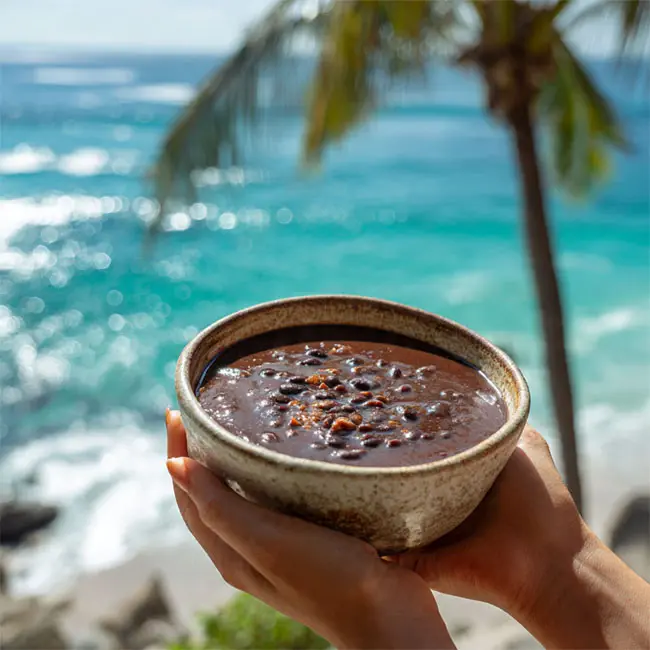
🌑 Recipe 3: Sopa Negra (Traditional Black Bean Soup)
✨ About this Recipe
Sopa Negra is the ultimate "fix-all" soup. Feel a cold coming on? Sopa Negra. Need a light but filling dinner? Sopa Negra. It is a simple, elegant soup based on black beans, usually enriched with poached eggs that cook right in the broth. It is traditionally served with a side of white rice and corn tortillas. It’s incredibly popular because it’s economical, healthy, and high in protein, making it a vegetarian favorite across the country.
📝 Ingredients & Measurements
• 2 cups of dried black beans (soaked overnight)
• 8 cups of water
• 1 large onion (finely diced)
• 1 red bell pepper (finely diced)
• 4 cloves of garlic (minced)
• 1 bunch of cilantro (chopped)
• 4 to 6 eggs (one per person)
• 1 teaspoon of salt
• 1/2 teaspoon of black pepper
• 1 tablespoon of olive oil
• Salsa Lizano (the secret Costa Rican sauce, to taste)
🥣 Step-by-Step Instructions
1.Cook the Beans: In a large pot (or pressure cooker), cook the soaked black beans in 8 cups of water with a bit of salt until they are soft. (Keep the cooking liquid—that’s your soup base!)
2.Sauté the Olores: In a separate small pan, sauté the onion, bell pepper, and garlic in olive oil until golden and fragrant.
3.Combine: Add the sautéed mixture into the pot with the beans and their liquid.
4.Add Flavor: Stir in half of the chopped cilantro and a generous splash of Salsa Lizano. Let it simmer for 10 minutes so the beans absorb the aromatics.
5.The Eggs: This is the signature step. Crack the eggs one by one and gently drop them into the simmering bean soup. Do not stir!
6.Poach: Cover the pot and let the eggs poach in the liquid for about 3-5 minutes until the whites are set but the yolks are still soft.
7.Final Touch: Turn off the heat and stir in the remaining fresh cilantro.
8.Serve: Ladle the beans and broth into a bowl, making sure to carefully place one poached egg in each bowl. Serve with a scoop of white rice on the side.
💡 Tips & Mistakes to Avoid
• The "Black" Liquid: Never drain the beans! The dark, nutrient-rich water they were cooked in is exactly what makes this "Sopa Negra."
• Egg Management: Don't drop the eggs into a rolling boil, or they will break apart. A gentle simmer is key for perfect poached eggs.
• Bean Texture: Some people like to blend a cup of the beans and add them back in to make the soup thicker. It’s a great trick for a creamier texture!
• Soaking is Key: Soaking your dried beans overnight not only speeds up cooking but also makes them much easier to digest.
❓ FAQ
Q1.Can I use canned beans?
You can, but you'll need to add vegetable broth as the "soup," and it won't be quite as rich as the natural bean liquor.
Q2.Is Salsa Lizano necessary?
It’s highly recommended for that authentic Tico taste, but a mix of Worcestershire sauce and a bit of cumin can work in a pinch.
Q3.How do I serve the rice?
Some people like to put the rice directly into the soup bowl, while others keep it on a separate plate. There are no rules in Pura Vida!
📌 Summary
Sopa Negra is simple, rustic, and incredibly satisfying. It’s the perfect example of how a few humble ingredients can create a world-class meal.
🌈 Final Thoughts: Bringing Pura Vida to Your Kitchen
I hope these recipes inspire you to look at "soup" in a whole new way. Costa Rican soups are more than just liquid; they are textures, traditions, and a deep appreciation for the land's produce. Whether you’re trying the exotic Sopa de Pejibaye, the massive Olla de Carne, or the comforting Sopa Negra, you’re getting a true taste of Costa Rican life.
Don't worry if your first Olla de Carne looks a little messy—it’s supposed to be rustic! The most important thing is the flavor and the love you put into the slow-cooking process. Try these out one by one, and I promise you’ll find a new favorite for those chilly nights.
Which one are you going to try first? If you make one, please share your experience or any little "tweaks" you made to the recipe. I love hearing how these Tico flavors travel across the world. Happy cooking, friend! 🥣🇨🇷
| 🇨🇷 🍲 < Back |