
🏠 Home > 🗺️ Recipes > 🍞 Breads > 🇨🇷 Costa Rica Breads
🇨🇷 🍞 Costa Rica Breads Recipes
Published by Supakorn | Updated: April 2026
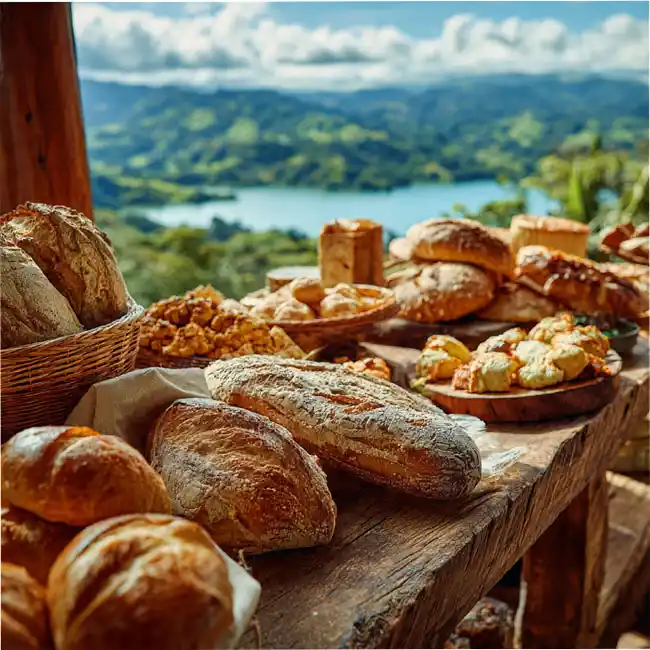
🥖 🇨🇷 The Heartbeat of the Pura Vida Kitchen 📚🥡
If you’ve ever walked through a small town in the Central Valley at 3:00 PM, you know exactly what I’m talking about. That intoxicating, buttery, slightly sweet aroma wafting through the humid air isn't just a coincidence—it's a ritual. In Costa Rica, bread isn't just a side dish; it’s a social glue.
The "Pura Vida" lifestyle is often associated with lush rainforests and pristine beaches, but the real magic happens around a wooden table with a warm loaf of Pan Casero. Tico food culture is grounded in simplicity and heartiness. While many neighboring countries focus heavily on corn tortillas, Costa Rica has a deep-seated love affair with flour, yeast, and local cheeses. It’s a fusion of Spanish colonial influence, Afro-Caribbean soul from the Limón coast, and indigenous staples.
🥨 Must-Try Loaves: The Stars of the Panadería
When you step into a local panadería (bakery), the variety can be overwhelming. You aren't just looking at "bread"; you're looking at history baked into different shapes and textures. Here are the heavy hitters you need to know:
🧀 Pan Casero (Homemade Style Bread)
This is the "Grandmother" of all Costa Rican breads. It’s thick, dense, and often flavored with local sour cream (natilla) or cheese. It’s the kind of bread that feels heavy in your hand but melts in your mouth. It’s rustic, unpretentious, and usually served in thick slabs.
🥧 Enchiladas (Not the Mexican kind!)
Wait, don't get confused! In Costa Rica, an Enchilada is a savory pastry. It’s a flaky, rectangular bread stuffed with spiced mashed potatoes and sometimes minced meat. It’s the ultimate "on-the-go" snack for workers and students alike.
🥯 Pan de Elote (Sweet Corn Bread)
This straddles the line between bread and cake. Made with fresh corn kernels, it has a grainy texture and a natural sweetness that doesn't need any frosting. It’s the perfect companion for a rainy afternoon in Monteverde.
🥥 Pan Bon (The Caribbean Treasure)
If you head east to the province of Limón, the bread changes entirely. Pan Bon is a dark, spicy, fruit-filled bread brought over by Jamaican immigrants. It’s rich with molasses, vanilla, and dried fruits. It’s dense, flavorful, and tells the story of the Afro-Costa Rican heritage.
🥖 Quesadilla Costa rricense
Forget the cheese-filled tortilla. In the Tico bakery world, a Quesadilla is a sweet, spongy bread made with corn flour and a healthy dose of salty cheese. It’s a beautiful balance of sweet and savory that defies expectations.
🌅 The "Cafecito" Culture: Eating Like a Local
In Costa Rica, time follows a different rhythm, especially during the Cafecito. Around 3:00 PM or 4:00 PM, the country collectively pauses. This isn't just a coffee break; it’s an essential daily ceremony.
• The Pairing: Bread is never eaten alone. It is almost always accompanied by a steaming mug of coffee or a fresh fruit fresco.
• The Dip: Don’t be surprised to see locals dipping their dry bread into their coffee. It’s not "bad manners"—it’s the best way to enjoy the texture!
• The Social Aspect: This is when families catch up, neighbors gossip over the fence, and business deals are softened with a piece of Pan Dulce.
Bread also plays a supporting role in the national breakfast, Gallo Pinto. While rice and beans are the stars, a side of toasted white bread with a thick layer of butter or natilla is the standard way to round out the plate.
⛰️ From Volcanoes to Beaches: Bread and Geography
The flavor of the bread often changes with the elevation.
1.The Central Valley (San José, Heredia, Alajuela): Here, you’ll find the classic wheat-based breads. The cooler climate makes the warm ovens of the panaderías feel like a sanctuary. This is the land of the Orejitas (crunchy butterfly-shaped pastries) and Gatos.
2.The Guanacaste Lowlands: This is cowboy country. The heat is intense, and the food reflects a deep indigenous history with corn. You’ll find more Tanelas and Rosquillas (crunchy corn rings) here, which are technically "breads" but have a cracker-like snap that survives the tropical humidity better than soft loaves.
3.The Southern Zone & Coastal Areas: Bread here often incorporates tropical elements. Think hints of coconut or breads designed to be sturdy enough to carry on a boat for a day of fishing.
🌾 The "Secret" Ingredients
What makes Tico bread taste so unique? It’s rarely about fancy techniques and usually about the local pantry:
• Natilla: Costa Rican sour cream is thinner and saltier than the American version. Adding this to dough creates a richness you can’t replicate with butter alone.
• Queso Turrialba: A mild, farmhouse cheese that softens but doesn't completely disappear when baked.
• Tapa de Dulce: Unrefined cane sugar (panela) used to sweeten darker breads, giving them a smoky, earthy depth.
🥖 Why We Obsess Over the "Olor a Pan"
The "smell of bread" is a nostalgic trigger for every Costa Rican. It represents home, safety, and the comfort of tradition. Even as modern supermarkets pop up with plastic-wrapped loaves, the local Panadería de Barrio (neighborhood bakery) remains the soul of the community. People still prefer to walk down the street to get a bag of warm rolls wrapped in brown paper, the heat from the bread seeping through the bag against their chest as they walk home.
The bread here isn't trying to be a French baguette or an Italian sourdough. It isn't about perfectly airy holes or a glass-shattering crust. It’s about being sustancioso (substantial). It’s bread that fills your belly and warms your spirit.
🤔❓ FAQ: Everything You Wanted to Know About Costa Rican Breads
Q1. Is Costa Rican bread mostly sweet or savory?
It’s a beautiful mix of both! While there are plenty of salty, cheesy breads like Pan Casero, Ticos have a huge sweet tooth. You’ll find many breads topped with sugar crystals or filled with guava paste (dulce de guayaba).
Q2. Can I find gluten-free bread options in Costa Rica?
While traditional wheat-based bakeries are the norm, Costa Rica has a secret weapon: corn and cassava (yuca). Many traditional snacks like Rosquillas or Bizcochos are naturally made with corn flour, making them great alternatives for those avoiding gluten, though always check for cross-contamination!
Q3. What is the best time of day to buy bread in Costa Rica?
Timing is everything! Most bakeries have two "peak" times: early morning (around 6:00 AM) for breakfast, and mid-afternoon (around 2:30 PM to 3:00 PM) just in time for the afternoon cafecito. If you go at 3:00 PM, you’re almost guaranteed to get something straight from the oven.
🍞 The Secret to Mastering Soft and Velvety Costa Rican Breads
👉 3 Best Specialty Costa Rican Breads
| 🌐 🍞 < Back | 🇨🇷 🥗 < Previous | Next > 🍱 🇨🇷 |