
🏠 Home > 🗺️ Recipes > 🍝 Main Dishes > 🇨🇳 China Main Dishes > 🍝 1.Tomato and Egg Stir-Fry
🍝 Easy Chinese Tomato and Egg Stir-Fry: The 15-Minute Main Dish Everyone Loves
Published by Supakorn | Updated: November 2026
🥢 Introduction – Discover Tomato and Egg Stir-Fry: Authentic Chinese Comfort Food
Picture this. It's a busy weeknight, you're hungry, and you want something warm and homemade that doesn't take an hour. You open the fridge and find a few eggs and some ripe tomatoes. In millions of Chinese homes, that's dinner sorted.
Meet Tomato and Egg Stir-Fry, called xīhóngshì chǎo jīdàn (西红柿炒鸡蛋) in Mandarin. If you ask people in China what dish tastes like home, a lot of them will name this one. It's often the first thing kids learn to cook. Students living abroad make it when they miss their mom's kitchen, and nearly every family has its own small twist on it.
The dish has also travelled well beyond China. Food bloggers, home cooks, and travelers who have eaten in local Chinese canteens keep coming back to it. They love the fluffy golden eggs and the sweet-tangy tomato sauce that soaks into a bowl of steamed rice. When you travel around China, you'll find it everywhere, from little family-run restaurants in Beijing hutongs to university cafeterias in Chengdu and roadside diners in Guangdong. You won't usually see it on fancy banquet menus. It belongs to everyday life, and that's a big part of why people love it.
Here's the good news: this is an authentic, traditional home-style recipe, adjusted so anyone can make it in a regular kitchen. You don't need a wok, rare ingredients, or special skills. If you can crack an egg and chop a tomato, you can make this.
So grab your apron. Let's cook it together, and you'll have a proper Chinese main dish on the table in about 15 minutes. 🍅🥚
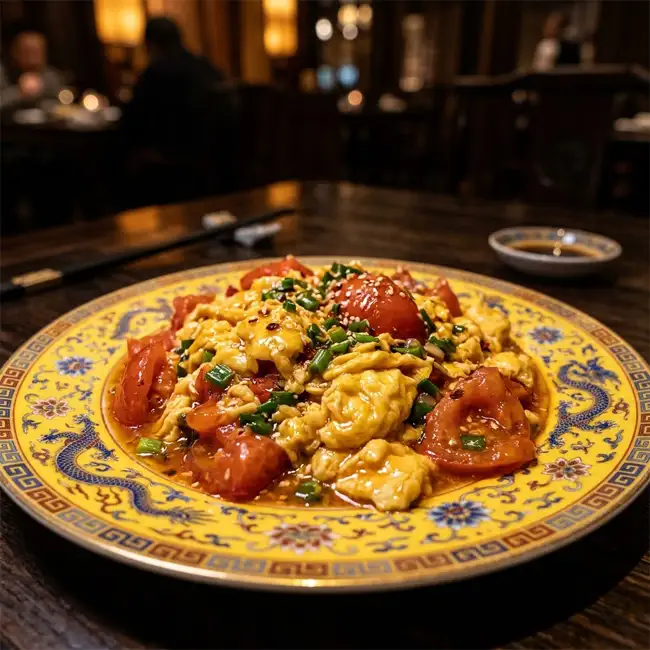
🍳 Authentic Tomato and Egg Stir-Fry Recipe
📖 Culinary Background & Flavor Profile
Okay, let's talk about why this simple dish is so good.
The first bite gives you soft, pillowy curds of egg with lightly crisp, golden edges where they hit the hot oil. Then the tomato sauce comes in. It's juicy, glossy, a bit sweet, a bit tangy, and full of savory flavor. The tomatoes cook down until they release their juices, and that turns into a silky sauce that coats every piece of egg.
The flavor depends on balance. Ripe tomatoes bring natural acidity, a pinch of sugar softens it, salt makes everything taste brighter, and scallions add a fresh, mild onion note. Some cooks add a few drops of sesame oil at the end, which gives it a nutty aroma.
The texture contrast matters just as much. The eggs should be tender and custardy. The tomatoes should be soft and partly broken down but still in recognizable pieces. Spooned over hot jasmine rice, the sauce soaks into every grain.
Chinese food lovers also argue about this dish. People in northern China often like it more savory. Many cooks in southern China prefer it noticeably sweeter. Some families add ketchup for extra color and tang, and others think that's a crime. You get to pick your side, and we'll show you how to adjust it.
🧂 Essential Ingredients & Precise Measurements
Serves: 2 to 3 people as a main dish with rice
⭐ For the Eggs:
◦ 4 large eggs, at room temperature if possible
◦ 1/4 teaspoon fine salt
◦ 1 tablespoon water (keeps the eggs extra fluffy)
◦ 2 tablespoons neutral cooking oil (vegetable, canola, or peanut oil)
⭐ For the Tomatoes:
◦ 3 medium ripe tomatoes, about 450 g / 1 lb total
◦ 1 tablespoon neutral cooking oil
⭐ For the Aromatics:
◦ 2 scallions (green onions), whites and greens separated
◦ 1 small garlic clove, finely minced (optional but tasty)
⭐ For the Sauce & Seasoning:
◦ 1 to 2 teaspoons white sugar (adjust to how sweet you like it)
◦ 1/2 teaspoon fine salt
◦ 1 tablespoon ketchup (optional, for deeper color and tang)
◦ 1 teaspoon light soy sauce (optional, for extra savoriness)
◦ 60 ml / 1/4 cup water
◦ 1/2 teaspoon cornstarch mixed with 1 tablespoon cold water (optional, for a glossier sauce)
⭐ For Garnish & Finishing:
◦ Sliced scallion greens
◦ A few drops of toasted sesame oil
◦ A small pinch of ground white pepper
⭐ To Serve:
◦ Freshly steamed jasmine rice, about 1 cup cooked per person
👩🍳 Step-by-Step Cooking Instructions
1.Prep the tomatoes. Cut out the tough core at the top of each tomato. Cut each one into 6 to 8 wedges, or into bite-sized chunks if you like.
2.Optional: peel the tomatoes. For a silkier sauce, score a small "X" on the bottom of each tomato. Dip them in boiling water for 30 seconds, then move them to cold water. The skins will slip right off. Skip this step when you're in a hurry.
3.Prep the aromatics. Slice the scallions, keeping the white parts and green parts separate. Mince the garlic if you're using it.
4.Beat the eggs. Crack the eggs into a bowl, then add 1/4 teaspoon of salt and 1 tablespoon of water. Whisk well for about 30 seconds, until the mixture is evenly yellow with lots of small bubbles on top.
5.Heat the pan. Put a wok or large non-stick skillet over medium-high heat. Add 2 tablespoons of oil and wait until it shimmers. A drop of egg should sizzle right away.
6.Cook the eggs. Pour in the beaten eggs. Let them sit for 5 to 10 seconds until the edges puff up. Then gently push them from the edges toward the center with a spatula to form large, soft curds.
7.Remove the eggs early. When the eggs are about 80% set (still a little wet on top), move them to a plate right away. They'll finish cooking later.
8.Sauté the aromatics. Put the pan back on the heat and add 1 tablespoon of oil. Add the scallion whites and garlic and stir for about 15 seconds, until they smell fragrant.
9.Cook the tomatoes. Add the tomato wedges and stir-fry for 1 to 2 minutes, until they start to soften and release their juices.
10.Season the tomatoes. Add the sugar, 1/2 teaspoon of salt, the ketchup and soy sauce if you're using them, and 60 ml of water. Stir well, then let it simmer for 2 to 3 minutes. Press a few tomato pieces with the back of your spatula to help make the sauce.
11.Thicken (optional). Stir the cornstarch slurry again, pour it in, and stir for about 20 seconds until the sauce turns glossy and coats the spoon lightly.
12.Bring it together. Put the eggs back in the pan. Gently fold them into the tomato sauce for 30 to 60 seconds, breaking them into bite-sized pieces as you go.
13.Finish and garnish. Turn off the heat. Add a few drops of sesame oil and a pinch of white pepper, then top with the scallion greens.
14.Serve right away. Spoon it over hot steamed rice, making sure the sauce soaks into the rice.
🔥 Chef's Pro Tips & Common Mistakes to Avoid
⚠️ Pro Tips for the Best Results:
• Choose the ripest tomatoes you can find. Deep red, slightly soft tomatoes on the vine give you the sweetest, juiciest sauce. Pale, hard supermarket tomatoes taste flat and watery.
• Add a splash of water to the eggs. That spoonful of water turns into steam while the eggs cook, so the curds come out lighter and fluffier.
• Use hot oil for the eggs. The oil has to be properly hot so the eggs puff up the moment they touch the pan. That's how you get the tender center and lightly golden edges.
• Taste before you add the eggs back. Tomatoes vary a lot. Taste the sauce and adjust it with a pinch more sugar if it's too sour, or a pinch more salt if it tastes flat.
• Use ketchup sparingly. About a tablespoon makes the color and flavor deeper, especially when your tomatoes aren't very ripe. With too much, the dish starts to taste like pasta sauce.
• Use a non-stick pan if you don't have a wok. It works really well here and the eggs won't stick.
⚠️ Common Mistakes to Avoid:
• Overcooking the eggs in the first step. This is the most common mistake. If the eggs are fully cooked before they go back into the sauce, they'll turn rubbery and dry. Take them out while they're still slightly runny.
• Adding the tomatoes to a cold pan. They'll stew slowly and turn mushy without developing flavor. Wait until the pan is properly hot.
• Making it too watery. Too much water gives you soup instead of a saucy stir-fry. Start with the measured amount and only add more if the tomatoes are very dry.
• Skipping the sugar entirely. Even if you like it savory, a small pinch of sugar balances the acidity of the tomatoes. Without it, the dish can taste sharp.
• Stirring the eggs too much. Constant scrambling breaks the eggs into tiny, grainy bits. Fold them slowly so you get big, soft curds.
• Cutting tomatoes too small. Tiny pieces dissolve completely. Larger wedges give you a nice mix of sauce and juicy tomato pieces.
🍚 Pairings & Serving Suggestions
Tomato and egg stir-fry was made to be eaten with rice, but there are plenty of other ways to serve it.
✦ Classic Ways to Serve:
• Over steamed jasmine rice: This is the most traditional way. The sauce soaks into the rice and makes it extra flavorful.
• As part of a family-style meal: In Chinese homes, people usually share several dishes at once. Serve it with a green vegetable stir-fry and a simple soup for a balanced dinner.
• Over noodles: Toss it with hand-pulled or wheat noodles for a quick tomato egg noodle bowl, which is a beloved street food in northern China.
✦ Great Side Dishes:
• Garlic stir-fried bok choy or choy sum
• Smashed cucumber salad with garlic and black vinegar
• Stir-fried green beans
• A light seaweed and egg drop soup or a simple tofu soup
✦ Drink Pairings:
• Jasmine tea: Its floral notes go nicely with the sweet-tangy sauce.
• Chrysanthemum tea: It's light and slightly sweet, and many Chinese families drink it with home-style meals.
• Oolong tea: Its roasted, mellow flavor cuts through the richness of the eggs.
• Warm soy milk: This comforting choice is popular across China, especially for a casual lunch.
• Iced lemon tea: Great on hot summer days.
☯️❓ Frequently Asked Questions (FAQ)
Q1. How do I store leftover tomato and egg stir-fry?
Let it cool completely, then keep it in an airtight container in the refrigerator for up to 2 days. Reheat it gently in a pan over low heat or in the microwave in short bursts. The eggs will be a little firmer than when fresh, but it still tastes great. We don't recommend freezing it, because the eggs turn spongy when thawed.
Q2. Can I use canned tomatoes instead of fresh?
Yes. Use about 400 g / 14 oz of canned whole or diced tomatoes, drained of some liquid. Canned tomatoes have a deeper, more concentrated flavor, so reduce the ketchup or leave it out. Fresh, ripe tomatoes are still the most authentic choice.
Q3. Should tomato and egg stir-fry be sweet or savory?
Both are authentic. Many people in northern China prefer it more savory, with just a pinch of sugar. In the south, families often make it sweeter. Start with 1 teaspoon of sugar, taste, and adjust to your liking.
Q4. Is tomato and egg stir-fry healthy?
It's a fairly balanced dish. Eggs give you high-quality protein, and tomatoes add vitamin C and antioxidants such as lycopene, which your body absorbs better when it's cooked with a little oil. To make it lighter, use less oil and leave out the ketchup.
⏱️ Recipe Quick Summary
• Dish: Chinese Tomato and Egg Stir-Fry (Xīhóngshì Chǎo Jīdàn)
• Category: Main Dish
• Cuisine: Chinese (Home-Style)
• Prep Time: 5 minutes
• Cook Time: 10 minutes
• Total Time: 15 minutes
• Servings: 2 to 3 people
• Difficulty: Easy (beginner-friendly)
• Key Equipment: Wok or large non-stick skillet, spatula, mixing bowl
🌟 Final Thoughts & Kitchen Inspiration
Cooking authentic international food at home doesn't have to be complicated, and this dish shows it. With a few eggs, some ripe tomatoes, and 15 minutes, you've made a dish that families across China have loved for generations.
What makes this recipe special is how flexible it is. Make it sweeter, more savory, saucier, or extra garlicky. Add a little chili for heat, or serve it over noodles instead of rice. There's no single "perfect" version, only the one that tastes right to you and the people you're feeding.
So here's the challenge: try it this week. It might well become your favorite quick weeknight dinner. When you make it, tell us how it went in the comments. Did you go sweet or savory? Did you use ketchup? Did your family ask for seconds? We'd love to hear your stories and tweaks.
If this recipe helped you, share it with a friend who needs an easy, comforting dinner idea. Good home cooking is better when it's shared. 💛
🏮 Culinary Heritage & Cultural Credit to China
We owe this beloved dish to Chinese home cooks, the generations of parents, grandparents, and everyday cooks who turned a few humble ingredients into a national comfort food.
The tomato itself has an interesting history in China. It came from the Americas and is generally believed to have arrived in China several centuries ago. At first it was grown mostly as an ornamental curiosity. Its Chinese names show where it came from: 番茄 (fānqié) roughly means "foreign eggplant," and 西红柿 (xīhóngshì) means "western red persimmon." Tomatoes only became an everyday ingredient on Chinese tables during the 20th century, and as they spread, home cooks found that they paired wonderfully with eggs.
Tomato and egg stir-fry never came from an imperial palace or a famous chef. It grew up in ordinary family kitchens, school canteens, and small neighborhood eateries, and that's why it means so much to people. For many Chinese people, it brings back memories of childhood, family meals, and the comfort of home. Students who study abroad often say it's the first dish they learn to cook when they miss home.
It also reflects key ideas in Chinese home cooking:
• Balance of flavors, with sweet, sour, and savory working together
• Respect for simple ingredients, letting fresh produce shine
• Efficiency and practicality, with nourishing meals made quickly with heat and skill
• Sharing, since dishes go in the middle of the table for everyone
When you make this dish in your own kitchen, you're joining a tradition shared by millions of families across China and around the world. We offer our sincere thanks and respect to the Chinese culinary heritage and the countless home cooks who have kept this simple, delicious dish alive and loved. 🇨🇳🙏
| 🇨🇳 🍝 < Back |