
🏠 Home > 🗺️ Recipes > 🍲 Soups > 🇨🇱 Chile Soups
🇨🇱 🍲 Chile Soups Recipes
Published by Supakorn | Updated: May 2026
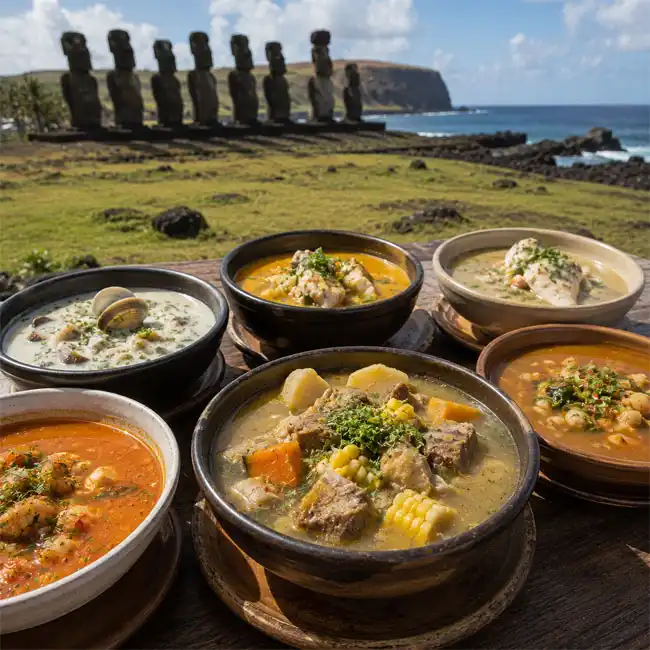
🇨🇱 🥘 The Heartbeat of the Andes: An Intro to Chile’s Soulful Soups
When you think of Chile, your mind might jump straight to the towering peaks of the Andes or the rugged beauty of Patagonia. But if you really want to get to the "soul" of this long, slender nation, you’ve got to look at what’s simmering in the pot. Chilean soup culture isn't just about nutrition; it’s a warm hug in a bowl, a historical map of migrations, and a celebration of one of the most diverse climates on the planet.
Chilean soups are incredibly unique because they represent a "mestizo" (mixed) heritage. You have the ancient traditions of the Mapuche people blending seamlessly with Spanish colonial influences and later European migrations. Because Chile stretches over 4,000 kilometers, the "daily soup" changes drastically as you move. In the north, you feel the desert's heat and the high-altitude Andean influence. In the central valleys, it’s all about the fertile earth’s bounty. And once you hit the south and the coast? It’s a seafood extravaganza that would make any foodie’s head spin.
🌊 From the Pacific to the Plate: Coastal Liquid Gold
Chile has a coastline that seems to go on forever, so it’s no surprise that some of their most legendary "soups" are born from the sea. These aren't just thin broths; they are thick, rich, and deeply satisfying stews that carry the scent of the Pacific Ocean.
🐟 The Legendary Caldillo de Congrio
If there is one soup that defines the Chilean coast, it is the Caldillo de Congrio (Conger Eel Soup). This dish is so iconic that Chile’s Nobel Prize-winning poet, Pablo Neruda, actually wrote an ode to it! It’s traditionally served in a heavy clay bowl (paila) which keeps the soup bubbling hot. Imagine a rich broth infused with onions, garlic, carrots, and bell peppers, cradling a succulent piece of conger eel. It’s hearty, bright, and deeply connected to the fishing villages that dot the coast.
🦀 The Indulgent Pastel de Jaiba
While often baked, many variations of Pastel de Jaiba (Crab Pudding/Stew) lean into that creamy, soupy consistency that makes it a comfort staple. Using the sweet meat of the Chilean blue crab, this dish is a creamy masterpiece usually thickened with bread soaked in cream. It represents the luxury of the Chilean sea, yet it remains a humble favorite in seaside "picadas" (local eateries).
🏔️ Andean Comfort: The Warmth of the Central Valleys
As you move inland toward the mountains and the lush central valleys, the focus shifts from the sea to the land. This is the realm of the "Cazuela," arguably the most famous dish in the entire country.
🍲 The Mighty Cazuela
If you ask any Chilean what their "mother’s cooking" tastes like, they will likely say Cazuela. This is the ultimate comfort food. What makes it special is the way it’s served: you get a large piece of meat (beef or chicken), a whole potato, a chunk of pumpkin (zapallo), and a piece of corn on the cob, all swimming in a clear, flavorful broth with rice or fine noodles. The pumpkin is the secret—it partially melts into the broth, giving it a signature golden hue and a subtle sweetness that balances the savory meat.
🌽 Carbonada: The Winter Lifesaver
Another staple you’ll find in the central heartland is Carbonada. Unlike the large chunks in a Cazuela, Carbonada features finely diced meat and vegetables. It’s a thick, colorful summer or winter soup packed with peas, carrots, potatoes, and corn. It was traditionally a quick meal for workers, designed to provide maximum energy for a long day in the fields.
❄️ Southern Wonders: Chiloé and the Deep South
The further south you go, the rainier and colder it gets. In places like the Chiloé Archipelago, the food becomes even more robust to fight off the misty chill.
🥘 Curanto en Olla (Pulmay)
While traditional Curanto is cooked in a hole in the ground covered with nalca leaves, the "home version" is Pulmay, a massive seafood and meat stew made in a giant pot. It’s a wild mix of smoked meats, sausages, chicken, and various shellfish like giant mussels (choritos). The broth that settles at the bottom of the pot is considered a "liquid elixir" and is often served in a separate cup alongside the solids. It’s a communal feast that brings families together during the long southern winters.
🥔 Valdiviano: The Soldier's Soup
Hailing from the city of Valdivia, this soup has a rugged history. It was originally created by soldiers and is essentially a "re-use" soup made with Charqui (dried llama or beef jerky), onions, and leftover potatoes. It’s salty, smoky, and incredibly filling—perfect for the damp, cold climate of the southern rainforests.
🏡 The "Sobremesa" Culture: More Than Just Eating
In Chile, eating soup isn't a rushed affair. It’s part of the Sobremesa—the time spent sitting around the table talking long after the food is gone. When a steaming bowl of soup is placed in front of you, it’s an invitation to slow down.
The way of life here revolves around the seasons. In the summer, you’ll see people enjoying Porotos Granados, a thick bean soup with fresh cranberry beans, corn, and pumpkin. Even in the heat, a hot soup is welcomed! In the winter, the soups become heavier, designed to keep the damp cold of the Chilean homes at bay. Most of these dishes are served with a side of Pebre, a spicy Chilean salsa made of tomatoes, onions, cilantro, and chili peppers, allowing you to customize the heat of your bowl.
📍 Culinary Tourism: Where to Find the Best Bowls
If you’re traveling through Chile, your "soup map" should look like this:
• Valparaiso & Viña del Mar: Head to the local markets (Mercado Cardonal) for a bubbling Caldillo de Congrio while watching the ships come in.
• Santiago: Visit the Mercado Central or Vega Central. It’s chaotic, loud, and the best place to find a massive Cazuela de Vacuno (Beef Cazuela) for a bargain price.
• Pucón & Villarrica: Look for Mapuche-influenced soups that use Merkén (smoked chili pepper) and local pine nuts (piñones).
• Chiloé: You cannot leave without trying Pulmay in a local "fogon" (a traditional cooking hut).
✨ Why Chilean Soups Rule the World (In Our Opinion!)
The beauty of Chilean soup lies in its honesty. There are no fancy foams or tiny portions here. It’s about the quality of the ingredients—the sweetness of the Chilean pumpkin, the freshness of the cold-water seafood, and the richness of the local meats. It’s a cuisine that respects the land and the sea, turning simple ingredients into a masterpiece of liquid gold.
Whether you are a solo traveler looking for a warm meal or a home cook wanting to explore new flavors, Chile’s soup game offers a world of discovery. It’s hearty, it’s healthy, and most importantly, it’s made with a lot of heart.
✋❓ FAQ
Q1. What is the most famous soup in Chile?
The most iconic is definitely the Cazuela. Whether it's made with beef (vacuno) or chicken (ave), it is the quintessential Chilean comfort dish found in almost every home and traditional restaurant across the country.
Q2. Are Chilean soups usually spicy?
Generally, Chilean soups are savory and mild rather than spicy. However, they are almost always served with Pebre (a cilantro and chili salsa) on the side, so you can add as much "kick" as you like!
Q3. Is there a specific time of year to eat these soups?
While some soups like Porotos Granados are seasonal (summer/autumn) because they use fresh beans and corn, staples like Cazuela and Caldillo de Congrio are enjoyed year-round, regardless of the weather.
🍲 Hidden Gastronomic Gems: Exploring the Soul of Chile Through a Bowl
👉 Indulge in 3 Authentic Chilean Soups
| 🌐 🍲 < Back | 🇨🇱 🍷 < Previous | Next > 🥗 🇨🇱 |