
🏠 Home > 🗺️ Recipes > 🥘 Sauces > 🇨🇱 Chile Sauces > 🥘 1.Classic Chilean Pebre (The Everyday Icon) , 2.Traditional Chancho en Piedra (The Stone-Crushed Masterpiece) , 3.Creamy Chilotan Garlic Sauce (The Island Treasure)
🥘 The Ultimate Chilean Sauce Guide: Bring the Vibrant Flavors of South America to Your Kitchen
Published by Supakorn | Updated: May 2026
🇨🇱 🌶️ Introduction: The Soulful World of Chilean Flavors
Have you ever tasted a dish that instantly transported you across the globe? Food has this magical way of telling stories, sharing traditions, and bringing people together. Lately, Chilean cuisine has been exploding in popularity all over the world. Foodies from New York to London are falling head over heels for its rustic, comforting, and deeply satisfying flavors. Beyond the breathtaking landscapes of Patagonia, the dramatic Andes mountains, and the bustling streets of Santiago, Chile holds a rich culinary treasure trove that relies heavily on one specific element: its legendary, soul-satisfying sauces.
In Chile, a meal is never just a meal; it is a celebration of community, family, and togetherness. And at the absolute center of every dining table, you will always find a fresh bowl of homemade sauce. These sauces are the heartbeat of Chilean food culture. They elevate simple grilled meats, roasted vegetables, and warm, crusty breads into absolute masterpieces. If you have been looking to spice up your regular cooking routine with something incredibly fresh, vibrant, and packed with history, you have come to the right place.
To give you the most authentic taste of this beautiful country, this comprehensive guide has gathered the top three most popular, beloved, and time-tested Chilean sauce recipes. We are going to break them down one by one, exploring their unique backgrounds and showing you exactly how to recreate them in your own kitchen. Here is a quick look at the delicious lineup we will be making today:
🌶️🥘 • Recipe 1: Classic Chilean Pebre – The undisputed king of Chilean condiments. This is a bright, fresh, and herb-forward salsa packed with fresh cilantro, onions, and a zesty kick that you will find on literally every single dinner table across Chile.
🌶️🥘 • Recipe 2: Traditional Chancho en Piedra – A deeply historic, stone-crushed tomato companion originating from the heart of Chile’s agricultural valleys. It is incredibly smooth, rich, and perfect for spreading over warm bread.
🌶️🥘 • Recipe 3: Creamy Chilotan Garlic Sauce – A hidden treasure from the mystical southern island of Chiloé. This recipe delivers a silky, luxurious, and beautifully mellow garlic dream that will completely redefine how you look at garlic dips.

🍅 Recipe 1: Classic Chilean Pebre (The Everyday Icon)
🌿 About this Recipe
If you walk into any home, market, or restaurant in Chile, the very first thing to greet you on the table is a bowl of fresh Pebre. This iconic condiment is a vibrant, herb-forward salsa that balances fresh cilantro, pungent garlic, crisp onions, and a gentle kick of chili pepper. It is bright, tangy, and incredibly refreshing. Pebre is traditionally served with warm, freshly baked breads as an appetizer, but it also acts as the ultimate topping for grilled items, empanadas, and stews. It is more than just a sauce; it is a daily ritual that embodies the warm hospitality of Chilean culture.
🥄 Ingredients & Measurements
• Fresh cilantro, finely chopped: 2 cups
• White or yellow onion, very finely diced: 1 medium onion
• Roma tomatoes, seeded and finely diced: 2 medium tomatoes
• Garlic cloves, minced into a smooth paste: 3 cloves
• Green chili pepper (such as jalapeño or serrano), seeded and minced: 1 pepper
• Red chili paste (Aji Chileno) or sriracha: 1 tablespoon
• Red wine vinegar: 3 tablespoons
• Extra virgin olive oil: 4 tablespoons
• Fresh cold water: 2 tablespoons
• Fine sea salt: 1 teaspoon
• Freshly cracked black pepper: half a teaspoon
🔪 Step-by-Step Instructions
1.Start by prepping your vegetables with care. The secret to a beautiful Pebre is a very fine, uniform dice. Take your time to chop the onion, tomatoes, and green chili pepper as finely as possible.
2.Place your finely diced onion into a small bowl and pour warm water over it with a pinch of salt. Let it sit for about 5 minutes. This classic Chilean trick takes away the harsh, bitter bite of the raw onion, leaving it sweet and crisp. Drain thoroughly and pat dry.
3.In a large glass mixing bowl, combine the deflamed onions, diced tomatoes, minced garlic, chopped green chili, and the fresh cilantro.
4.Add the red chili paste to the mixture. This adds that authentic, deep Chilean warmth to the salsa.
5.Pour in the red wine vinegar and extra virgin olive oil. Toss the ingredients together gently using a large spoon.
6.Stir in the fresh cold water. This helps to create a bit of a light broth, binding the oil and vinegar with the vegetable juices perfectly.
7.Season with the sea salt and freshly cracked black pepper. Give it one final, thorough mix.
8.Cover the bowl with plastic wrap and let it rest in the refrigerator for at least 30 to 60 minutes before serving. This resting time allows the acids to soften the herbs and lets the flavors marry beautifully.
⚠️ Tips & Mistakes to Avoid
• Do not use a food processor for this recipe. Blending the ingredients will turn your Pebre into a watery, muddy puree. The distinct charm of this sauce comes from its hand-chopped, chunky texture.
• Make sure to remove all the seeds and white ribs from your tomatoes. Leaving them in will release too much excess moisture and make your sauce soggy.
• Always taste your cilantro before adding it. Ensure it is thoroughly washed and completely dried, as wet cilantro will dilute the delicious dressing.
• If you find the sauce too acidic, do not add sugar. Instead, balance it out with an extra splash of olive oil or a tiny bit more cold water.
💬 FAQ
Q1.Can I make Pebre a day in advance?
Yes, absolutely! Pebre actually tastes much better the next day as the flavors develop. Just keep it in an airtight container in the fridge.
Q2.How long does homemade Pebre last?
It will stay fresh and delicious in the refrigerator for up to 3 to 4 days.
Q3.Is Pebre supposed to be incredibly spicy?
Not at all. Authentic Chilean Pebre focuses more on freshness, acidity, and herbal notes rather than intense heat. You can easily adjust the chili levels to suit your personal preference.
📝 Summary
Classic Chilean Pebre is a versatile, nutrient-packed, and refreshing powerhouse that brings immediate life to any plate. Its bright colors and zesty flavor profile make it the perfect introductory recipe for anyone looking to explore the beautiful, comforting world of Chilean home cooking.
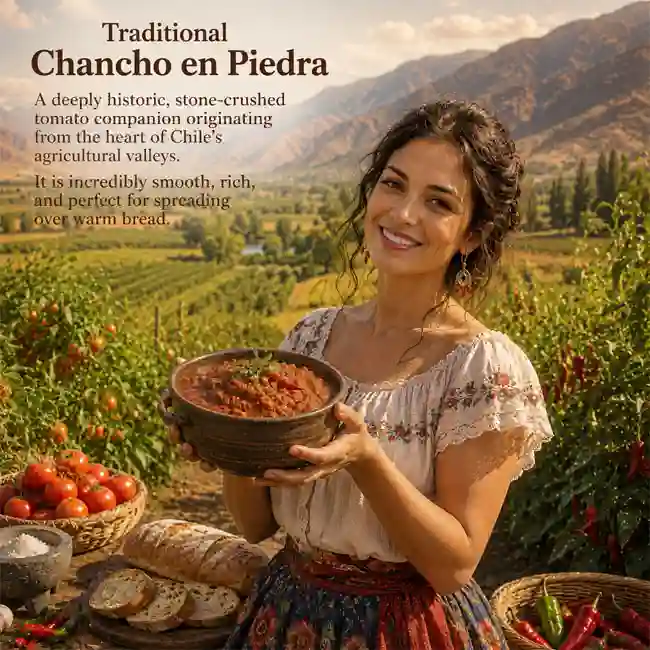
🔨 Recipe 2: Traditional Chancho en Piedra (The Stone-Crushed Masterpiece)
🌿 About this Recipe
Do not let the name fool you! While "Chancho en Piedra" literally translates to "Pig on Stone," this recipe contains absolutely no meat. Instead, it is a glorious, ancient tomato and garlic salsa that is traditionally prepared in a heavy volcanic stone mortar and pestle, known as a mortero. Hailing from the Maule region of Chile, this sauce is smoother, richer, and more integrated than Pebre. Crushing the ingredients against the stone releases natural oils and juices that you simply cannot replicate with steel knives. It is sweet, savory, smoky, and absolutely spectacular when spread over warm, rustic bread.
🥄 Ingredients & Measurements
• Ripe Roma or beefsteak tomatoes, completely peeled and chopped: 4 large tomatoes
• Garlic cloves, peeled: 4 whole cloves
• Green chili pepper (such as banana pepper or jalapeño), chopped: 1 pepper
• Vegetable oil or light olive oil: 3 tablespoons
• White vinegar: 1 tablespoon
• Fine sea salt: 1 and a half teaspoons
• Fresh oregano leaves, chopped: 1 teaspoon
🔪 Step-by-Step Instructions
1.Begin by peeling your tomatoes. The easiest way to do this is to score a small "X" on the bottom of each tomato and drop them into boiling water for 30 seconds, then immediately transfer them to an ice bath. The skins will slide right off.
2.Once peeled, cut the tomatoes open and remove the core and the majority of the watery seeds. Rough chop the remaining tomato flesh and set aside.
3.In your stone mortar, add the whole garlic cloves, the chopped green chili pepper, and the sea salt.
4.Using the pestle, grind these ingredients together using a circular, crushing motion until they form a completely smooth, fragrant paste.
5.Add the fresh oregano leaves to the paste and crush them briefly to release their aromatic oils.
6.Begin adding the chopped tomatoes to the mortar a little bit at a time. Use the pestle to crush and mash the tomatoes into the garlic paste. You want to achieve a thick, rustic, sauce-like consistency with some small texture remaining.
7.Slowly drizzle in the vegetable oil and the white vinegar while stirring continuously with a spoon to incorporate them into the crushed tomato mixture.
8.Taste the Chancho en Piedra and add a bit more salt or vinegar if you feel it needs a brighter pop. Serve it directly out of the beautiful stone mortar for that authentic, rustic feel.
⚠️ Tips & Mistakes to Avoid
• Avoid using underripe, pale tomatoes. Because this sauce relies heavily on the natural sweetness of the tomato, you need the ripest, juiciest, red tomatoes you can possibly find.
• Do not skip peeling the tomatoes. The skins will become tough and stringy during the stone-crushing process, ruining the velvety texture of the sauce.
• If you do not own a stone mortar and pestle, you can use a heavy ceramic bowl and a wooden rolling pin. Avoid using a high-speed blender, as it introduces too much air and turns the sauce an unappealing pink color.
• Be cautious with the garlic. Crushing garlic in a mortar makes it significantly more potent than chopping it, so stick to the recipe measurements first before adding more.
💬 FAQ
Q1.Why is it called Chancho en Piedra if there is no pork?
The name likely comes from the phonetic distortion of the word "chanchar," which means to crush or mash ingredients into a paste, combined with the stone mortar used.
Q2.Can I use canned tomatoes for this?
It is highly discouraged. Canned tomatoes lack the fresh, vibrant, summer flavor that defines this specific regional dish.
Q3.What should I serve this with? It is heavenly when paired with traditional Chilean country bread (pan amasado), fresh white cheese, or used as a rich sauce for grilled potatoes.
📝 Summary
Chancho en Piedra is a stunning testament to the power of traditional cooking methods. By using a stone mortar, you unlock a deep, complex flavor from basic ingredients that feels incredibly comforting, authentic, and utterly soulful.

🧄 Recipe 3: Creamy Chilotan Garlic Sauce (The Island Treasure)
🌿 About this Recipe
Travel down south to the mysterious, myth-filled archipelago of Chiloé, and you will discover a completely different side of Chilean cuisine. The island is famous for its unique varieties of potatoes and its massive, sweet elephant garlic, known locally as Ajo Chilote. This Chilotan Garlic Sauce is a creamy, luxurious dream. It is silky, rich, and packs a beautifully rounded garlic flavor that is far less harsh than standard garlic sauces. It acts as the perfect companion for roasted potatoes, crispy fried foods, and fresh roasted vegetables, bringing a touch of coastal southern magic directly to your kitchen.
🥄 Ingredients & Measurements
• Garlic cloves (preferably mild elephant garlic), peeled: 6 whole cloves
• Mayonnaise (high quality, full fat): 1 cup
• Fresh lemon juice: 2 tablespoons
• Extra virgin olive oil: 2 tablespoons
• Warm water: 1 tablespoon
• Finely chopped fresh chives: 2 tablespoons
• Sea salt: half a teaspoon
• Smoked paprika: a tiny pinch for color
🔪 Step-by-Step Instructions
1.To create a complex and smooth flavor base, we are going to gently mellow out half of our garlic. Take 3 of your garlic cloves and wrap them loosely in aluminum foil with a few drops of olive oil and a tiny pinch of salt.
2.Place the foil packet into an oven or toaster oven preheated to 350°F (175°C) and roast for about 15 to 20 minutes until the garlic is completely soft and golden. Let it cool.
3.In a small mixing bowl, take the remaining 3 raw garlic cloves and grate them using a microplane or fine grater to ensure there are no large, unpleasant chunks.
4.Unwrap the roasted garlic cloves and mash them with a fork into a smooth, buttery paste.
5.In a clean glass bowl, combine the grated raw garlic, the mashed roasted garlic paste, and the high-quality mayonnaise. Mix them together thoroughly using a small whisk.
6.Slowly whisk in the fresh lemon juice and the extra virgin olive oil. The sauce will begin to take on a beautiful, glossy, and silky appearance.
7.Add the warm water to thin out the consistency slightly, ensuring it becomes a smooth, easily pourable sauce.
8.Stir in the sea salt and the finely chopped fresh chives.
9.Dust the very top with a tiny pinch of smoked paprika for visual contrast and a hint of woodsy aroma. Refrigerate for 20 minutes before serving to let the garlic infuse the mayonnaise base completely.
⚠️ Tips & Mistakes to Avoid
• Never use miracle whip or sweet salad dressings as a substitute for real, high-quality mayonnaise. The sweetness will clash horribly with the bold garlic and lemon notes.
• Do not burn the garlic while roasting it in the foil. Burnt garlic tastes incredibly bitter and will completely ruin the delicate, creamy profile of the sauce.
• Make sure your chives are chopped very finely with a sharp knife so they do not release excess water, which can cause the emulsion to separate.
Use fresh lemon juice instead of bottled concentrate to ensure a bright, clean acidity that cuts through the richness of the mayo perfectly.
💬 FAQ
Q1.Can I use regular garlic instead of Chilotan garlic?
Yes, you can! Regular garlic works wonderfully, but since it is stronger and sharper than elephant garlic, you might want to start with 4 or 5 cloves instead of 6.
Q2.Is this sauce dairy-free?
As long as you use a standard mayonnaise made from oil and eggs, this recipe is completely dairy-free.
Q3.How long can I store this garlic sauce?
Because it contains mayonnaise and fresh raw garlic, it should be kept in a tightly sealed jar in the fridge and consumed within 5 days.
📝 Summary
Chilotan Garlic Sauce is a rich, velvety, and addictive treat that showcases the beautiful diversity of southern Chile's food identity. It is an effortless way to bring bold, gourmet flavor to everyday comfort foods.
✨ Final Thoughts: Your Kitchen, Your Adventure
Look at that! You have just unlocked the secret formulas to the three most cherished, soulful sauces in all of Chile. From the bright, herb-filled crunch of Pebre, to the rich, stone-crushed sweetness of Chancho en Piedra, all the way to the silky, luxurious depth of Chilotan Garlic Sauce, you now have the power to transform any ordinary meal into an authentic South American feast.
As you can see, making these sauces at home is incredibly easy, accessible, and requires absolutely no fancy culinary gear or complicated techniques. They celebrate the beauty of simple, fresh, and wholesome ingredients handled with love and care.
The next time you are planning a weekend family dinner, a casual backyard gathering, or just looking to elevate your weekday lunches, pick one of these recipes and give it a shot. Try making them one by one to truly appreciate the distinct flavor profiles and regional histories behind each one.
Once you mix up your first batch, do not keep the magic all to yourself! Share your gorgeous culinary creations with your close friends, talk about the history of these beautiful regional dishes, and leave a comment below to share your cooking journey, your favorite pairings, and which sauce stole your heart. Happy cooking, my friend!
| 🇨🇱 🥘 < Back |