
🏠 Home > 🗺️ Recipes > 🍞 Breads > 🇧🇬 Bulgaria Breads
🇧🇬 🍞 Bulgaria Breads Recipes
Published by Supakorn | Updated: April 2026
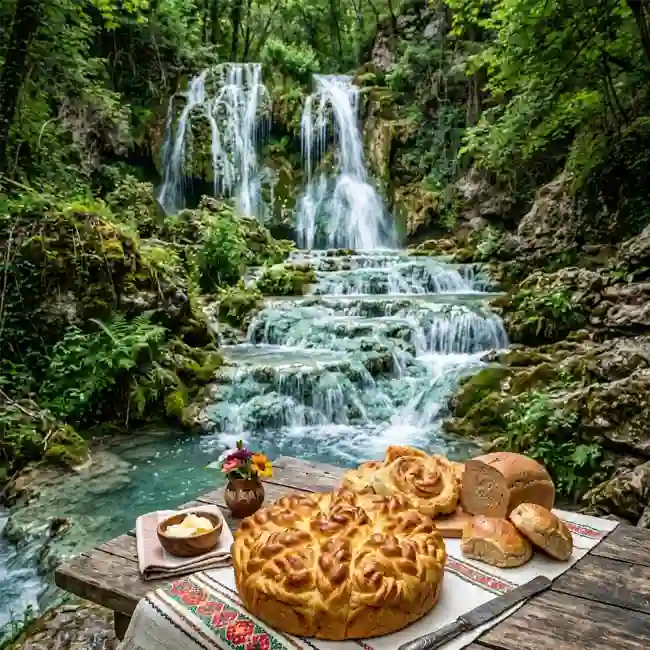
If there is one thing you need to know about Bulgaria, it’s this: "No one is bigger than bread." This isn't just a catchy proverb; it’s a philosophy that has guided Bulgarian life for millennia. In this corner of the Balkans, bread isn’t just a side dish or a carb to be counted—it is a sacred symbol of life, hospitality, and family.
Walking through a Bulgarian town in the early morning is a sensory experience. The air is thick with the scent of melting butter, toasted flour, and the unmistakable tang of authentic Bulgarian white cheese. Whether it's a quick breakfast on the go or a massive, braided loaf at a wedding, bread is the glue that holds Bulgarian society together.
🌾🍞The Culture of the Crumb: Why Bread Matters 🇧🇬 🍿
In Bulgaria, bread is treated with a level of respect that borders on the religious. Traditionally, bread is never thrown away. If a piece falls on the floor, it’s picked up and kissed as a sign of apology. It represents the labor of the farmer, the blessing of the earth, and the warmth of the home.
🤝 The Ultimate Welcome: Salt and Honey
If you are ever an honored guest in a Bulgarian home or at an official ceremony, you will likely be greeted with a large, round loaf of bread called a Pitka. You’ll be asked to break off a piece and dip it into two small bowls: one filled with Salt (representing wisdom and the struggles of life) and the other with Honey (representing sweetness and prosperity). This gesture says, "You are welcome here, and we share our life with you."
🏠 The Daily Ritual
For the average Bulgarian, a meal without bread feels incomplete. It’s used as a utensil to scoop up stews, a vessel for thick spreads like Lyutenitsa, or a simple snack when paired with a chunk of Sirene (brined white cheese). It’s the ultimate comfort food that transcends social classes.
🥐 The "Must-Try" Legends: Iconic Bulgarian Breads
Bulgarian "bread" covers a vast spectrum—from flaky pastries that melt in your mouth to dense, rustic loaves that can feed a village. Let’s look at the heavy hitters you absolutely have to try.
🧀 Banitsa: The Uncrowned Queen of Breakfast
You cannot talk about Bulgaria without mentioning Banitsa. While technically a pastry, it occupies the "bread" space in the hearts of locals.
• The Vibe: Layers upon layers of paper-thin phyllo dough, whisked eggs, and crumbled white cheese, all swirled into a spiral or stacked in sheets.
• The Texture: Crispy on the outside, soft and buttery on the inside.
• The Fun Part: During New Year’s Eve, Bulgarians hide "fortunes" (small pieces of paper wrapped in foil or dogwood branches) inside the Banitsa. Whatever you find in your slice—be it "Health," "Love," or "A New Car"—is what your year will hold!
🥯 Mekitsi: The Balkan Answer to Donuts
If you wake up on a Sunday morning in a Bulgarian household, you’re likely smelling Mekitsi.
• The Vibe: Deep-fried dough made with yogurt and flour. They aren't perfectly round like American donuts; they are rustic, bubbly, and chewy.
• How to Eat Them: Most people dust them with powdered sugar, but the "pro" way is to eat them with a side of honey, jam, or—of course—more white cheese. It’s the perfect salty-sweet balance.
🥨 Gevrek: The Street Food Staple
Walk past any train station or busy city corner, and you’ll see vendors with stacks of Gevrek.
• The Vibe: Similar to a Turkish Simit or a thin bagel, these are circular breads encrusted with sesame seeds.
• The Variety: You can find them "sweet" (boiled in honey water before baking) or "salty." They are the ultimate "running late for work" breakfast.
🎨 Ritual Breads: Art You Can Eat
In Bulgaria, certain breads are only baked for specific days. These are called Ritual Breads, and they are often decorated with intricate symbols made of dough.
☀️ Pitka (or Pogacha)
This is the big, beautiful, braided round bread used for celebrations.
• The Decoration: For a harvest festival, the dough might be shaped like grapes or wheat. For a wedding, it might have flowers or birds.
• The Breaking: At weddings, the bride and groom stand back-to-back and pull the Pitka apart. Whoever gets the bigger piece is said to be the "boss" of the household!
🍞 Kozunak: The Easter Giant
When spring arrives, every bakery in the country starts producing Kozunak.
• The Vibe: A sweet, brioche-like leavened bread that is braided and often stuffed with walnuts, raisins, or Turkish delight (Lokum).
• The Test: A "perfect" Kozunak is judged by its threads. When you pull it apart, it should peel off in long, thin fibers. It takes hours of kneading to get it right, but the result is heavenly.
🥗 How to Live (and Eat) Like a Local
Eating bread in Bulgaria is an art form. If you want to blend in, here are a few tips on the "bread lifestyle":
🍅 The "Dip and Scoop"
Bulgarians love their spreads. If you have a fresh loaf of bread, you need Lyutenitsa (a thick relish of roasted peppers and tomatoes). You take a thick slice of bread, slather it with Lyutenitsa, crumble some white cheese on top, and sprinkle it with Sharena Sol (colorful salt—a mix of savory, paprika, and salt). This is the quintessential Bulgarian snack.
🥣 The Soup Companion
As we've discussed before, soup and bread are inseparable. But specifically, with bread, Bulgarians often use the "crust" to clean the bowl. It’s a sign that the meal was delicious.
🥖 The Local Bakery (Pekarna)
While supermarkets exist, the soul of the neighborhood is the Pekarna. These are small, often window-only shops where you can buy fresh bread and morning pastries. If you see a line of people standing in the cold at 7:00 AM, join them. They know where the freshest Banitsa is.
✨ The Secret Ingredients: What Makes it Different?
What makes Bulgarian bread taste so... Bulgarian?
1.The Yogurt: Many bread and dough recipes (like Mekitsi and Banitsa) use Bulgarian yogurt. The acidity reacts with baking soda to create an incredible fluffiness that you can't get with milk alone.
2.The Cheese: Sirene is the star. It’s saltier and tangier than Greek Feta, providing a sharp contrast to the rich, buttery dough.
3.The Herbs: Chubritza (Summer Savory) is often baked into the crust or sprinkled on top, giving the bread an earthy, peppery aroma that is unique to the region.
🧐 Frequently Asked Questions (FAQ)
Q1. Is there a gluten-free tradition in Bulgarian breads?
Traditionally, Bulgarian bread culture is very wheat-heavy. However, in rural areas, you can find Kachamak (a dish made from cornmeal, similar to polenta), which serves as a grain-based staple for those avoiding wheat. In modern cities, "bio" bakeries are now offering gluten-free versions of classics like Banitsa using rice or buckwheat flour.
Q2. What is the difference between Pitka and Pogacha?
The terms are often used interchangeably, but generally, Pitka is the broad term for a round, festive bread. Pogacha often refers to a version that is more layered and buttery, almost like a giant, savory pull-apart bread. Both are equally delicious and used for welcoming guests!
🇧🇬 A Final Slice
Bulgaria is a land where the oven is the heart of the home. From the humble daily loaf to the magnificent, decorated Pitka, bread is how Bulgarians express love, gratitude, and hospitality.
So, next time you're presented with a warm slice of Bulgarian bread, remember: you're not just eating flour and water. You're tasting centuries of tradition, a dash of Balkan sunshine, and a whole lot of heart. Dobur apetit!
🍞 Bountiful Bakes: 3 Nutritious Bulgarian Breads for Your Wellness Journey
👉 Must-Try 3 Bulgarian Lifestyle Breads
| 🌐 🍞 < Back | 🇧🇬 🥗 < Previous | Next > 🍱 🇧🇬 |