
🏠 Home > 🗺️ Recipes > 🍱 Snacks > 🇧🇷 Brazil Snacks
🇧🇷 🍱 Brazil Snacks Recipes
Published by Supakorn | Updated: February 2026
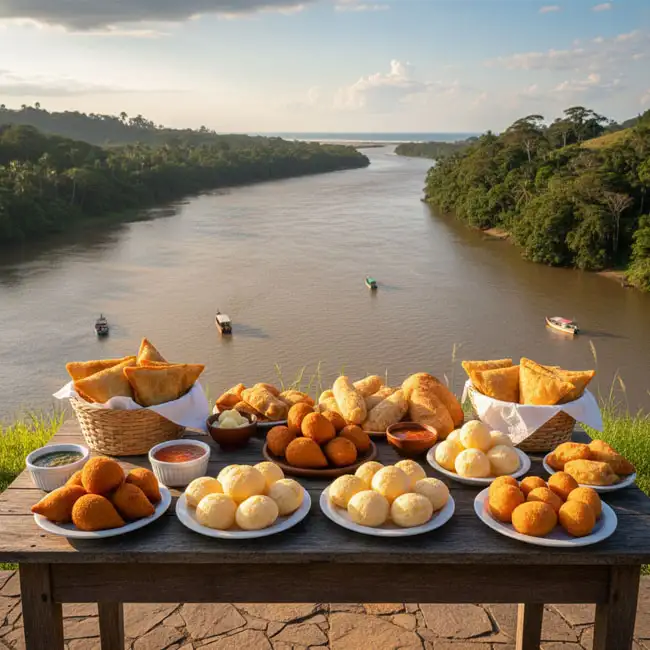
Hey snack lover! Get ready to explore a world where quick bites aren't just appetizers—they're a way of life. Brazilian snacks, affectionately known as lanches (light meals) or salgados (savory pastries), are arguably the most accessible and exciting part of the country's cuisine. They are the delicious, crispy, chewy, and creamy little heroes found everywhere, from fancy bakeries (padarias) and bustling street corners to the glass cases of every café and petrol station.
The culture of the lanche is a direct response to the Brazilian rhythm of life. With a hearty, structured midday lunch (almoço) being the main event, the time between meals—the mid-morning, the late afternoon, and the quick-stop dinner—is filled by these savory treats. They serve as portable, affordable, and incredibly satisfying bridges that keep the energy flowing.
Brazilian snacks beautifully showcase the cultural fusion that defines the food of the country. You'll find influences from Portuguese baking techniques, indigenous ingredients like cassava (mandioca), and a distinctly Brazilian flair for combining simple, comforting fillings (like cheese, ground beef, and shredded chicken) into irresistible handheld packages. They are a testament to Brazilian ingenuity: maximum flavor and comfort in a compact, perfectly sized bite. To understand Brazil, you must understand the love for the salgado!
🍗 Savory Stars: The Iconic Salgados
When a Brazilian says they're craving a salgado, they are talking about these iconic savory pastries. These are the heavy hitters, the classics that every single Brazilian grows up eating and fiercely debates the best version of!
💧 Coxinha: The Little Thigh of the Queen
The Coxinha (pronounced coh-SHEEN-ya) is truly the Queen of Brazilian snacks and the one you absolutely must try first. The name literally means "little chicken thigh," a reference to its signature teardrop shape, which is often said to resemble a drumstick.
• The Anatomy of Perfection: A coxinha features a smooth, thick dough, traditionally made with chicken broth, that encases a creamy, seasoned, shredded chicken filling. The whole thing is breaded and deep-fried until it achieves a perfect golden-brown crispness. The texture is key: a crunchy exterior giving way to a soft, moist dough and a savory, irresistible filling. It is the pinnacle of Brazilian comfort food, perfect for dipping in a little pimenta (hot sauce).
🧀 Pão de Queijo: The Cheesy Cloud
The Pão de Queijo (pronounced pown de KAY-zho) is perhaps Brazil’s most famous culinary export, and for good reason. These small, puffy, baked rolls are naturally gluten-free and ridiculously addictive.
• Simplicity is Genius: Made from tapioca flour (a starch derived from cassava), eggs, milk, oil, and cheese (often queijo minas or Parmesan), pão de queijo is pure magic. It bakes up with a crispy, thin shell and a unique, chewy, elastic, and airy interior. They are essential for breakfast and perfect as a mid-afternoon bite, best enjoyed warm when the cheese is at its stretchiest and the texture is at its peak.
🥟 Pastel: The Flaky Street Food
Pastel (pronounced pah-STEL) is the undisputed champion of Brazilian street food, especially found at bustling weekend markets (feiras). These are large, impossibly thin, and flaky fried turnovers.
• The Size and the Crunch: The dough is rolled paper-thin, folded into a rectangle or half-moon, and filled with a wide variety of savory or sweet ingredients before being fried quickly until bubbly and crisp. Popular savory fillings include:
• Carne (Ground Beef): Often seasoned with olives and onions.
• Queijo (Cheese): Usually a stretchy mozzarella or mild white cheese.
• Palmito (Heart of Palm): A vegetarian favorite, often mixed with requeijão (cream cheese).
Biting into a pastel is an intense textural experience—a loud, shattering crunch followed by the soft, hot filling.
🥩 Empada: The Mini Pie
Think of the Empada (pronounced em-PAH-da) as a miniature, sophisticated savory tart or pot pie. Unlike the flaky pastel, the empada uses a shortcrust pastry dough that is rich and buttery.
• Savory Treasure: The dough is pressed into small, cup-shaped molds, filled generously with a creamy, savory mixture, and topped with a small pastry lid before being baked. Fillings are similar to other salgados but often creamier, thanks to the use of requeijão. Shredded chicken, shrimp (camarão), and heart of palm are among the most popular fillings. They are delicate, rich, and a perfect, self-contained bite.
🍚 Hearty and Comforting: Snacks That Fill You Up
Not all snacks are fried pastries! Brazil also features a wonderful array of wholesome, comforting snacks that leverage staple ingredients like corn and cassava. These often serve as lighter lunch alternatives or satisfying late-afternoon meals.
🌽 Tapioca: The Versatile Crepe
Tapioca is a culinary superstar, especially in the Northeastern states, though its popularity has spread nationwide. It refers to a thin, flexible crepe made purely from hydrated manioc/cassava starch—it's naturally gluten-free and incredibly versatile.
• Sweet or Savory Canvas: The damp tapioca starch is sifted directly onto a hot, dry griddle. As it cooks, the starch grains fuse together to form a thin, stretchy, translucent crepe. It's then filled like a taco or a crepe.
• Savory Fillings: Cheese and ham (queijo e presunto), dried meat (carne de sol), or chicken and requeijão.
• Sweet Fillings: Banana and cinnamon, coconut and condensed milk, or the ultimate: chocolate and strawberry.
It is a light, flexible, and truly indigenous Brazilian food that is essential street food.
🍡 Acarajé: The Bahian Black-Eyed Pea Fritter
Venturing to the Northeast, specifically Bahia, you must encounter Acarajé (pronounced ah-kah-rah-ZHAY). This snack has deep African roots and is a cultural icon of Afro-Brazilian cuisine.
• A Street Food Ritual: Acarajé is a ball of mashed and seasoned black-eyed peas, deep-fried in dendê oil (red palm oil), which gives it a rich, distinctive flavor and deep color. The fritter is split open and generously stuffed with two primary fillings:
• Vatapá: A thick, creamy paste made from bread, shrimp, coconut milk, and dendê oil.
• Caruru: A savory okra stew often mixed with nuts and shrimp.
This snack is hearty, complex, and savory, often dressed with dried shrimp and a hot pepper sauce, making it a complete meal experience.
🍮 Bolos and Doces: The Sweet Interlude
While the salgados get the most glory, Brazil has an incredible range of sweet snacks and cakes (bolos and doces) that also serve as lanches. These are often found at the padaria (bakery).
• Bolo de Fubá (Cornmeal Cake): A simple, moist cake made with cornmeal, often with a hint of fennel, perfect for pairing with a cafezinho (small coffee).
• Brigadeiro: While often a party dessert, the individual chocolate truffle is a ubiquitous small sweet snack.
• Beijinho (Little Kiss): The coconut version of the brigadeiro, made with condensed milk and coconut, rolled in coconut flakes.
These sweet bites are comforting, deeply traditional, and represent the country’s love for condensed milk and simple, home-style baking.
🗺️ The Brazilian Snack Ecosystem: Where and How to Eat
The beauty of Brazilian snacks is their ubiquitous nature. They are woven into the very fabric of daily commerce and social interaction. You don't have to seek them out; they find you!
🥖 Padarias: The Bakery Hub
The Padaria (bakery) is the heart of the Brazilian food community and the primary source for fresh salgados and pães (breads). Brazilian bakeries are social hubs that serve as a combination of café, small grocery store, and restaurant. They bake fresh pão de queijo, coxinha, and a host of other pastries throughout the day. Grabbing a lanche and a cafezinho at the padaria is a daily ritual for millions.
🌭 Lanchonetes and Carrinhos: Quick Stops
Lanchonetes (snack bars) are casual, fast-paced eateries designed for quick, budget-friendly meals. They are the perfect place to grab a hot pastel, a creamy empada, and a fresh fruit juice. On the street, you’ll find carrinhos (small carts) selling hot items like churros or fried snacks, making Brazilian food available literally on every corner.
⚖️ The Buffet Experience
Even in a larger comida por quilo (food by the kilo) buffet restaurant, the salgados have a place. You will often find a dedicated section for smaller, cold savory bites and fried snacks, allowing customers to add one or two coxinhas or empadas to their plates alongside their main meal, showing how essential they are to the complete dining experience.
🤝 Sharing and Community
Snacks are inherently communal. Ordering a mix of salgados to share with friends, passing around a bag of pão de queijo on a road trip, or stopping for a pastel with colleagues—these are small, daily acts of sharing. The variety available means everyone can grab what they like, making snack time a democratic and fun social ritual.
❓ Your Brazilian Snacks FAQs
1. Are all Brazilian salgados deep-fried?
No, but many of the most famous and beloved ones are! Classics like the Coxinha and Pastel are deep-fried to achieve that signature golden-brown, crispy exterior. However, other essential snacks, like Pão de Queijo and Empadas, are baked, resulting in a lighter, drier, and crumblier texture. This variety means you always have a choice between a satisfyingly crispy fried treat and a baked savory pastry.
2. Can I eat Brazilian snacks for a full meal?
Absolutely! While they are often called "snacks," many Brazilian salgados are quite substantial and are frequently eaten as a light meal, or lanche. A large pastel with a fresh juice, a few coxinhas, or a hearty acarajé are perfectly acceptable and common substitutes for a traditional lunch or dinner, especially for busy people or those grabbing a quick bite on the go.
3. What is the difference between coxinha dough and pastel dough?
The doughs are completely different and give the snacks their unique textures. Coxinha dough is a cooked, thick, and soft dough made primarily from a liquid (usually chicken broth), giving it a texture similar to enriched mashed potatoes or choux pastry. It is smooth and yielding. Pastel dough, on the other hand, is an extremely thin, unleavened, wheat-based pastry dough, similar to phyllo or spring roll wrappers. It becomes incredibly flaky, crisp, and bubbly when fried.
🍱 Fuel Your Day: Healthy Brazilian Snacks for Energy and Balance
👉 Savor3 Lifestyle Brazil Snacks
| 🌐 🍱 < Back | 🇧🇷 🍞 < Previous | Next > 🥘 🇧🇷 |