
🏠 Home > 🗺️ Recipes > 🥘 Sauces > 🇧🇦 Bosnia Sauces
🇧🇦 🥘 Bosnia Sauces Recipes
Published by Supakorn | Updated: April 2026
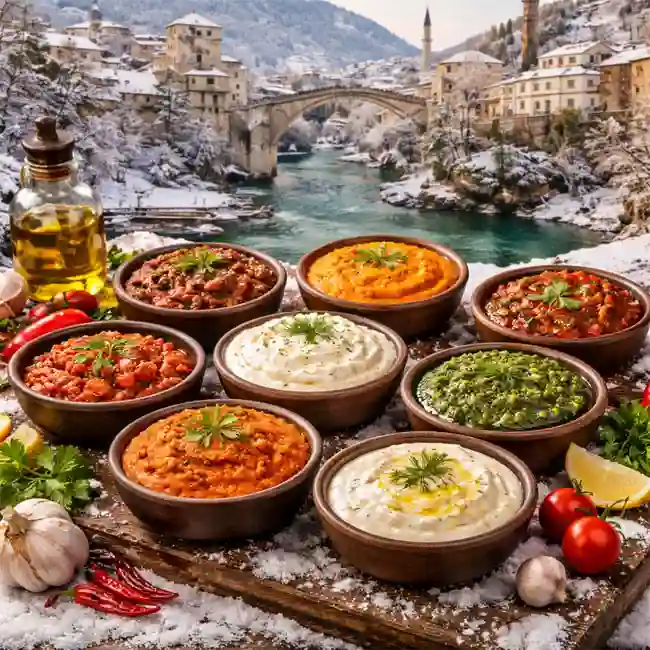
Hey there, food lover! If you’ve ever found yourself wandering (or daydreaming about wandering) through the cobblestone streets of Sarajevo’s Baščaršija, you know that the air smells like grilled meat and magic. But here’s a little secret: while the kebabs get all the fame, it’s the sauces, spreads, and creams that do the heavy lifting.
In Bosnia and Herzegovina, food isn’t just fuel; it’s a love language. And if you aren't dipping your bread into something creamy, garlicky, or smoky, are you even eating? Let’s dive into the soulful world of Bosnian condiments and the beautiful culture that created them.
🇧🇦 🥘The Soul of the Balkan Table: A Cultural Prelude🥫🧄
To understand Bosnian sauces, you first have to understand the Bosnian "merak." It’s a word that doesn’t have a direct English translation, but it’s essentially the feeling of deep pleasure derived from simple, everyday joys—like sitting with friends for hours over a meal.
🏠 Hospitality on a Plate
In Bosnia, the kitchen is the heart of the home. If you walk into a Bosnian house, you aren’t asked "Are you hungry?" You are simply fed. The table is usually a colorful mosaic of shared plates. Central to this experience is the concept of "meza"—a platter of appetizers featuring smoked meats, cheeses, and, most importantly, various dips and sauces that bridge the gap between the bread and the main course.
🏺 East Meets West
The culinary landscape here is a fascinating mix of Ottoman (Turkish), Austro-Hungarian, and Mediterranean influences. You’ll see the richness of Central European creams meeting the bold, vegetable-forward spices of the East. This blend has resulted in sauces that are incredibly hearty yet surprisingly fresh.
🌶️ The Stars of the Show: Iconic Bosnian Spreads and Sauces
While the word "sauce" in the West might make you think of a thin liquid poured over pasta, in Bosnia, sauces are often thick, textured spreads meant to be scooped up with a warm piece of somun (flatbread).
🍯 1. Ajvar: The "Balkan Caviar"
You cannot talk about Bosnia without mentioning Ajvar. It is the king of the pantry. Made primarily from roasted red bell peppers and eggplant, it’s a smoky, sweet, and slightly tangy masterpiece.
• The Ritual: Making Ajvar is a community event. In late autumn, families gather to roast hundreds of pounds of peppers over open fires, peeling them by hand and simmering them for hours.
• The Vibe: It’s rich, velvety, and deep orange. It goes on everything—from meat to just a plain slice of bread.
🥛 2. Kajmak: The Creamy Holy Grail
If heaven were a dairy product, it would be Kajmak. It sits somewhere between clotted cream and a very mild cream cheese, but with a salty, savory kick that is entirely unique.
• How it’s made: It’s traditionally produced by simmering raw milk and skimming the cream from the top as it cools.
• The Experience: When placed on a hot Ćevapi (minced meat sausages), it melts into a golden pool of deliciousness that soaks into the bread. It’s pure indulgence.
🧄 3. Bijeli Luk u Octu (Garlic in Vinegar)
Bosnians love their garlic. This isn't so much a "sauce" in the modern sense as it is a potent flavor enhancer. Often served with roasted meats or bean stews (Grah), it’s simple: crushed garlic cloves swimming in high-quality vinegar and a bit of salt. It cuts through the fat of the meat perfectly.
🥣 4. Pavlaka and Sour Cream Blends
Dairy is a pillar of the Bosnian diet. Pavlaka (a thick sour cream) is frequently mixed with herbs, garlic, or even grated cucumbers to create cooling side sauces that balance out the heavy, grilled proteins.
🥖 The Art of Living: How Bosnians Eat
In Bosnia and Herzegovina, the pace of life is a bit slower, and the meals reflect that. "Polako" (slowly) is a life philosophy.
🧺 The "Meza" Culture
The meza is the ultimate social meal. It’s a slow-paced grazing session. You’ll find small bowls of Ajvar, cubes of salty Travnik cheese, mounds of Kajmak, and pickled vegetables (Turšija). It’s designed to keep the conversation flowing. You take a little bit of this, a little bit of that, and let the afternoon turn into evening.
🍞 Bread is Sacred
You won't find a Bosnian meal without bread. Whether it's the fluffy, hollow Somun or the denser Pogača, the bread serves as the primary utensil. These sauces aren't just garnishes; they are the reason the bread exists. To leave a drop of Ajvar on the plate is almost a tragedy!
🥗 Seasonality and Freshness
One thing that makes Bosnian food so special is its reliance on the seasons.
• Summer & Autumn: These are the months of the vegetable. Sauces are made from sun-ripened peppers, tomatoes, and herbs pulled straight from the garden.
• Winter: This is the time for fermented flavors. While not a sauce in the liquid sense, the brine from Sarma (cabbage rolls) or the juices from pickled peppers often serve as the flavorful base that moistens the winter table.
🧐 Why These Sauces Matter for Your Kitchen
Even if you aren't in the heart of Sarajevo, bringing Bosnian sauces into your repertoire is a game-changer. They are:
1.Versatile: Use Ajvar as a sandwich spread or a pasta base.
2.Natural: Traditional Bosnian recipes rely on slow cooking rather than chemical thickeners or sugars.
3.Crowd-Pleasers: There is something deeply comforting about the combination of roasted vegetables and rich dairy.
🤔 FAQ: Everything You Wanted to Know
Q1. Is Ajvar spicy?
Usually, no! Traditional Bosnian Ajvar is "blagi" (mild), focusing on the sweetness of the roasted peppers. However, there is a "ljuti" (hot) version if you like a bit of a kick. It’s all about that smoky depth!
Q2. What is the difference between Kajmak and cream cheese?
Kajmak has a much higher fat content and a more complex, fermented flavor profile. While cream cheese is smooth and tangy, Kajmak is rich, buttery, and has a slightly grainy, "clotted" texture that melts beautifully over hot food.
Q3. Can I eat these sauces if I'm vegetarian?
Absolutely! In fact, many Bosnian spreads like Ajvar, Malidžano (eggplant-based), and various cheese-based dips are naturally vegetarian. They are a fantastic way to add "umami" and heartiness to a meat-free diet.
Final Thought:
Bosnia and Herzegovina’s culinary world is a hidden gem of Europe. It’s a place where the sauces tell the story of the land—of the mountains, the sun-drenched valleys, and a people who believe that any guest at the door is a gift from God. So, next time you're looking to spice up your meal, look to the Balkans. Your taste buds (and your friends) will thank you! 🇧🇦✨
🥘 Elevate Your Plate: Essential Bosnian Condiments You Can Make at Home
👉 Get 3 Bosnian Everyday Sauces
| 🌐 🥘 < Back | 🇧🇦 🍱 < Previous |