
🏠 Home > 🗺️ Recipes > 🍱 Snacks > 🇧🇪 Belgium Snacks
🇧🇪 🍱 Belgium Snacks Recipes
Published by Supakorn | Updated: February 2026
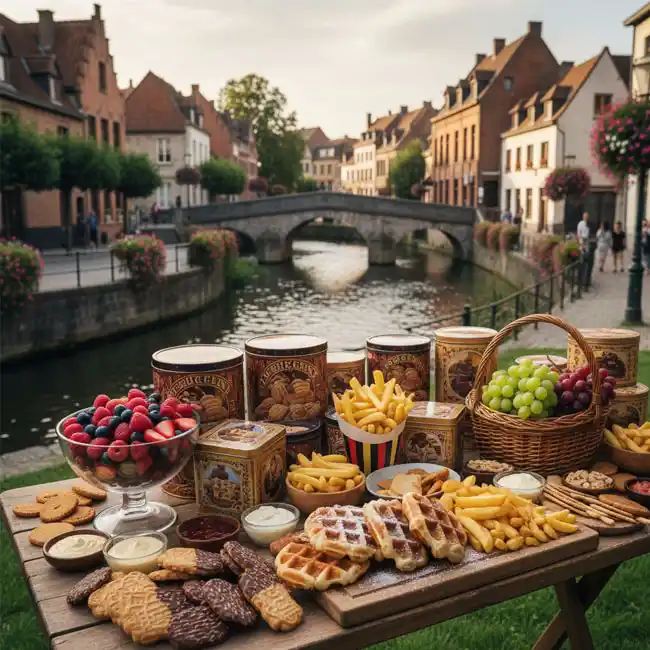
🍟 The Art of the Quick Bite: Belgian Snack Culture
Hey there, hunger enthusiast! We’ve talked about Belgium’s hearty main dishes and their sophisticated salads, but let’s be honest: sometimes, the real heart of a nation’s cuisine is found in the stuff you can grab and eat while walking around. In Belgium, the snack culture is not just an afterthought; it’s a national obsession, a beloved ritual, and a serious culinary business.
Forget the idea of a simple 'snack'—in Belgium, these quick bites are often mini-meals, rich with history and made with the same commitment to quality as a five-star dinner. The Belgian street food scene is vibrant, cozy, and deeply comforting, ensuring you are never more than a few steps away from something truly satisfying.
🇧🇪 Culinary Crossroads: Snack Influences
Belgian snacks perfectly embody the country’s position at the European crossroads. They manage to be both incredibly generous (hello, German portions!) and refined in execution (thank you, French technique!). This culture is all about:
- Accessibility: High-quality food should be available everywhere, from a bustling market to a small friterie (fry shack).
- Indulgence: The snacks are often rich, buttery, or fried to perfection—they are meant to be a treat!
- Tradition: Many of the most popular snacks, from their famous fried potatoes to their distinct waffles, have deep, generational roots and regional identities.
In short, Belgian snacks are the perfect way to fuel your exploration of their gorgeous, historic cities, one satisfying bite at a time.
🧇 Sweet or Savory? The Unbeatable Snack Champions
When it comes to quick bites, two heavyweights dominate the Belgian streets, along with a few savory contenders that prove Belgians can fry anything to perfection.
👑 The Waffle Wars: Brussels vs. Liège
You can’t discuss Belgian snacks without crowning the undisputed champion: the Waffle. But hold on—it's not just one type! Belgium is home to two distinct waffle styles, and knowing the difference is key to snacking success:
💎 The Liège Waffle (Gaufre de Liège)
This is the true street food star. Born in the Walloon region, the Liège waffle is the one you see everywhere. It is:
- Irregular in Shape: It’s dense, chewy, and irregularly shaped, not perfectly rectangular.
- The Secret Pearl: Its signature feature is the inclusion of pearl sugar—small chunks of caramelized sugar that melt inside the dough, creating pockets of crunchy, sticky sweetness on the outside when cooked.
- Eat It Plain: It is rich enough to be eaten without any toppings, making it the perfect hand-held snack. It’s warm, caramelized, and intensely satisfying.
🏰 The Brussels Waffle (Gaufre de Bruxelles)
This one is the lighter, airier, and more elegant cousin, often found in salons de thé (tea rooms) or at home.
- Rectangular and Airy: It’s perfectly rectangular, lighter, and much crispier than the Liège waffle, featuring deep, uniform pockets.
- Topping Carrier: Because it's less sweet, it's the perfect vehicle for lavish toppings like powdered sugar, fresh fruit, or whipped cream. It requires a plate and fork—less of a street snack, more of an afternoon treat.
🍟 Frites: The Perfectly Fried Foundation
Of course, the most iconic Belgian street food is the Frites, and calling them French Fries is practically fighting words here! Frites are more than a side dish; they are a culinary institution, often eaten as a standalone snack.
The key is the double-frying technique:
1.The cut potatoes are briefly fried at a lower temperature to cook the inside and make it soft and fluffy.
2.They are then fried a second time at a higher temperature to achieve that signature golden-brown color and irresistible crunch.
They are traditionally served in a paper cone and topped with a sauce—a ritual that is essential to the Belgian snack experience. The sheer variety of delicious, creamy, and zesty sauces available means you can have a different frites experience every single day.
🍖 Savory Deep-Fried Delights
Beyond the famed fries, Belgians have mastered the art of the deep-fried savory snack, often served alongside the frites as a filling addition:
- Frikandel: A dark-colored, skinless, minced meat sausage that is very popular in friteries. It's often served speciaal (special), sliced open and topped with mayonnaise, curry ketchup, and finely chopped raw onions.
- Bitterballen/Kroketten: These are savory, deep-fried croquettes. Kroketten can be filled with anything from creamy shrimp (Garnalenkroket) to cheese (Kaaskroket). Bitterballen are smaller, rounder, and typically filled with a rich, beef ragout, often served with a sharp mustard for dipping—perfect little bursts of savory goodness.
- Bicky Burger: A beloved Belgian fast-food invention, this is a distinctively seasoned burger patty served on a soft bun with three unique sauces (a thick yellow, a creamy white, and a tangy brown) and fried onions. It is a true local legend and a must-try for any savory snack fan.
🏙️ The Snack Habitat: Where and How Belgians Eat
The entire ritual around eating these snacks is just as important as the food itself.
📍 The Fritkot/Friterie
This is the holy ground for Belgian snack culture. The Fritkot (in Dutch) or Friterie (in French) is a small shack or stand dedicated almost exclusively to frites and a range of deep-fried specialties. They are everywhere—in city squares, along busy streets, and even nestled into quiet neighborhoods. The Fritkot is a social hub, a place where people of all walks of life line up for their daily dose of golden, crispy perfection.
🚶 The Eating Habit: On the Go, But Slow
While these are 'snacks,' the consumption is rarely rushed. Belgians usually eat their frites standing near the Fritkot or sitting on a nearby bench, carefully navigating the sauce-covered cone. The social aspect is key; it’s a moment to pause, chat with friends, and savor the rich, satisfying flavors. It perfectly captures the Belgian balance: food that is quick and accessible, but still requires a moment of appreciation.
Belgian snacks are hearty, flavorful, and full of character. They are the true, delicious pulse of the nation's culinary scene, proving that the simplest foods, when made with care and quality, can be the most beloved.
❓ Frequently Asked Questions (FAQ)
1. What is the biggest difference between a Liège waffle and a Brussels waffle?
The biggest difference is the dough and texture. The Liège waffle is made with a brioche-style dough that includes chunks of pearl sugar, making it dense, chewy, and sticky-sweet. The Brussels waffle is made with a lighter, yeast-leavened batter, giving it a light, crisp, and airy texture, which makes it perfect for adding toppings.
2. Is the "Frikandel" a uniquely Belgian food?
While popular throughout Belgium and the Netherlands, the Frikandel is a uniquely regional sausage in the Low Countries. It is a deep-fried, skinless minced meat sausage (often a blend of pork, beef, and sometimes chicken) known for its distinctive dark color and smooth texture, making it a fixture in almost every Belgian Fritkot.
3. Why are frites served with so many different sauces?
The Belgian frites culture centers around customization and indulgence. Since the perfectly double-fried potato provides a neutral, crisp canvas, the sauce is key to the flavor experience. The tradition offers a wide range of creamy, savory, and tangy sauces (like Andalouse, Samourai, and the classic mayonnaise) to satisfy every palate and make the simple act of eating fries an exciting, personalized event.
🍱 Master Belgium's Most Iconic Street Food Snacks at Home
👉 Savor 3 Famous Belgium Snacks
| 🌐 🍱 < Back | 🇧🇪 🍞 < Previous | Next > 🥘 🇧🇪 |