
🏠 Home > 🗺️ Recipes > 🥘 Sauces > 🇦🇹 Austria Sauces
🇦🇹 🥘 Austria Sauces Recipes
Published by Supakorn | Updated: February 2026
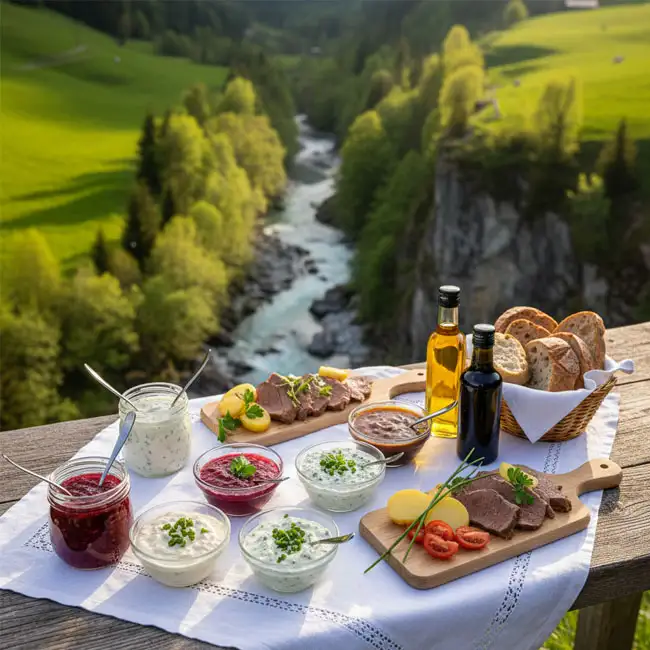
🇦🇹 🥘 The Unsung Heroes: Why Austrian Sauces and Gravies Are the Heart of Viennese Cooking
Hey there, fellow flavor chasers! We’ve talked about the comforting soups and the crusty perfection of Austrian bread. Now, let’s get down to the real magic—the rich, creamy, and sometimes surprisingly sharp sauces and gravies that make Austrian cuisine legendary.
In the Wiener Küche (Viennese Kitchen), a main course is never just meat and potatoes. It's a carefully composed plate where the sauce (Soße) or gravy (Saft) provides the necessary moisture, depth, and contrast, connecting the protein to the side dishes (especially those essential Knödel—dumplings!).
Austrian sauces are a testament to the cuisine’s heritage, drawing influences from the old Austro-Hungarian Empire. They range from savory, dark reductions born from long, slow cooking, to bright, refreshing accompaniments that cut through the richness of boiled or roasted meats, and don't forget the luscious sweet sauces that elevate Kaiserschmarrn and Buchteln.
Ready to dip into this crucial part of Austrian flavor culture? Let's get saucy!
🍲 The Savory Soul: Culture of Saft (Gravy) and Rich Reductions
In Austria, particularly with dishes like Gulasch or Braten (roast), the liquid that develops during cooking is so revered it gets its own name: Saft (juice or gravy), and it is often the single most important element of the dish.
The Alchemy of Gulasch Saft
While many stews rely on a roux (flour and fat) to thicken, the classic Austrian Gulasch (known locally as Saftgulasch) follows a much purer, more time-intensive path.
- Patience is the Key: The dark, glossy, and impossibly rich gravy of Saftgulasch is built on a massive amount of slowly cooked, finely chopped onions—often a 1:1 ratio of onions to meat!
- Natural Thickening: As the onions dissolve over hours of simmering, they naturally thicken the sauce without the need for flour. This results in a gravy that is incredibly smooth, deep red from sweet Hungarian paprika, and has a pure, concentrated meaty flavor that is simply divine. It’s what transforms a simple beef stew into a truly Viennese masterpiece, demanding a Semmelknödel (bread dumpling) to soak up every last drop.
The Roasting Companion: Bratensaft
A Sunday Schweinsbraten (pork roast) is incomplete without its Bratensaft (roast gravy).
- Pan Scrapings: This gravy is built on the delicious, caramelized brown bits (Röststoffe) left in the roasting pan.
- Simple Purity: Often, it’s just the pan juices deglazed with broth or water, possibly thickened slightly with a little cornstarch or a light Einbrenne (Austrian roux), and seasoned simply with pepper and marjoram. It has to be rich enough to coat the tender roast and cling to the accompanying potatoes and dumplings, ensuring a mouthful of flavor with every bite.
🔪 The Cold and Creamy Classics: Sauces for Boiled Beef
If the gravies are the heart of the rustic kitchen, the cold, creamy sauces are the height of Imperial refinement, created to perfectly complement Tafelspitz (boiled beef), the celebrated centerpiece of Viennese court cuisine.
The Essential Three: Tafelspitz Accompaniments
Tafelspitz—tender boiled beef sliced at the table—is traditionally served with three distinct, essential sauces, offering a brilliant balance of creamy texture, sweetness, and heat.
1. 🔥 Apfelkren (Apple Horseradish Sauce)
- The Sweet Heat: This sauce is a marvelous contradiction. It balances the sharp, pungent heat of freshly grated horseradish (Kren is the Austrian term for horseradish) with the mild sweetness and smooth texture of applesauce (Apfelmus).
- The Purpose: It’s designed to provide a bright, zesty counterpoint to the buttery richness of the boiled beef broth and the meat itself, waking up the palate.
2. 🌿 Schnittlauchsauce (Creamy Chive Sauce)
- Cool and Herbaceous: A simple, elegant sauce that provides a cooling, herbaceous contrast. The base is often sour cream or a rich yogurt, mixed with plenty of fresh chives (Schnittlauch), a splash of lemon juice, and a pinch of salt.
- The Comfort: It adds a fresh, soft creaminess to the plate, making it the perfect soothing partner to the spicy Apfelkren.
3. 🌶️ Semmelkren (Bread Horseradish Sauce)
- Rustic Depth: A more traditional and rustic take on the horseradish sauce. It uses grated horseradish combined with soft bread crumbs or soaked bread (Semmel), bound with broth and cream. The bread adds a unique body and texture, making it heartier than Apfelkren.
The Tafelspitz ritual is a perfect example of Austrian food culture: taking a simple ingredient (boiled beef) and elevating it through a sophisticated array of complementary sauces and side dishes.
🍒 Sweet Finishers: The Delicate Dessert Sauces
Austrians love their Mehlspeisen (flour-based desserts), and few are served without a luxurious, often warm, sweet sauce.
🍦 Vanillesauce (Vanilla Sauce/Custard)
- The Universal Sweetener: This is arguably the most common and beloved dessert sauce. Unlike a thick French crème pâtissière, Austrian Vanillesauce is a thinner, pourable custard, rich with egg yolks and flecked with vanilla beans (or vanilla sugar).
- The Perfect Partner: It's poured warm over Topfenstrudel (quark strudel), accompanies light, pillowy Buchteln (sweet yeast buns), and is absolutely essential for the fluffy scrambled pancake dish, Kaiserschmarrn. The cool, delicate sweetness is the perfect foil to the warm, buttery baked goods.
🍓 Preiselbeerenröster (Lingonberry Compote)
- The Tangy Cut: While technically a compote, this tart, slightly sweet berry preparation functions exactly like a sauce in Austrian savory and sweet dishes. It’s made from lingonberries (Preiselbeeren), which are similar to cranberries.
- The Must-Have for Schnitzel: Most importantly, it is the classic, mandatory accompaniment to the Wiener Schnitzel. The bright, sharp tang of the compote cuts through the richness of the breading and the fried veal, preventing the dish from tasting too heavy. It also appears alongside game dishes and is delicious with savory dumplings.
🗺️ A Culture of Flavor Elevation
Austrian sauce culture is less about masking flavor and more about complex layering and contrast.
- Fat Meets Acid/Heat: Notice how the richest dishes (fried Schnitzel, boiled beef fat, fatty Gulasch gravy) are always paired with something bright, spicy, or acidic (Preiselbeeren, Apfelkren).
- Sauce is Non-Negotiable: The expectation of sauce is deeply ingrained. Whether it's a dollop of creamy horseradish or a generous pool of Vanillesauce, the sauce provides the essential moisture and flavor complexity that defines a proper Austrian meal. It transforms basic ingredients into comforting, multi-layered culinary experiences.
Next time you see an Austrian menu, pay attention not just to the meat, but to the Soßen—that’s where the centuries of culinary wisdom truly shine!
❓ Quick Bites: Austrian Sauce FAQs
Q: Is Gulasch Saft the same as American gravy?
A: Not quite! While they both serve to accompany meat and starch, classic Austrian Gulasch Saft is made by naturally thickening the braising liquid using dissolved, slow-cooked onions and beef collagen, without the addition of flour or roux. American gravy is typically thickened quickly with flour or cornstarch, making the Saft a purer, more labor-intensive reduction of flavor.
Q: Why is Preiselbeeren (Lingonberry) served with meat dishes like Schnitzel?
A: The Preiselbeerenröster is served specifically to provide a tart, acidic contrast to the rich, often fried or fatty main course. The bright, tangy flavor of the berry compote cuts through the richness of the fried breading on the Schnitzel or the fat in a game dish, refreshing the palate and balancing the overall flavor profile.
Q: Can I use bottled horseradish for Apfelkren?
A: Yes, you can use high-quality bottled creamy horseradish, but many Austrians will insist on using freshly grated Kren (horseradish root) for the best, most pungent heat and flavor. The fresh root provides a sharper, cleaner kick that is slightly lost in the jarred varieties. A mix of both is often a good compromise!
We've covered soups, bread, and the essential sauces! To complete the meal, how about we explore the famous Austrian Desserts and Pastries next?
Think Sachertorte, Apfelstrudel, and Kaiserschmarrn!
🥘 The Secret Ingredient: Mastering 3 Iconic Austrian Sauces at Home
| 🌐 🥘 < Back | 🇦🇹 🍱 < Previous |