
🏠 Home > 🗺️ Recipes > 🍞 Breads > 🇦🇹 Austria Breads
🇦🇹 🍞 Austria Breads Recipes
Published by Supakorn | Updated: February 2026
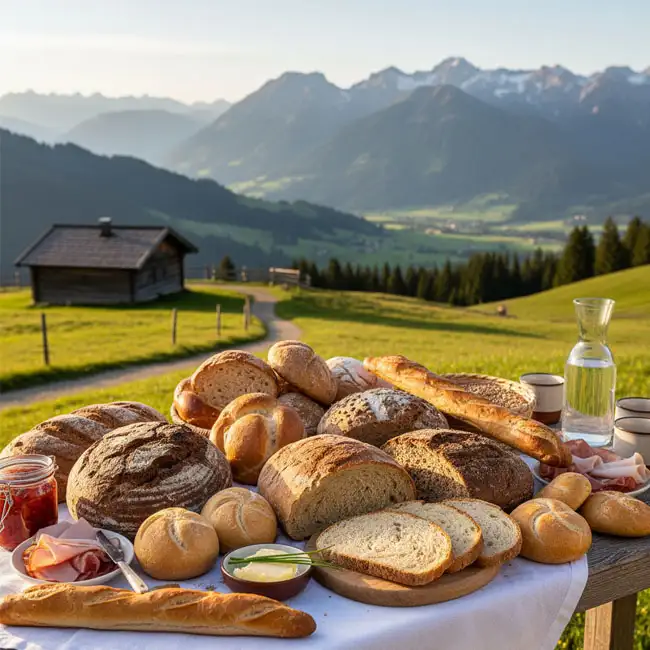
The Daily Loaf: Why Austrian Bread Is the Soul of the Kitchen and the Baker’s Art
Hey fellow food enthusiasts! If you've ever thought all bread was created equal, you haven't been to Austria. Forget those fluffy, pre-sliced supermarket loaves; here, bread is a daily ritual, a point of regional pride, and a cornerstone of culture that dates back to the Imperial age.
In Austria, particularly in Vienna and throughout the Alpine regions, the aroma of fresh baking—be it dark, hearty rye or light, crusty rolls—is the soundtrack to daily life. We're not just talking about food; we’re talking about Brotkultur (Bread Culture), a heritage that sees thousands of unique bakeries still thriving, committed to time-honored techniques.
Ready to dive into the wonderful, crusty, and wonderfully diverse world of Austrian Breads? Let's break some bread and talk history, flavor, and daily life!
🥖 The Cultural Backstory: More Than Just Wheat and Water
Austrian bread culture is a rich tapestry woven from history, geography, and the pioneering spirit of Viennese bakers.
The Imperial Stamp: Birth of the Kaiser Roll
You can’t talk about Austrian bread without starting with the Kaisersemmel, or simply Semmel (roll). This roll is perhaps the most famous piece of Austrian baking and its history is appropriately grand:
- A Roll for the Emperor: The Kaisersemmel (Emperor’s Roll) supposedly takes its name from Emperor Franz Joseph I. Historically, it was seen as a luxury item, made with the finest white flour and distinguished by its beautiful, crown-like five-point spiral shape—a stamp of quality and a nod to the Imperial crown.
- The Viennese Process: The 19th century saw Viennese bakers revolutionize the world of bread. They pioneered the use of press-yeast (instead of sourdough or beer yeast) and introduced advanced milling techniques that resulted in lighter, more consistent, and finer rolls. This "Vienna Process" traveled the world, changing global baking forever. The Semmel is the perfect testament to this golden age of baking innovation.
The Geography of Grain: Dark vs. Light
Austrian bread diversity is deeply tied to its geography and history within Central Europe:
- The East (Viennese Influence): Closer to the historic Imperial center, you find a preference for white wheat rolls (Semmel and Kornspitz)—reflecting a time when fine white flour was a costly status symbol.
- The West (Alpine and Regional Influence): In the more rustic, mountainous regions, the tradition favors darker, denser breads made from rye, spelt, and other regional grains. These breads, known generally as Schwarzbrot (black bread), are heavier, stay fresh longer, and are perfect for a hard day’s work or a mountain hike.
The Daily Ritual: The Morning Run
For many Austrians, buying bread is not a weekly chore—it’s a daily pilgrimage. There is a deep, cultural preference for fresh bread—bread that is still slightly warm, crusty, and meant to be eaten on the same day. This is why local bakeries (Bäckerei) are integral to every town and city neighborhood. Getting the perfect, fresh Semmel for breakfast (Frühstück) is simply the standard.
🍞 The Pillars of the Austrian Bakery Case
Step up to the counter of any Austrian bakery, and you’ll be faced with a delightful array of perfectly baked goods. Here are the stars you need to know:
👑 The Roll Kings: Small Breads for Every Meal
Austrians excel at small, single-serving bread items, known collectively as Gebäck or Kleinbrote.
- Kaisersemmel / Semmel: The undisputed king. Crusty, round, and fluffy inside, with the distinctive five-petal star pattern on top. It’s the go-to for breakfast with jam and butter, or split for a lunchtime sandwich (Wurstsemmel or Käsesemmel).
- Kornspitz: The modern champion. Developed in 1985, the Kornspitz is a long, pointed roll made with a mix of rye and wheat flour and loaded with seeds (like poppy, sesame, and sunflower). It’s darker, healthier, and its hearty crunch is a favorite for savory cold cuts and cheese.
- Salzstangerl: The ultimate savory snack roll. This long, slightly twisted stick is generously topped with coarse salt and caraway seeds. It’s light, airy, and perfect alongside a glass of beer or as a mid-morning Jause (snack).
- Mohnflesserl: The poppy seed braid. This roll is beautifully braided or twisted (Flesserl), giving it a delicate, airy structure, and covered completely in crunchy poppy seeds (Mohn). It has a subtle, nutty flavor that is particularly beloved for breakfast.
🌾 The Hearty Loaves: Dark, Dense, and Flavorful
When Austrians refer to Brot (loaf bread), they usually mean something substantial and rustic, designed to last and pair beautifully with savory toppings.
- Bauernbrot (Farmer’s Bread): The quintessential country loaf. This is a large, dark, rustic, and dense loaf, often made with a sourdough starter and a mix of rye and wheat flours. It has a beautiful, thick crust and a slightly tangy flavor, making it perfect for the Brettljause (snack board).
- Schwarzbrot (Black Bread): A general term for very dark, often 100% rye bread. It is dense, packed with flavor, and keeps for a very long time. It’s the base for most traditional savory spreads like Liptauer (spicy cheese spread) or used alongside heavy stews.
🍽️ Eating Culture: Bread at the Center of the Plate
How Austrians use and eat bread speaks volumes about their culture.
The Jause (Snack Time)
Bread shines most brightly during the Jause. This is the traditional mid-morning or mid-afternoon snack, often enjoyed by workers, schoolchildren, and hikers.
- Open-Faced Tradition: Unlike North American or British sandwiches, Austrian snack rolls are often eaten open-faced or just with one filling (like ham and cheese). The fillings are simple and high-quality, allowing the flavor of the fresh bread to be the star.
- The Brettljause: In Alpine areas, the Jause elevates to the Brettljause (wooden-board snack). Here, thick slices of Bauernbrot are served alongside cold cuts, smoked bacon (Speck), regional cheeses, pickles, and hearty spreads. It is a social, nourishing, and deeply rustic meal where the bread acts as the essential vehicle for the flavors of the land.
Bread and the Main Course
While bread rolls are mainly for breakfast and snacks, the starchy base doesn't disappear at dinner. In fact, many of Austria’s famous side dishes are based on bread:
- Semmelknödel (Bread Dumplings): Stale Semmel rolls are the foundational ingredient for these essential savory side dishes, which absorb the gravies and sauces of dishes like Gulasch or Braten (roast).
- Soup Fillings: As discussed, the Frittaten (pancake strips) that fill the famous Rindsuppe are technically a delicate, savory, flat bread (crêpe), further proving that a form of dough is required at every stage of the Austrian meal.
Next time you visit a Bäckerei, take a moment to savor the choice, the commitment to fresh ingredients, and the centuries of history baked into every crusty bite. It’s an authentic taste of Austria you can enjoy every day.
❓ Quick Bites: Austrian Bread FAQs
Q: Why is Austrian bread generally darker and denser than bread in many other countries?
A: Austrian bread often incorporates a higher percentage of rye flour than bread in many Anglo-Saxon countries. Rye creates a denser crumb, a darker color (Schwarzbrot), and has a characteristic sour/tangy flavor, especially when made with traditional sourdough methods, making it more robust and longer-lasting.
Q: Can I order a plain sandwich in an Austrian bakery?
A: Not in the American or British sense! Austrians usually order a specific belegtes Semmel (filled roll), which is most often a single Semmel split and filled with a small, high-quality filling like Schinken (ham) and Käse (cheese), or the local meatloaf specialty, Leberkäse. The focus is less on layered complexity and more on the quality of the bread and the filling.
Q: What is the secret to the Kaisersemmel's unique five-point shape?
A: The signature star pattern is made using a special Kaisersemmel stamp or, traditionally, by an intricate technique of rolling and folding the dough around the baker’s thumb. This folding process not only creates the beautiful shape but also provides extra tension in the dough, which results in that perfect crispy, separated crust when baked.
We've covered the soups and the bread! How about we move on to the Main Courses next, exploring the famous Schnitzel, Tafelspitz, and Gulasch that define Austrian cuisine?
🍞 The Austrian Baker’s Toolkit: Mastering 3 World-Famous Breads at Home
| 🌐 🍞 < Back | 🇦🇹 🥗 < Previous | Next > 🍱 🇦🇹 |