
🏠 Home > 🗺️ Recipes > 🍷 Drinks > 🇦🇱 Albania Drinks > 🍷 Mountain Herb Tea (Albania style) , Boza (Albanian Style Fermented Grain Drink) , Dhallë (Albanian Yogurt-Salt Drink)
🍷 Sip Albania: Three Refreshing Non-Alcoholic Beverages You’ll Love
Published by Supakorn | Updated: February 2026
🍃 Introduction
Hey friends! If you’ve ever found yourself dreaming of exploring the Balkans, tasting new flavours, or simply trying something fresh to drink, you’re in the right place. Albania might not always pop up first when we think of drinks—but it’s packed with unique, welcoming, and genuinely delicious non-alcoholic beverages. According to local food guides, Albania has a rich tradition of herbal teas, fermented grain drinks, and refreshing summer sips.
In this post, we’re going to dive into three standout Albanian drink recipes that are perfect whether you’re entertaining, chilling solo, or just want to add something new to your repertoire. We’ll cover:
- Recipe 1: Mountain Herb Tea (Albania style)
- Recipe 2: Boza (Albanian Style Fermented Grain Drink)
- Recipe 3: Dhallë (Albanian Yogurt-Salt Drink)
Each one comes with: a little story, full ingredients & measurements, step-by-step instructions, tips and mistakes to avoid, FAQs, and a summary. Let’s get sipping!
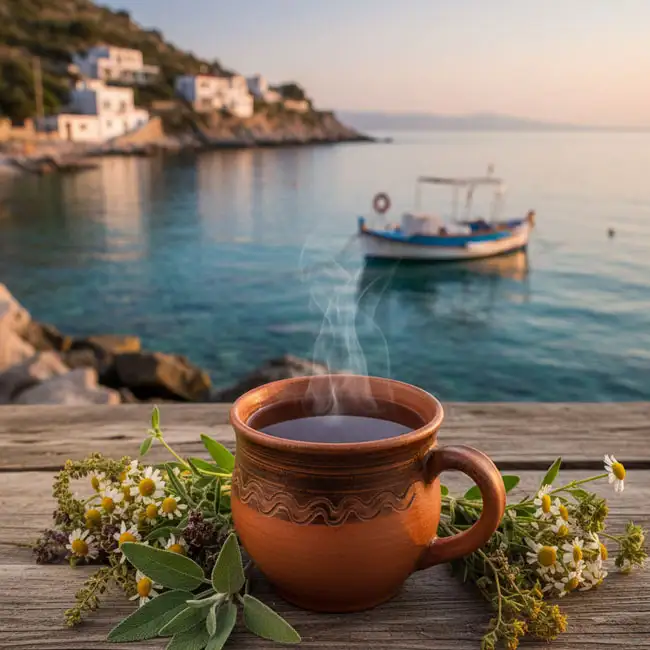
🍵 Recipe 1: Mountain Herb Tea – Albania style
🌿 About this Recipe
Alright, first up: picture yourself high in the Albanian mountains, in a small village, where locals are steeping wild mountain herbs and giving you a mug of warm, fragrant tea. That’s essentially the vibe of this drink. Albanian cuisine lists mountain-herb tea (and other herbal infusions) as one of the widely consumed beverages.
This drink is soothing, naturally herbal, and it’s a great way to enjoy something calm yet flavourful without sugar or fuss.
🧂 Ingredients & Measurements
- Fresh or dried mountain herbs (such as wild mint, sage, or alpine tea herbs) – enough for about 1 tablespoon dried (or 2 tablespoons fresh) per cup.
- Water – about 250 ml (1 cup) per serving.
- Optional: a slice of lemon or a few drops of honey if you’d like a little sweetness.
- Optional: fresh mint sprig for garnish.
🥄 Step-by-Step Instructions
1.Heat the water to just under boiling, around 90-95 °C.
2.Place your herbs into a teapot or infuser.
3.Pour the hot water over the herbs and cover.
4.Let steep for about 5–7 minutes (longer if you like stronger flavour).
5.Strain into a cup. Add lemon slice or honey if using. Garnish with mint sprig.
6.Serve warm—sit back, slow down, enjoy the aroma and calm.
💡 Tips & Mistakes to Avoid
- If you brew too long, the herbs can become bitter. Don’t exceed ~8 minutes unless you like bold herbal flavours.
- Use filtered or fresh water for best taste—since this is a simple drink, water matters.
- Don’t overload with too many strong herbs at once or the individual flavours will compete.
- If using dried herbs, store them properly (sealed jar, cool dark place) so they retain aroma.
- If you add honey or lemon, do so just before serving—heating them too long can change texture and taste.
❓ FAQ
Q: Can I chill this and serve it iced?
A: Yes! After steeping and cooling, pour over ice and add a lemon slice or mint leaves for a refreshing iced version.
Q: What herbs are typical in Albania for this tea?
A: Mountain-grown herbs such as wild mint, sage, or local alpine tea herbs are common.
Q: Is it caffeinated?
A: It depends on the herbs. Many mountain herbs are caffeine-free (unlike typical black tea). Check your herb blend if you’re sensitive.
✅ Summary
Mountain Herb Tea is simple, clean, and full of natural character. It gives you a taste of Albania’s quiet countryside without needing complex ingredients. Definitely one to adopt for a calm afternoon or calming evening sip.
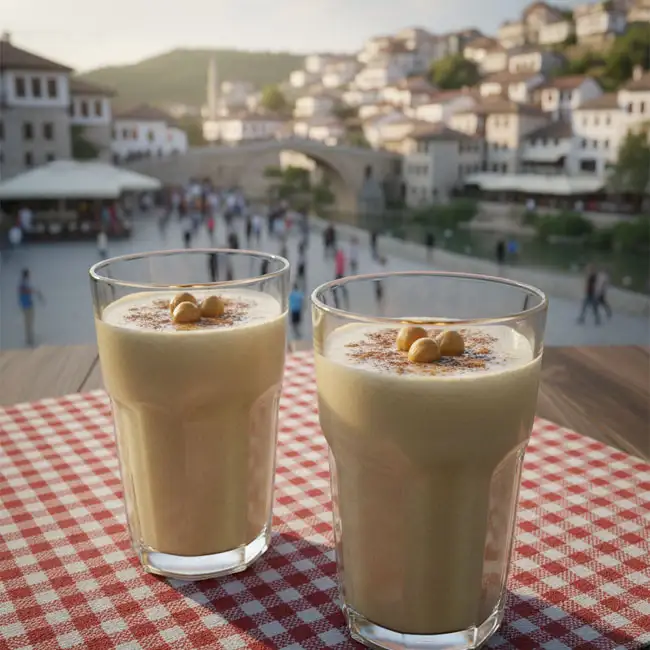
🍶 Recipe 2: Boza – Albanian Style Fermented Grain Drink
🎉 About this Recipe
Next up: a drink that’s a little more adventurous but in the best way: Boza. In Albania, boza is a traditional drink made from fermented grains (often corn, wheat or millet) and it’s enjoyed in various Balkan and Eastern European countries.
It has a slightly sweet, tangy, almost pud-like texture (depending on preparation), and it’s especially popular in warmer weather as a refreshing, nutritious drink.
🧂 Ingredients & Measurements
- Cornmeal or millet (choose a light-coloured grain) – around 50 g for about 500 ml final drink.
- Water – about 500 ml.
- Sugar – around 1-2 tablespoons (adjust to taste).
- Raisins or dried fruits (optional) – a small handful to add flavour or natural sweetness.
- Lemon or citrus peel (optional) – for aroma.
- A pinch of yeast (food-grade) to initiate fermentation (around ¼ teaspoon).
- Reserve: additional water to adjust consistency.
🥄 Step-by-Step Instructions
1.In a saucepan, mix the cornmeal (or millet) with about 300 ml water and heat gently, stirring until it thickens (like a thick porridge consistency).
2.Remove from heat, add the rest of the water (to bring total ~500 ml) and stir well so there are no lumps. Let cool until warm (around 30-35 °C).
3.Stir in sugar, raisins (optional) and citrus peel if using.
4.Add the yeast, stir well, and cover the pot. Let ferment at room temperature for about 12-24 hours (morning to afternoon works well). You should notice some bubbles or slight fizzy texture.
5.After fermentation, strain if desired, adjust with extra water to reach a drinkable consistency (some like it thicker, some more fluid). Chill in the fridge.
6.Serve cold, with ice if you like, optionally garnish with a few raisins or a light sprinkle of cinnamon.
💡 Tips & Mistakes to Avoid
- Temperature matters: If it’s too hot when you add yeast the yeast may die. If too cool, fermentation will be sluggish.
- Don’t rush the fermentation; it’s the tangy flavour and bubbles that make it interesting.
- Ensure your equipment (pot, spoon) are clean—since you’re fermenting, hygiene matters.
- If it smells off (sharp or overly sour beyond a mild tang) discard and start over.
- Adjust sugar to your taste—Albanian boza is typically lightly sweet and tangy, not dessert-sweet.
- Chill thoroughly before serving; the flavour is best when cold.
❓ FAQ
Q: What grain if I can’t find cornmeal?
A: You can use millet or light wheat flour—just aim for a grain that yields a light colour and creamy texture.
Q: How fizzy should it be?
A: Mild fizz is perfect—think gentle bubbles, not full carbonated soda.
Q: Is it probiotic or good for digestion?
A: Fermented grain drinks like this often contain beneficial microbes and can be soothing for digestion, though homemade batches will vary.
✅ Summary
Boza is a fun, slightly funky, totally charming drink from the Albanian tradition. It’s got character, it’s refreshing, and it’s a great “why not” when you want something beyond typical juices or iced teas.
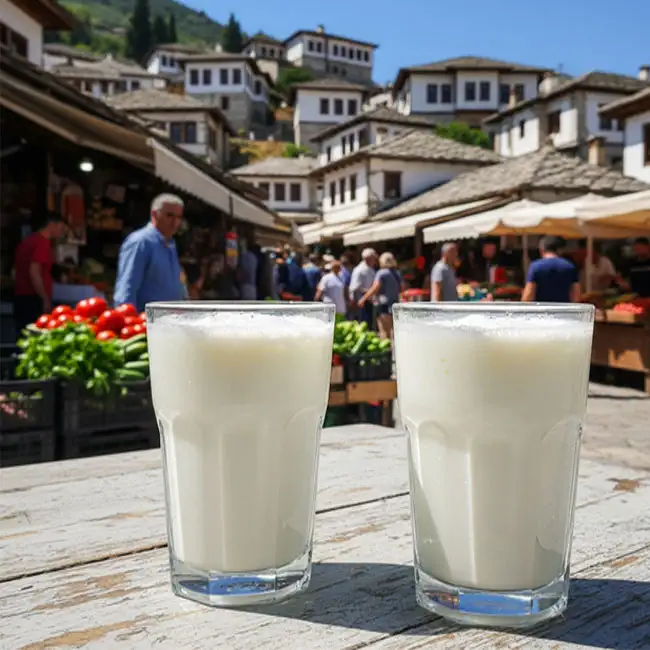
🥛 Recipe 3: Dhallë – Albanian Yogurt-Salt Drink
🧊 About this Recipe
Last but certainly not least: let’s go with a drink that is soothing, classic, and perfect for warm days or after a meal—Dhallë. In Albanian culinary listings, dhallë is described as a traditional, healthy beverage made by mixing yogurt with water or milk and spices/salt.
Think of it as a savoury yogurt drink—not sweet, not heavy, but very refreshing and deeply Albanian in spirit.
🧂 Ingredients & Measurements
- Plain full-fat yogurt – around 200 ml (1 small cup).
- Cold water or milk – about 200–300 ml (adjust to preferred thickness).
- Salt – about ¼ teaspoon (or to taste).
- Mint leaves or finely chopped fresh herbs (optional) – a few sprigs.
- Ice cubes – for serving cold if desired.
- Optional: a small garlic clove (crushed) or cucumber slices for subtle extra flavour.
🥄 Step-by-Step Instructions
1.In a tall glass or jug, add the yogurt.
2.Pour in cold water (or milk) slowly, stirring or whisking until smooth and combined. Adjust water to reach the consistency you like (thicker or thinner).
3.Add salt and stir. If using garlic or herbs, add now and stir lightly.
4.Add ice cubes (if serving cold) and garnish with mint leaves or cucumber slices.
5.Serve immediately, enjoy it while chilled and refreshing.
💡 Tips & Mistakes to Avoid
- Use good quality yogurt (full-fat gives best texture and flavour).
- If you find separation (water and yogurt separating) after mixing, whisk again before serving.
- Adjust salt gently—this drink is about balance; too salty and it becomes heavy.
- If adding garlic, use very little and crush it finely so it blends gently—too much will overwhelm.
- Keep it chilled; this is a warm-weather favourite. Serve immediately for best taste.
❓ FAQ
Q: Can I skip the salt?
A: You can, but traditional versions do include a mild saltiness—set your taste accordingly.
Q: Is this like Ayran (Turkish yogurt drink)?
A: Yes, quite similar in concept—plain yogurt, water, salt—just Albanian style and very simple.
Q: What to serve it with?
A: It pairs beautifully with grilled vegetables, a light lunch, fresh pita, or even as a soothing post-meal sip.
✅ Summary
Dhallë is simple, clean and deeply refreshing. It’s the kind of drink you might have after a hot day, after a hearty meal, or when you just want something gentle. If you make nothing else, this one’s a strong, chill pick.
🔚 Final Thoughts
So there you have it—three Albanian non-alcoholic drink recipes that are far from ordinary, and perfect for when you want to try something new and authentic.
- Start gentle with the Mountain Herb Tea, take a turn into tradition with the Boza, and end with the refreshing simplicity of Dhallë.
- Each one requires minimal ingredients, is easy to make at home, and gives you a taste of Albania’s unique beverage culture.
- My challenge to you: pick one recipe, make it this week, and share the experience—snap a photo, note how it tastes, maybe tweak it to your flavour preferences.
In the end, making your own drink doesn’t have to be complicated or reserved for special occasions. It can be fun, relaxed—and origin stories like these give it that extra “ahh” moment when you sip and think: “Wow, that comes from Albania.”
Happy brewing—and here’s to discovering new flavours and sharing good times! 🎉
| 🇦🇱 🍷 < Back |