
🏠 Home > 🗺️ Recipes > 🍞 Breads > 🇦🇱 Albania Breads
🇦🇱 🍞 Albania Breads Recipes
Published by Supakorn | Updated: February 2026
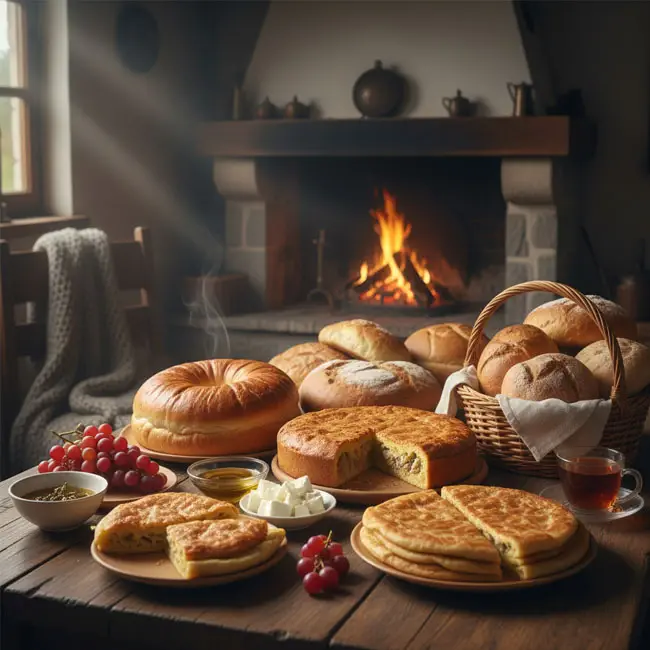
🏡 More Than Just a Side: The Unbreakable Role of Bukë
If you’ve ever been a guest at an Albanian table, you know the absolute truth: bread is life. In Albania, the word for bread, Bukë, isn’t just a noun; it's a foundational pillar of the entire culinary culture. Unlike many Western tables where bread is an optional starter, in the "Land of Eagles," a meal without bukë is simply incomplete, almost unthinkable.
This is a culture where hospitality is paramount, and the first thing a host offers a guest—even before they are fully seated—is a piece of warm bread, often accompanied by local cheese and a drizzle of olive oil. It is a gesture of respect, abundance, and inclusion. To share the bread is to share the home and the table.
Albania's long and complex history, sitting at the crossroads of the Mediterranean and the Balkans, has gifted its bread traditions a stunning diversity. You'll find rustic loaves baked in centuries-old wood ovens, paper-thin layered pastries influenced by the Ottoman Empire, and festive ceremonial breads unique to specific regions. The one constant? Every kind of bread is meant for scooping up sauces, soaking up the savory juices of a gjellë (stew), or being dipped into rich, yellow olive oil. It is the perfect, edible utensil, cementing its status as the most important staple on the table.
🔥 The Daily Loaf: Everyday Breads and Hearth Staples
The daily ritual of baking or buying fresh bread is a deeply ingrained rhythm of Albanian life, especially in the villages where the warmth of a communal furrë (oven) or saç (metal dome for baking) is central to community life.
🍞 Bukë Shtëpie: The Classic Homemade Loaf
The simplest, most essential bread is the homemade loaf, or Bukë Shtëpie. This is the heart of daily sustenance, the bread your Nënë (grandmother) insists you eat more of.
- The Vibe: This is a rustic, often round or slightly flattened loaf. It's usually made from a mix of wheat and sometimes corn flour, lending it a slightly denser, chewier texture than soft Western sandwich bread.
- The Flavor Profile: It has a mild, comforting, yeasty flavour. Its beauty lies in its simplicity and its incredible crust, which is often thick, dark, and beautifully crunchy from being baked in a hot, wood-fired oven.
- How it's Eaten: It is a daily accompaniment to everything—torn by hand at the table and used to scoop up Fasule (bean soup) or wipe a plate clean of the delicious sauce from Fërgesë (summer stew). A classic breakfast might be Bukë Shtëpie sliced and served with feta cheese, fresh tomatoes, and olives.
🫓 Pogaçe: The Versatile Soft Bread
A close relative to the classic loaf, Pogaçe is a popular type of soft, leavened bread that often takes on a variety of regional forms and is frequently baked in a clay pot or directly on the hearth.
- The Vibe: It’s often thicker and softer than Bukë Shtëpie, sometimes enriched with milk, yogurt, or butter, giving it a melt-in-your-mouth tenderness. It can range from a fluffy white bread to a denser, wholemeal version depending on the region.
- The Flavour Profile: The inclusion of dairy products adds a slight tang and richness. In some variations, it is topped with savory seeds like sesame or nigella.
- The Tradition: Pogaçe is often served alongside the heavier, sauce-rich dishes, as its soft texture makes it ideal for soaking up liquids without crumbling. Many families make a batch of Pogaçe specifically on Friday to go with the traditional white bean soup.
🥟 Flaky Wonders: Pies, Layers, and Savory Pastries
The Ottoman influence on Albanian cuisine is most evident in the wonderful world of layered pastries. These are often eaten on the go, for breakfast, or as a light but filling lunch.
🟢 Byrek: The Unofficial King of the Streets
If you ask any Albanian what their most famous baked good is, they will instantly say Byrek (or sometimes Börek). This savory pie is a cultural icon found throughout the Balkans, but the Albanian version is truly special.
- The Vibe: It's made from thin layers of filo dough that are either stretched incredibly thin by hand (petë) or stacked, then filled and baked to a golden crisp. It can be made as one large, round pie (tepsi) that is sliced into wedges, or as small, individual, rolled or triangular portions.
- The Fillings: This is where the magic happens. The most popular fillings include:
- Me Djathë: With local salty white cheese (similar to feta).
- Me Spinaq: With spinach and cheese.
- Me Mish: With minced meat (usually beef or veal).
- Me Domate dhe Qepë: With tomato and onion.
- The Experience: You can grab it hot from a Byrektore (a small shop specializing in Byrek) on virtually any street corner. It’s the perfect portable fuel, often paired with a chilled glass of dhallë (a salty, fermented yogurt drink) to complete the experience.
🥞 Flija: The Sunburst Cake of the North
Flija is not your everyday bread—it's a ceremonial masterpiece, predominantly found in the northern regions of Albania and Kosovo. Making it is a lengthy process and a true community event.
- The Vibe: Flija is instantly recognizable by its appearance: a stack of multiple, thin, crepe-like layers, baked to create a beautiful fan or "sunburst" pattern.
- The Process: It's made by pouring a thin, simple batter (flour, water, and sometimes egg) onto a large, slightly curved baking dome (saç). Crucially, each thin layer is quickly baked, then brushed with a butter and yogurt or kajmak (clotted cream) mixture, before the next layer is poured and baked. This process is repeated 10-20 times, creating the iconic layered texture.
- The Tradition: It is traditionally baked over an open fire or embers and is reserved for special occasions, holidays, family gatherings, or honoring a cherished guest. It is served with honey, yogurt, or cheese.
🌿 Lakror: The Rustic Southern Pie
From the south, particularly the Korçë region, comes Lakror, which is a beloved, rustic pie that shares similarities with Byrek but is often characterized by a thicker crust and a unique, sealed baking method.
- The Vibe: It's a double-crusted pie where the fillings are sandwiched between two layers of dough. It can be baked in the oven or traditionally, covered with hot ashes and a saç for slow cooking.
- The Fillings: Lakror tends to feature seasonal greens and vegetables, such as nettles, wild herbs, or cabbage, and is often made with leeks and minced meat.
- The Texture: The slow, enclosed baking process gives it a softer, more bread-like crust compared to the ultra-flaky Byrek.
🌍 The Historical Influence and Grain Staples
Albanian breads reflect the country's agricultural heritage, which is heavily reliant on grains grown in its diverse climate zones.
🌾 The Importance of Corn
In the mountainous, more rural regions, you will often find breads made not with white flour, but with cornmeal.
- Bukë Misri (Cornbread): This is a heavy, nutrient-dense cornbread that is much less sweet than its American counterparts. It is dense, wholesome, and often served alongside thick stews and rich, savory dishes like Tavë Kosi (baked lamb and yogurt). Its robust texture makes it the perfect carrier for rich, heavy sauces.
🍚 Beyond Wheat: The Rice Connection
While not technically bread, the importance of grains in Albanian baking also extends to the use of rice in baked dishes and pastries, linking them to broader Mediterranean and Ottoman traditions. The inclusion of rice and sometimes semolina in certain festive breads or desserts highlights the creative use of available staples.
🍽️ The Etiquette: How Bread Defines the Albanian Meal
The physical act of eating Bukë is almost a cultural study in itself.
✋ Tearing, Not Slicing
While the host may initially slice the loaf for serving, it is common and acceptable for diners to tear off pieces of bread by hand, especially when sharing a communal platter. This rustic, intimate way of eating emphasizes the togetherness of the meal.
🥣 The Essential Plate Wiper
Bread is rarely just 'chewed.' Its primary function is a vehicle for other foods. It is used to:
1.Scoop up: Beans, rice, or small, non-forkable items.
2.Sop up: The flavourful fat and juices left on the plate after a main course.
3.Contain: A small pocket of cheese or a piece of olive.
Leaving sauce on your plate after a gjellë is a cardinal sin of wastefulness—the bread is there to ensure your plate is not just clean, but polished by the time you're done!
❓ Frequently Asked Questions (FAQ)
1. What is the main difference between Byrek and Lakror?
While both are savory layered pies, Byrek is typically made with extremely thin layers of filo pastry (often professionally stretched by hand) and is flaky and crispy. Lakror is generally a more rustic pie with thicker dough layers, often baked with a sealed top and bottom crust in a clay pot, resulting in a slightly softer, more bread-like texture, and is especially famous in the southeastern region of Korçë.
2. Is there an Albanian equivalent to American-style toast or sliced bread?
While commercially sliced, packaged sandwich bread is available in modern stores, it is not considered the traditional staple. The closest daily staple is Bukë Shtëpie, the classic, crusty homemade loaf. When stale, it might be used to make savoury Petulla (fried dough fritters) or incorporated into recipes, but the culture favors fresh, crusty bread over soft, pre-sliced varieties.
3. Why is bread so important that an Albanian meal is considered incomplete without it?
Bread's importance stems from historical necessity and cultural tradition. Historically, it was a cheap, filling source of calories and energy for rural life. Culturally, it is the purest form of hospitality and sharing. It physically connects the person eating the food to the act of cleaning the plate, soaking up all the precious flavour and sustenance, symbolizing respect for the ingredients and the host. The saying "to share bread" is synonymous with "to share life" in many Balkan cultures.
🍞 The Essential Guide to Albanian Bread: Baking a Taste of Tradition
👉 Experience 3 Authentic Breads
| 🌐 🍞 < Back | 🇦🇱 🥗 < Previous | Next > 🍱 🇦🇱 |